The Fintech Paradox: Why “Thanks, But No Thanks” is the Most Important Voice in Open Banking
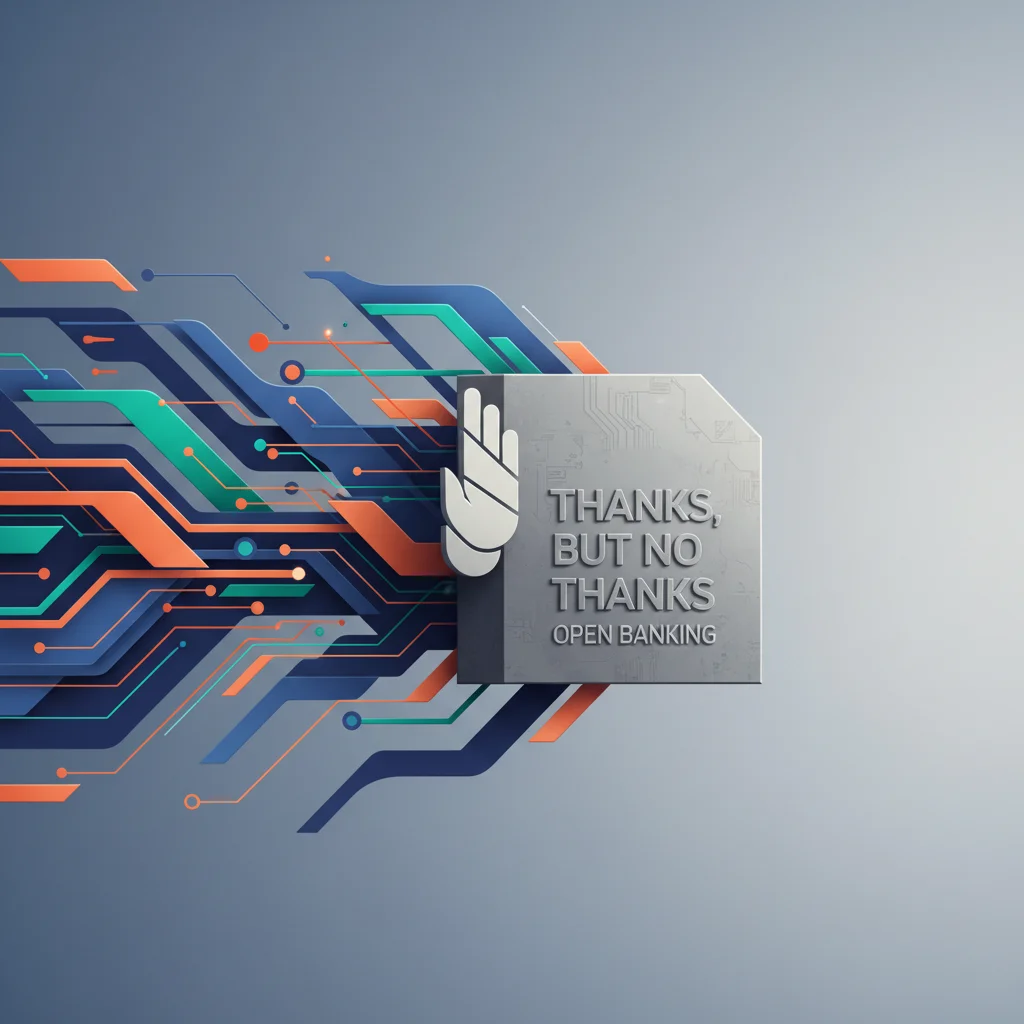
In a world hurtling towards hyper-connectivity, a simple, four-word sentiment published in the Financial Times serves as a powerful brake pedal on the fintech hype train: “Thanks, but no thanks.” This concise response from reader Anne-Mette Jensen Foreman, reacting to an article on “Fintech 2.0,” perfectly encapsulates a deep-seated and often-overlooked tension at the heart of modern finance. While technologists and venture capitalists champion a future of seamless, interconnected banking, a significant portion of the public remains deeply skeptical about giving an “unknown third party access to all my bank accounts.”
This isn’t just the grumbling of a few “old-fashioned” customers. It’s a critical and valid counterpoint in the dialogue about Open Banking and the future of our financial lives. The promise is tantalizing: a single dashboard for all your accounts, automated savings, smarter investment advice, and instant loan approvals, all powered by a constellation of innovative apps. But this convenience comes at a cost—or at least, a perceived one. It requires us to hand over the keys to our most sensitive financial data.
This blog post delves into that paradox. We will explore the revolutionary promise of the new financial technology ecosystem, dissect the legitimate fears holding back its universal adoption, and analyze the regulatory and technological frameworks designed to bridge this crucial trust gap. For investors, business leaders, and everyday consumers, understanding both sides of this debate is essential to navigating the rapidly evolving landscape of personal finance.
The Allure of the Connected Economy: Why Fintech 2.0 is So Compelling
To understand the skepticism, we must first appreciate the vision. The traditional banking model is fragmented. Many of us have a checking account with one bank, a mortgage with another, a credit card from a third, and an investment portfolio on a separate trading platform. This siloed approach is cumbersome and inefficient. Fintech 2.0, built on the principles of Open Banking, aims to tear down these walls.
Open Banking uses Application Programming Interfaces (APIs)—secure channels that allow different software systems to communicate. In this model, with your explicit consent, your primary bank can grant third-party financial technology applications read-only access to your account data. The result is a surge of innovation aimed at improving your financial health:
- Holistic Financial Views: Apps like Mint, YNAB, or Copilot can aggregate all your financial data—bank accounts, credit cards, loans, and investments—into one place, giving you a crystal-clear picture of your net worth and spending habits.
- Smarter Lending: Instead of relying solely on a credit score, lenders can analyze your actual cash flow to offer more personalized and competitive loan rates.
- Automated Savings & Investing: Platforms can analyze your spending patterns and automatically move spare change into savings or investment accounts, making wealth-building effortless.
The economic implications are massive. By lowering barriers to entry, Open Banking fosters intense competition in the financial services industry, a sector historically dominated by a few large players. This innovation is driving a global fintech market that is projected to reach a value of nearly $700 billion by 2030, according to a report by Grand View Research. For the broader economy, this means more choice, better products, and lower costs for consumers.
Political Risk on Trial: What the Arrest of a Bolivian Ex-President Means for Global Investors
The Anatomy of Distrust: Deconstructing the “Thanks, But No Thanks”
Despite the clear benefits, the hesitation expressed in the FT letter is not unfounded. The core of the issue lies in the transfer of trust from a single, highly regulated institution (a bank) to a distributed network of often new, less-established companies. The concerns can be broken down into three main categories:
1. Data Privacy: This is the paramount concern. Who exactly is seeing my data? How are they using it? Is it being anonymized and aggregated, or is it being used to build a highly specific profile of my life? The fear is that this data could be sold to marketers, insurers, or other entities without the user’s full comprehension or consent, leading to a new era of financial surveillance.
2. Cybersecurity Risks: Traditional banks are digital fortresses, spending billions on cybersecurity. While they are not impenetrable, they represent a single, hardened target. An Open Banking ecosystem creates hundreds of new potential entry points. A security breach at a single, popular budgeting app could potentially expose the financial data of millions of users across dozens of banks. The 2021 data breach of the trading app Robinhood, which exposed the personal information of 7 million users (source), serves as a stark reminder of the vulnerabilities in the fintech space.
3. Accountability and Liability: If fraudulent activity occurs, who is to blame? Is it the bank for allowing the API access? Is it the fintech app for having a security flaw? Or is it the user for granting permission in the first place? This ambiguity creates a sense of unease. With a traditional bank, the lines of responsibility are clear. In a multi-party ecosystem, they can become dangerously blurred.
Regulation as the Referee: Can We Legislate Trust?
Recognizing these challenges, regulators have stepped in to create a framework that aims to foster innovation while protecting consumers. The most prominent example is the European Union’s Second Payment Services Directive (PSD2). Far from being a free-for-all, PSD2 establishes strict rules for the Open Banking economy:
- Explicit Consent: A third-party provider can only access your data after you have given explicit and informed consent. This consent is not permanent and must be re-authenticated regularly (typically every 90 days).
- Strong Customer Authentication (SCA): It mandates multi-factor authentication for most digital transactions, adding a critical layer of security.
- Regulated Providers: Only authorized and regulated companies can participate in the ecosystem, ensuring they meet specific security and operational standards.
These regulations are a crucial step, but they are not a panacea. The onus is still on the consumer to understand what permissions they are granting. To clarify the trade-offs, here is a comparison of the two models:
| Feature | Traditional Banking Model | Open Banking / Fintech 2.0 Model |
|---|---|---|
| Data Control | Data is siloed within one or a few trusted, regulated institutions. | Data is shared with multiple (vetted) third parties, based on user consent. |
| Convenience | Lower convenience; requires logging into multiple platforms for a full financial picture. | High convenience; potential for a single, aggregated view of all finances. |
| Innovation & Choice | Slower pace of innovation; limited product choice from incumbent players. | Rapid innovation; wide variety of specialized apps and services from competitors. |
| Security Model | Centralized “fortress” model. A single point of failure, but heavily defended. | Decentralized model. A wider attack surface, but protected by standards like SCA. |
| Accountability | Clear line of liability, resting primarily with the bank. | Potentially complex liability shared between the bank, the fintech, and the user. |
While regions like the UK and EU have led the way with regulation, other parts of the world, including the United States, have adopted a more market-driven approach. This global patchwork of rules adds another layer of complexity for both consumers and investors in the financial technology sector.
The Fading of Pax Americana: A New Playbook for the Global Economy and Your Investments
The Future of Banking: Coexistence or Conquest?
The rise of fintech doesn’t necessarily mean the death of traditional banking. Instead, we are seeing a great “rebundling” of financial services. Many incumbent banks are embracing the change, choosing to partner with fintechs rather than compete with them head-on. This has led to the rise of “Banking as a Service” (BaaS), where a regulated bank provides the core infrastructure (accounts, compliance, payments) while a fintech company builds the innovative, customer-facing application on top.
For those tracking the `stock market`, this creates a fascinating dynamic. Investors are no longer just choosing between a big bank and a tech startup. They are analyzing complex partnerships and ecosystems. The long-term winners may be the traditional banks that successfully transform into technology platforms or the fintechs that prove most adept at building and maintaining customer trust.
Looking further ahead, technologies like `blockchain` could play a role. While not the basis for current Open Banking APIs, blockchain’s principles of decentralization and cryptographic security offer a potential future model where users have even greater control over their own data, granting access on a granular, transaction-by-transaction basis. This could be the ultimate answer to the trust deficit, shifting the paradigm from “trust the company” to “trust the code.”
A Practical Guide for the Cautious Consumer and Investor
The “Thanks, but no thanks” sentiment is a call for caution, not outright rejection. For consumers and investors alike, the key is to engage with this new world of finance with open eyes.
For Consumers:
- Vet the Provider: Before linking your bank account to any app, research the company. Is it regulated in your country? What are its privacy policies?
- Understand Permissions: Don’t just click “accept.” Read the permissions the app is requesting. Does a budgeting app really need access to your contacts?
- Practice Good Security Hygiene: Use strong, unique passwords and enable multi-factor authentication wherever possible. Regularly review which apps have access to your accounts and revoke permissions for any you no longer use.
For Investors and Business Leaders:
- Look Beyond the Hype: Evaluate fintech companies not just on their user growth, but on their security architecture, regulatory compliance, and the clarity of their privacy policies.
- Trust is an Asset: In the world of finance, trust is the ultimate currency. Companies that are transparent and prioritize user security will build more durable, long-term value than those that chase growth at all costs. As a report from Ernst & Young highlights, customer trust is the new battleground for financial institutions.
The Razor's Edge: How a 14th-Century Principle Can Revolutionize Your Modern Financial Strategy
Conclusion: A Necessary Dialogue
The simple letter from a reader in Belgium is more than just a footnote in the financial press; it’s a vital contribution to one of the most important conversations in our modern economy. The tension between the convenience of a connected financial life and the fundamental need for privacy and security is not a problem to be solved, but a dynamic to be managed.
The future of finance will not be built by engineers and marketers alone. It will be shaped by the skeptics, the cautious adopters, and the everyday users who rightly demand to know who has their data and why. The voice that says “Thanks, but no thanks” doesn’t stop progress; it directs it. It forces the industry to innovate not just on features, but on trust. And in the long run, that is the only innovation that truly matters.

Related Posts

Beyond the Fine Print: Why a UK Insurance Shake-Up Signals a New Era for Financial Transparency
Cracks in the Foundation: Private Equity’s Lending Crisis and Fintech’s Growing Pains