High Stakes on the High Seas: Decoding the Economic Fallout of the US Blockade on Venezuela
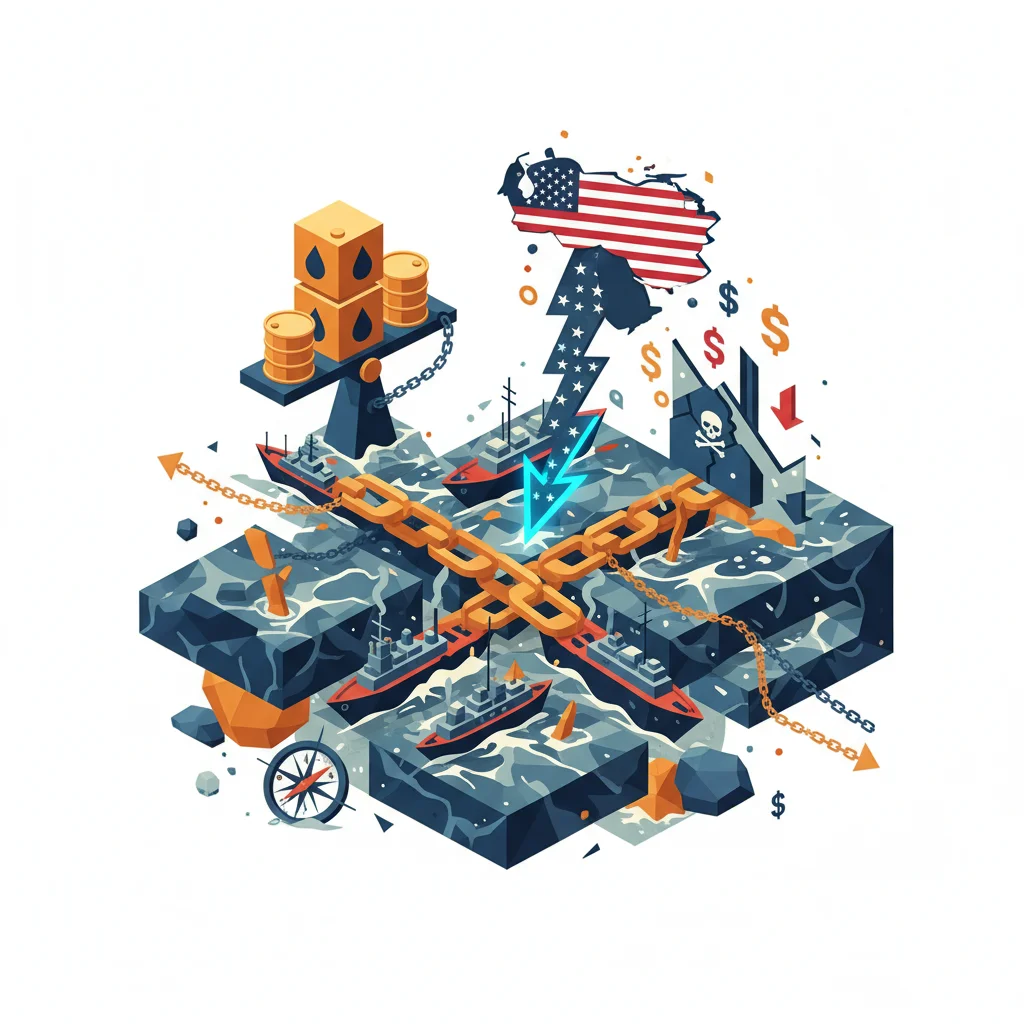
In a dramatic escalation of its “maximum pressure” campaign, the United States has initiated a naval blockade to intercept oil tankers departing from Venezuela, enforcing sanctions with military might. The White House confirmed the move, with the president stating the military presence will persist until the return of oil and assets that were, in his words, “previously stolen from us.” This action represents a significant shift from financial sanctions to physical enforcement, sending shockwaves through the global energy markets, the international banking sector, and the complex world of geopolitical economics.
This is not merely a political maneuver; it is a calculated economic strike aimed at the very heart of the Venezuelan government’s revenue stream. For investors, finance professionals, and business leaders, understanding the multifaceted implications of this blockade is crucial. The ripples will be felt far beyond the Caribbean, influencing everything from oil futures on the stock market to the strategic calculations of global powers and the evolving landscape of financial technology.
The Anatomy of an Economic Siege
The term “blockade” conjures images of wartime naval cordons, and while the current situation is a step in that direction, it’s more accurately an aggressive, military-backed enforcement of pre-existing economic sanctions. The primary target is Petróleos de Venezuela, S.A. (PDVSA), the state-owned oil and natural gas company that has long been the financial engine of the Venezuelan state. By physically preventing tankers from delivering their crude oil cargo to international buyers, Washington aims to completely sever the Maduro regime’s primary source of hard currency.
This move follows years of escalating sanctions designed to cripple the Venezuelan economy and force a political transition. These measures have included:
- Sanctions against individuals in the Venezuelan government.
- Prohibitions on the Venezuelan government from issuing new debt and equity.
- Sanctions directly targeting PDVSA, effectively locking it out of the U.S. financial system.
- Secondary sanctions threatening non-U.S. companies that do business with PDVSA.
The naval build-up in the Caribbean is the final, physical layer to this financial architecture of coercion. It signals a new level of risk for any entity—from shipping companies and insurers to oil traders and their banking partners—daring to engage with Venezuela’s sanctioned oil sector.
The Price of Patience: Is the UK's New Government Stalling the Economy?
Venezuela’s Oil Lifeline: A Story of Decline
To grasp the magnitude of this action, one must understand the catastrophic decline of Venezuela’s oil industry. Home to the world’s largest proven oil reserves, Venezuela was once a powerhouse in the global energy market. However, a combination of mismanagement, corruption, underinvestment, and the impact of U.S. sanctions has decimated its production capabilities. According to data from the U.S. Energy Information Administration (EIA), the decline has been staggering.
The table below illustrates the dramatic collapse of Venezuelan crude oil production over the past two decades, providing crucial context for the current crisis.
| Year | Average Crude Oil Production (Million Barrels per Day) |
|---|---|
| 2000 | 3.21 |
| 2005 | 2.86 |
| 2010 | 2.68 |
| 2015 | 2.65 |
| 2020 | 0.53 |
| 2023 (Est.) | 0.75 |
Source: Data compiled from reports by OPEC and the U.S. EIA.
While production has seen a minor recovery from its absolute lows, it remains a fraction of its former capacity. This blockade aims to choke off the revenue from even this diminished output, pushing the nation’s already shattered economy further toward total collapse.
The Ripple Effect: Global Finance and Market Volatility
An action of this scale in a major oil-producing (though diminished) nation inevitably creates waves across the global economy. The implications for finance, trading, and investing are profound.
1. Oil Price Volatility
The most immediate impact is on the price of crude oil. While Venezuela’s output is low, removing up to 750,000 barrels per day from the global market in a disorderly fashion can create significant price shocks. Traders on the stock market will be watching Brent and WTI futures closely. The blockade introduces a new “geopolitical risk premium” into the price of oil, leading to heightened volatility. This affects not only energy stocks but also has knock-on effects for transportation, manufacturing, and consumer inflation, impacting broader economics.
2. Shipping and Insurance Risks
The maritime industry is now on high alert. Any tanker operating in the Caribbean faces increased scrutiny. The risk of seizure, delays, and legal battles will cause shipping insurance premiums to skyrocket for routes near Venezuela. This raises operational costs and could lead to a re-routing of commercial traffic, disrupting supply chains far beyond the energy sector. As Reuters has reported previously, insurers and shipping firms become the de facto enforcers of sanctions, as the financial risk of non-compliance is too great.
3. The Banking and Compliance Minefield
For international banking institutions, this escalation is a compliance nightmare. Any financial transaction even tangentially related to a sanctioned Venezuelan oil shipment could trigger massive penalties from the U.S. Treasury. This forces a hyper-cautious approach, with banks likely to “de-risk” by exiting relationships with any clients who have exposure to the region. This further isolates the Venezuelan economy from the global financial system.
The Cracker Barrel Conundrum: When Nostalgia Clashes with Modernity, Investors Pay the Price
Geopolitical Chess: Winners, Losers, and Unintended Consequences
This blockade re-arranges the global energy chessboard. While the stated goal is to pressure the Maduro regime, the secondary effects are complex:
- Winners: Other OPEC+ members and U.S. shale producers may benefit from a tighter market and higher prices. They can increase their own output to fill the supply gap left by Venezuela.
- Losers: The primary losers are the Venezuelan people, who will bear the brunt of an even more severe economic collapse. Additionally, countries like China and India, which have been key buyers of Venezuelan crude (often as part of loan-repayment deals), will be forced to find alternative suppliers, potentially at higher prices.
- Strategic Implications: The move pushes Venezuela further into the arms of U.S. adversaries like Russia and China, who may see a strategic opportunity in providing an economic lifeline and challenging U.S. dominance in the region.
What This Means for Investors and Business Leaders
Navigating this new reality requires a sophisticated understanding of geopolitical risk and its intersection with finance and economics.
For the Investor: Geopolitical risk is no longer a footnote in an annual report; it is a primary driver of market volatility. Investors in the energy sector must brace for price swings and re-evaluate the risk profile of companies with operations or supply chains in Latin America. Diversification and a clear-eyed assessment of how international conflicts impact the stock market are more critical than ever. This is a moment where astute investing requires a deep understanding of global power dynamics.
For the Business Leader: The key takeaway is the weaponization of supply chains and financial networks. Businesses must conduct rigorous due diligence on their partners, suppliers, and customers to ensure they are not inadvertently violating complex sanctions regimes. The cost of non-compliance—both financial and reputational—is astronomical. This event underscores the need for resilient, transparent, and geographically diversified supply chains.
Conclusion: A High-Risk Gamble on the World Stage
The U.S. naval blockade of Venezuelan oil tankers is a high-risk, high-reward gamble. It represents the sharpest edge of economic statecraft, where financial sanctions are backed by military force. The intended outcome is the collapse of a hostile regime, but the path is fraught with peril. It risks triggering a regional conflict, causing a humanitarian catastrophe, and creating severe instability in a global economy already facing numerous headwinds.
For those in the world of finance, investing, and business, this is a stark reminder that the placid waters of global commerce can be churned into a tempest by political will. The intersection of military power, international law, and global economics is now on full display in the Caribbean—and the entire world is watching to see what happens next.