The Wimpy Kid Glitch: What a Movie Mix-Up on Amazon Reveals About the Fragility of Our Automated World
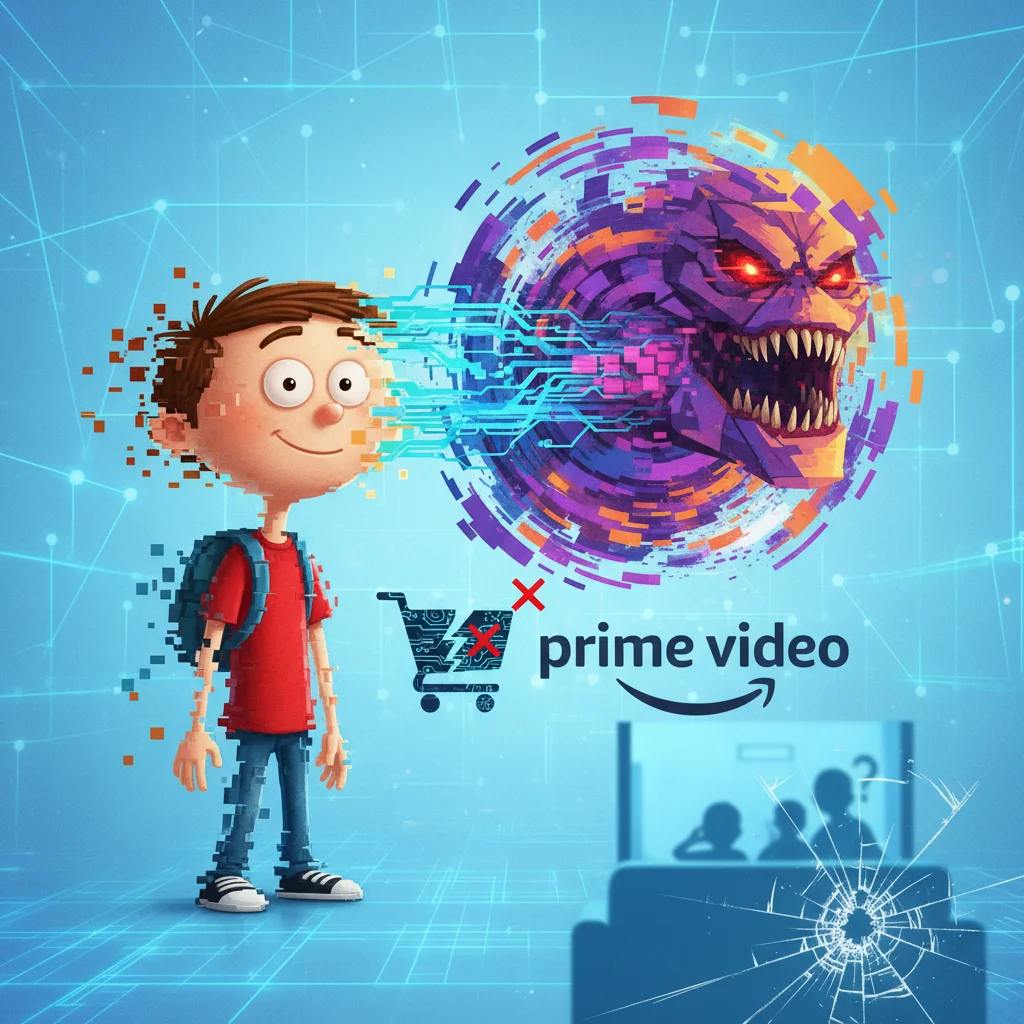
Imagine this: it’s family movie night. The popcorn is ready, the kids are settled on the couch, and you’ve navigated to Amazon Prime Video to rent a certified kid-friendly classic, Diary of a Wimpy Kid. You press play, expecting wholesome hijinks. Instead, the screen flickers to life with Heathers, the dark 1989 cult comedy filled with what one parent described as “strong sex and sex references.” This isn’t a hypothetical scenario; it was the jarring reality for a family in the UK, leading to a swift apology from Amazon. As reported by the BBC, what should have been a PG experience took a sharp turn into 15-rated territory.
On the surface, this is a simple, albeit unsettling, customer service blunder. A glitch in the system. But for those of us in the tech world—developers, entrepreneurs, and leaders at SaaS companies—this incident is more than just an awkward mix-up. It’s a stark reminder of the ghost in the machine; a fascinating case study in the inherent fragility of the complex, automated systems that power our digital lives. This wasn’t just a failure of one movie to load; it was a crack in the veneer of the seamless, intelligent cloud infrastructure we’ve come to take for granted. Let’s peel back the layers and explore what this “Wimpy Kid Glitch” truly reveals about software, automation, AI, and the constant battle for digital trust.
The Anatomy of a Digital Mismatch
So, how does a PG-rated animated movie suddenly become a dark teen comedy? While Amazon hasn’t disclosed the exact technical cause, we can make some highly educated guesses based on how large-scale content delivery systems work. The culprit is almost certainly not a sentient AI with a twisted sense of humor, but rather a failure in one of several critical backend processes. The entire world of streaming runs on a complex dance of data, and if one partner stumbles, the whole performance falls apart.
The most likely suspect is a metadata mismatch. In the vast digital library of a service like Prime Video, every piece of content—every movie, every TV show episode—is not just a video file. It’s an object surrounded by a universe of metadata: title, description, genre, cast, runtime, and, crucially, age rating and the location of the actual video file on a server. Think of it like a library card catalog. The catalog entry for Diary of a Wimpy Kid is supposed to point to a specific file on a specific shelf. In this case, it seems the pointer was accidentally redirected to the shelf holding Heathers. This can happen due to:
- Human Error During Ingest: A content manager could have accidentally pasted the wrong asset ID when uploading or updating the film’s information.
- Database Corruption: A minor glitch or error during a database update could have corrupted a single entry, causing the incorrect mapping.
- A Bug in the Automation Script: The software responsible for cataloging and updating content could have a bug in its programming logic that, under specific conditions, misaligns content IDs.
Another potential point of failure lies within the Content Delivery Network (CDN). Services like Amazon’s own AWS CloudFront store copies of popular content on servers around the globe to ensure fast streaming. It’s possible that a caching error at a specific “edge location” (the server closest to the user) served a stale or incorrect version of the content map. The core database might have been correct, but the local cache the user was pulling from was flawed. The scale of these operations is staggering; Amazon Prime Video offers tens of thousands of titles to over 200 million subscribers, a feat made possible only by this kind of sophisticated cloud architecture. According to a 2023 report from Reelgood, Prime Video’s US library alone contains over 14,000 movies (source), each with its own web of metadata.
Below is a simplified breakdown of the common failure points in systems like these.
| System Component | Potential Failure Mode | Resulting Impact |
|---|---|---|
| Metadata Database | Incorrect data entry, ID mismatch, or data corruption. | The wrong information (title, description, rating) is displayed, or the wrong content is served. |
| Content Ingest Pipeline | An automation script bug mislabels or misfiles new video assets. | A piece of content is entered into the system with fundamentally incorrect associations from the start. |
| Content Delivery Network (CDN) | Stale cache, incorrect routing, or configuration error at an edge node. | A specific region or group of users receives the wrong content, even if the central database is correct. |
| User Interface (UI) Application | A front-end programming bug incorrectly requests a content ID. | The user clicks on one title, but the application sends the wrong request to the backend servers. |
Apple's AI Inertia: How Chinese Rivals Are Weaponizing AI to Topple the iPhone
AI and Automation: The Unseen Curators That Can Fail
This incident throws a spotlight on the double-edged sword of automation. At the scale Amazon operates, manual oversight of every single content stream is impossible. Companies rely heavily on sophisticated SaaS platforms and internal tools, driven by artificial intelligence and machine learning, to manage their vast libraries. These AI systems are the unseen curators of our digital age. They are responsible for:
- Content Tagging: Automatically analyzing video and audio to generate tags for genre, actors, and even specific scenes.
- Rating Verification: Using AI to scan content for violence, language, or adult themes to verify or suggest age ratings.
- Recommendation Engines: The complex algorithms that decide what you might want to watch next.
- Quality Control: Automated checks for video artifacts, audio sync issues, and other technical flaws.
This reliance on AI is a cornerstone of modern tech innovation. However, the “Wimpy Kid Glitch” highlights a critical weakness: AI and automation lack human context and common sense. An automated script that mismaps an ID doesn’t “know” that one film is for kids and the other is a dark satire. It simply executes its flawed programming. The system’s guardrails, which should have flagged a PG-rated request being fulfilled by a 15-rated file, either weren’t in place or failed to trigger. This is a classic example of “garbage in, garbage out.” If the foundational metadata is wrong, the most brilliant AI in the world will diligently serve the wrong content, executing its instructions perfectly but with disastrous results.
Cybersecurity, Startups, and the Opportunity in Verification
While this particular incident appears to be an accident, it exposes a potential vulnerability vector. If a simple bug can cause this, what could a malicious actor do? This brings the conversation into the realm of cybersecurity. Imagine a scenario where an attacker finds a way to manipulate a streaming service’s metadata database. They could replace legitimate content with propaganda, phishing scams, or malware. They could swap the audio on a financial news report or subtly alter the subtitles on a political documentary. The ability to manipulate a trusted content source at scale is a powerful and dangerous weapon.
This is where the opportunity for startups and innovation emerges. The market for third-party verification and auditing of digital supply chains is exploding. There is a growing need for sophisticated tools that can:
- Continuously Audit Metadata: Use AI to scan content libraries for anomalies. For example, an AI could flag a mismatch between a film’s PG rating and the actual content’s audio track, which might contain explicit language.
- Perform Content Fingerprinting: Create a unique digital “fingerprint” for every media asset and constantly verify that the content being served matches the correct fingerprint.
- Secure the Ingest Pipeline: Offer robust, secure platforms for content ingestion that minimize the risk of human error and provide a clear, auditable trail for every piece of content.
This isn’t just about media and entertainment. Any industry that relies on a complex, automated digital supply chain—from finance and healthcare to manufacturing—faces similar risks. A glitch in a parts database can shut down a factory. An error in a patient record system can have life-or-death consequences. The “Wimpy Kid Glitch” is a low-stakes version of a problem that haunts CEOs and CTOs across every sector.
The Code That Cursed the Internet: An Apology for the Popup Ad
This incident is a far cry from the catastrophic software bugs of the past, like the Knight Capital trading glitch that cost the company $440 million in 45 minutes due to a faulty code deployment (source). Yet, it shares the same DNA: a small error in a complex, automated system leading to an unexpected and damaging outcome.
Code of Silence: The Terrifying Cost of Speaking Truth to Power in Tech
Conclusion: Beyond the Apology
Amazon’s apology was necessary and appropriate, but the real takeaway for the tech industry lies beyond the customer service response. This incident serves as a powerful parable for the modern age of software development and cloud computing. It underscores that as our systems become more complex and more reliant on automation and AI, the potential for bizarre and unpredictable failures grows. The challenge for developers, engineers, and tech leaders is not just to build more powerful systems, but to build more resilient, context-aware, and trustworthy ones.
For every line of programming that adds a new feature, we must consider the lines of code needed for validation, verification, and common-sense checks. For every machine learning model we deploy, we must ask what happens when it encounters flawed data. The “Wimpy Kid Glitch” wasn’t a sign that technology is failing; it was a sign that our work is never done. It was a reminder that behind every seamless stream and every intelligent recommendation, there is a complex web of code and data that demands constant vigilance, relentless testing, and a healthy dose of humility.