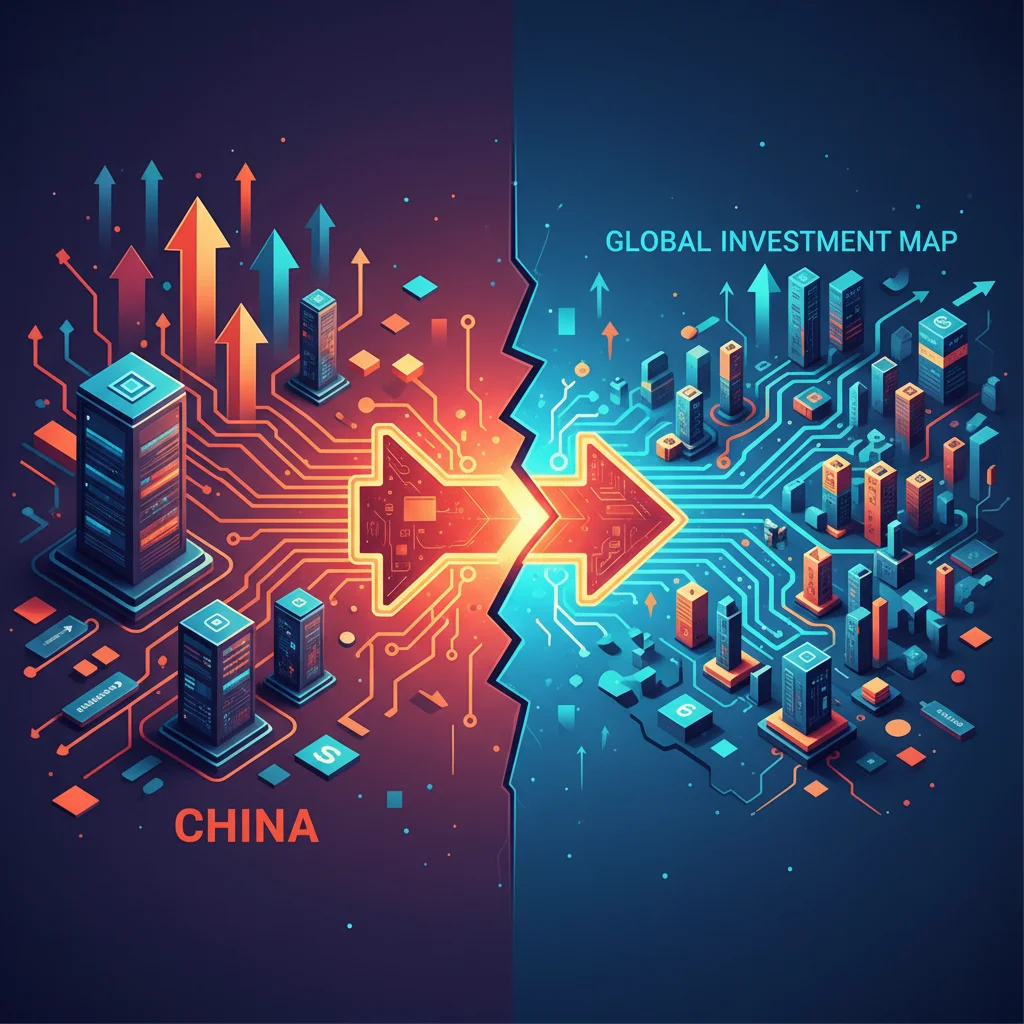
The Great Decoupling: Why China’s ‘One-Way’ Tech Strategy is Redrawing the Global Investment Map
In the intricate dance of global economics, the flow of technology and capital has long been seen as a two-way exchange, a symbiotic relationship that fuels innovation and growth. However, a recent letter to the Financial Times by Albion M Urdank starkly challenges this notion, framing the dynamic with China as a “one-way street” for technology transfer under President Xi Jinping. This perspective isn’t just an academic observation; it’s a critical thesis for anyone involved in finance, investing, or international business. It suggests a fundamental shift in the global order, one that carries profound implications for the stock market, economic policy, and the future of financial technology.
For decades, the prevailing Western consensus was that integrating China into the global economy would lead to political and economic liberalization. The theory was simple: as China grew richer through trade and investment, it would inevitably adopt the norms of the international system. Instead, we’ve witnessed a different outcome. China has masterfully leveraged its access to global markets and technology to fuel a state-directed mission of becoming a dominant technological and economic superpower, often on its own terms. This post delves into the mechanics of this “one-way street,” analyzes its impact on the global economy and investment landscape, and explores what it means for the future of finance.
Understanding the “One-Way Street”: China’s Grand Strategy
The concept of a one-way technology transfer isn’t about legitimate business competition; it describes a systemic, state-driven strategy to acquire foreign technology and intellectual property (IP) to bolster domestic industries while simultaneously limiting foreign firms’ access to the Chinese market. This isn’t a secret. It’s codified in ambitious industrial policies, most notably the “Made in China 2025” initiative.
Launched in 2015, this plan explicitly targets global leadership in ten high-tech industries, including robotics, semiconductors, and electric vehicles. The goal is to reduce China’s reliance on foreign technology and eventually dominate these critical global supply chains. According to a report by the Council on Foreign Relations, the strategy employs a range of tools to achieve these ends, from generous state subsidies for domestic champions to more coercive measures aimed at foreign companies operating in China.
The mechanisms of this transfer are multifaceted:
- Forced Joint Ventures: For years, foreign companies wanting to access China’s vast market were often required to form joint ventures with local partners, a process that frequently resulted in the transfer of sensitive technology and trade secrets.
- Intellectual Property Theft: Beyond coerced transfers, outright IP theft remains a significant concern. The FBI has stated that it opens a new China-related counterintelligence investigation every 10 hours, with the estimated cost to the U.S. economy running into the hundreds of billions of dollars annually.
- Talent Acquisition: State-sponsored programs are designed to recruit overseas scientists and engineers, incentivizing them to bring their knowledge—and often their former employers’ IP—back to China.
- Strategic Acquisitions: Chinese firms, often with state backing, have strategically acquired foreign tech companies to obtain key technologies and patents.
This systematic approach has reshaped the global economics of innovation, creating a challenging environment for Western firms and the investors who back them.
The Verdict on the UK Economy: Why Scrapping Jury Trials Could Rattle Global Investors
The Investor’s New Reality: Geopolitical Risk is Now Market Risk
For finance professionals and investors, ignoring these geopolitical dynamics is no longer an option. The “one-way street” has direct and tangible consequences for portfolio risk, corporate valuations, and long-term investing strategies. The era of viewing China purely as a growth opportunity is over; it must now be viewed through a complex lens of risk and strategic competition.
The impact on the stock market is already visible. U.S. and European semiconductor companies, for example, face the dual threat of having their designs illicitly copied while also being cut off from the Chinese market by U.S. export controls. This creates immense uncertainty, affecting everything from revenue forecasts to trading multiples. Companies heavily reliant on Chinese supply chains or consumer markets are now being scrutinized for their geopolitical resilience, a factor that barely registered in financial models a decade ago.
Below is a look at some of the key sectors targeted by “Made in China 2025” and the potential implications for investors in Western companies.
| Target Sector | China’s Stated Goal | Key Chinese Players | Potential Risk for Western Incumbents |
|---|---|---|---|
| Semiconductors | Achieve 70% self-sufficiency by 2025 | SMIC, Huawei (HiSilicon), YMTC | Loss of market share, IP theft, intense price competition from subsidized rivals. |
| Electric Vehicles (EVs) | Become a global leader in EV technology and sales | BYD, NIO, XPeng | Erosion of market share in both China and global markets as Chinese brands expand. |
| Aerospace | Develop domestic commercial aircraft to rival Boeing & Airbus | COMAC | Long-term competitive threat to a highly concentrated and profitable duopoly. |
| Biopharmaceuticals | Move up the value chain in drug development | BeiGene, Sino Biopharmaceutical | Patent infringement risk, competition in developing next-generation treatments. |
This new paradigm demands a more sophisticated approach to due diligence. Investors must now ask: How much of a company’s revenue is exposed to China? How secure is its intellectual property? How resilient is its supply chain to a potential geopolitical shock? The answers to these questions are becoming just as important as traditional financial metrics like P/E ratios and cash flow.
The Next Frontier: The Battle for Fintech and Digital Dominance
Nowhere is this strategic competition more apparent than in the realm of financial technology. While the West has a vibrant, market-driven fintech scene, China has pursued a state-led approach that has allowed it to leapfrog legacy systems, particularly in digital payments with giants like Alipay and WeChat Pay.
The next phase of this competition centers on the very infrastructure of finance. China is far ahead of any major Western economy in the development and pilot testing of a central bank digital currency (CBDC), the e-CNY or digital yuan. This isn’t just a new payment method; it’s a tool with profound geopolitical implications. An internationalized digital yuan could challenge the U.S. dollar’s dominance in global trade and finance, allowing China and its partners to bypass the SWIFT messaging system and, by extension, U.S. financial sanctions.
This race for the future of money highlights the stakes. The competition is no longer just about building better apps or improving the efficiency of the traditional banking system. It’s about controlling the underlying rails of the 21st-century global economy. For Western nations, this requires a coordinated response that fosters innovation in areas like blockchain technology and digital assets while also establishing clear regulatory frameworks. For those involved in trading and investing, understanding the trajectory of competing digital currency blocs will be essential for long-term asset allocation.
The Hidden Economic Toll of 'Carspreading': A New Risk for Your Portfolio?
Charting a New Course: Imperatives for Leaders and Investors
The recognition of China’s “one-way” technology strategy marks the end of an era of optimistic engagement. For business leaders, policymakers, and investors, this new reality requires a fundamental shift in strategy and mindset.
- For Business Leaders: The mantra is resilience. This means diversifying supply chains away from single-country dependence, investing heavily in cybersecurity to protect intellectual property, and developing market strategies that account for the high likelihood of regulatory and political volatility.
- For Policymakers: A reactive posture is insufficient. Governments must proactively foster domestic innovation through R&D investment, public-private partnerships, and education. At the same time, defensive tools like investment screening bodies (e.g., CFIUS in the U.S.) and targeted export controls are necessary to protect critical technologies.
- For Investors: Geopolitical analysis must become a core competency. This involves moving beyond headline news and understanding the specific policies, technological chokepoints, and strategic rivalries that will shape industries for decades to come. Allocating capital effectively in this environment means rewarding companies that demonstrate strategic foresight and geopolitical resilience.
Bitcoin's Silent Squeeze: Unpacking the Liquidity Crisis Rocking the Crypto Market
In conclusion, Albion M Urdank’s letter captures the crux of our modern geopolitical challenge. The “one-way street” of technology transfer has fundamentally altered the landscape of global commerce and competition. It has pushed the world toward an era of strategic rivalry where economic health, national security, and technological leadership are inextricably linked. For those in the world of finance and investing, the message is clear: the assumptions of the past no longer apply. Success in the coming decades will belong to those who can understand, adapt to, and navigate the complexities of this new, fractured world.

Related Posts

The Lawyer, The Strongman, The Presidential Hopeful: Decoding Abelardo de la Espriella’s Impact on Colombia’s Economy

Wanted: A Chief Innovation Killer—The Perils of Over-Regulation in Finance