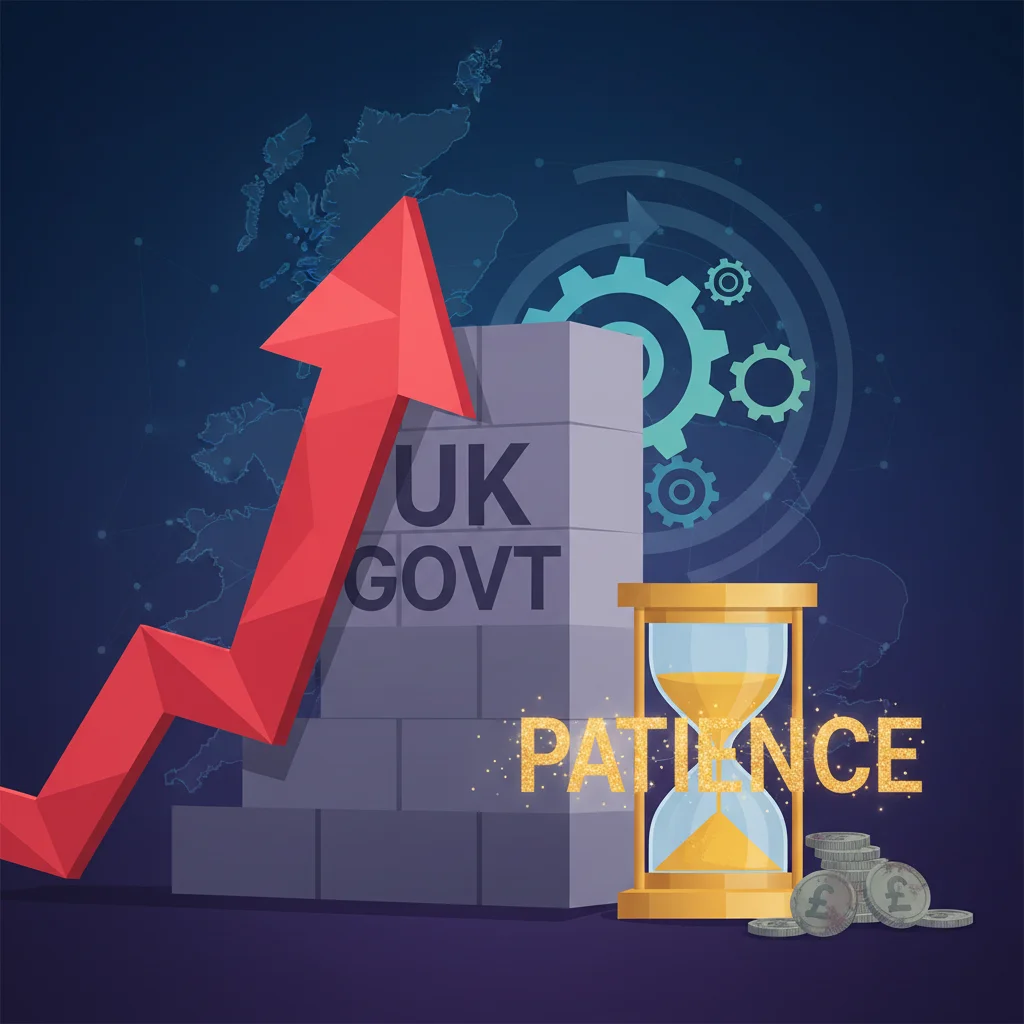
The Price of Patience: Is the UK’s New Government Stalling the Economy?
When Keir Starmer’s Labour party swept into power, it was on a wave of promises—not of radical revolution, but of something the British public and the financial markets craved even more: competence and delivery. After years of political turbulence and economic shocks, the mandate was clear: stabilize the ship and get things done. Yet, as the initial honeymoon period fades, a palpable sense of impatience is growing within Westminster and beyond. The promised action is materializing far slower than anticipated, raising critical questions for investors, business leaders, and anyone with a stake in the UK’s economic future.
The new government’s agenda is ambitious, targeting deep-seated issues across public services and the economy. However, a gap is emerging between rhetoric and reality. Some flagship policies are inherently long-term projects, but others, intended as quick wins to build momentum, have been marred by delays and a perceived lack of focus on execution. For a market that values certainty and a business community that needs clear policy direction for planning and investing, this sluggish pace is not just a political problem—it’s an economic one.
The Promise vs. The Progress: A Reality Check
The government’s platform was built on a series of core pledges designed to signal a new era of proactive governance. From tackling NHS waiting lists to kickstarting economic growth, the promises were specific and designed to be measurable. However, the initial report card shows a mixed and, in some areas, worrying picture. The challenge of translating political will into tangible outcomes is proving immense, constrained by tight public finances and the sheer inertia of the state machinery.
To understand the disconnect, it’s helpful to visualize the status of some of the key initiatives that were meant to define the government’s first year. While some are progressing, a number of critical areas are lagging, creating uncertainty that can ripple through the economy.
Below is a snapshot of some key government pledges and their current implementation status, reflecting the challenges being faced:
| Pledge/Policy Area | Intended Impact on Economy & Finance | Current Status |
|---|---|---|
| NHS Waiting List Reduction | Improve labour force health, reduce economic inactivity, and signal effective public spending. | Delayed – Targets proving difficult to meet amid ongoing structural pressures (source). |
| Planning System Reform | Unlock real estate development, boost construction sector, and address housing crisis, impacting banking sector loans and investment. | Slow Progress – Facing significant political and administrative hurdles. |
| Green Energy Investment (GB Energy) | Drive investment in renewables, create jobs, and provide long-term energy security, affecting the stock market valuation of energy firms. | Long-Term Overhaul – Initial steps taken, but large-scale impact is years away. |
| Financial Services Regulation Overhaul | Strengthen the UK’s position as a global finance hub, fostering innovation in fintech and financial technology. | Under Review – Key decisions postponed, creating ambiguity for the banking and investment sectors. |
This “delivery deficit” is causing frustration among the government’s own MPs, who are eager to demonstrate progress to their constituents. One senior minister anonymously admitted a failure to focus on delivery from day one, stating, “We spent too much time in the first few weeks on the machinery of government and not enough on delivery” (source). This kind of admission is a red flag for investors who see operational efficiency as a proxy for governmental competence.
The Sweeney Effect: How American Eagle Turned Celebrity Marketing into a Stock Market Victory
The Economic Cost of Inertia
In a globally competitive environment, policy inertia carries a significant economic cost. The world of finance, and particularly fast-moving sectors like fintech and financial technology, thrives on clarity and speed. When governments delay critical decisions on regulation, taxation, or infrastructure, they create a vacuum of uncertainty that chills investment and stifles innovation.
Consider the impact on several key areas:
- Investor Confidence: International investors allocate capital based on a combination of risk and opportunity. A government perceived as slow or ineffective increases the risk profile of a country’s assets. This can lead to lower valuations on the stock market, higher borrowing costs for the government, and a reluctance to commit to long-term foreign direct investment (FDI).
- The Banking and Fintech Sectors: The UK’s status as a leader in global finance and fintech is not guaranteed. Competitors are moving quickly to create favourable regulatory environments. Delays in clarifying the future of financial services regulation, or implementing frameworks for emerging technologies like blockchain and digital assets, can cause innovative firms to look elsewhere. This directly impacts the banking sector’s growth and the UK’s edge in financial technology.
- Corporate Investment: Businesses need to make long-term decisions about hiring, expansion, and R&D. Policy ambiguity makes this impossible. A company considering building a new factory or launching a new trading platform will pause if it doesn’t know what the energy policy, tax regime, or labour laws will be in two years. This collective hesitation acts as a powerful brake on the national economy.
The principles of economics are clear: capital is fluid and seeks the best risk-adjusted return. A government that fails to act decisively is, in effect, telling capital to wait on the sidelines or go elsewhere. In the modern economy, standing still is the same as moving backward.
The Hidden Economic Toll of 'Carspreading': A New Risk for Your Portfolio?
Why the Gears of Change are Grinding Slowly
Understanding the reasons behind the slow pace is crucial for assessing the long-term outlook. The delays are not born from a single cause but a confluence of challenging factors. Firstly, the government inherited a dire set of public finances, severely limiting its ability to simply spend its way to success. Every new initiative must be weighed against a backdrop of fiscal restraint, a discipline the markets are enforcing rigidly.
Secondly, many of the problems the government aims to solve are not simple fixes. Reforming the NHS or the planning system involves untangling decades of bureaucracy and navigating complex stakeholder interests. These are not short-term projects but generational overhauls. The government’s mistake, perhaps, was not in the ambition of its goals but in managing expectations about the timeline for achieving them.
Finally, there is the human element of a new administration finding its footing. A transition of power involves thousands of new personnel, new reporting structures, and a steep learning curve. The early focus on the “machinery of government,” while frustrating, may have been a necessary, if poorly communicated, step in preparing for the complex delivery challenges ahead. The critical test is whether the machine, now assembled, can begin to operate at speed and scale.
The Way Forward: A Roadmap for Observers
For investors, economists, and business leaders, the coming months are a critical observation period. The government’s narrative of “long-term change” will be tested against the market’s demand for short-term progress. So, what should you be watching?
- Key Performance Indicators (KPIs): Move beyond political rhetoric and focus on the data. Track specific metrics like NHS waiting list numbers, planning application approval times, and the pace of green infrastructure tenders. These are the real indicators of progress.
- Pivotal Policy Announcements: The upcoming Autumn Statement will be a major signal of intent. Watch for concrete, funded proposals rather than vague ambitions. Clarity on financial services regulation, R&D tax credits, and business investment incentives will be crucial for the finance and technology sectors.
- Personnel and Tone: Pay attention to the language used by ministers. A shift from “we plan to” towards “we have delivered” is essential. Any changes in key ministerial posts could also signal a renewed focus on execution.
Bitcoin's Tightrope Walk: Navigating the Return of Macroeconomic Headwinds
Ultimately, the Starmer government came to power with a significant reserve of goodwill from a public and a business community weary of chaos. That goodwill is a valuable but finite asset. The challenge now is to convert promises into progress before patience wears thin. The future health of the UK economy, its vibrancy in sectors from banking to fintech, and its attractiveness as a destination for investing all hang in the balance. The clock is ticking.

Related Posts

The Trillion-Dollar Choice: Why the UK’s Next Geopolitical Move Will Define Your Portfolio

The Lawyer, The Strongman, The Presidential Hopeful: Decoding Abelardo de la Espriella’s Impact on Colombia’s Economy