Beyond the Tech Giants: Is Web3 the Answer to AI’s Centralization Problem?
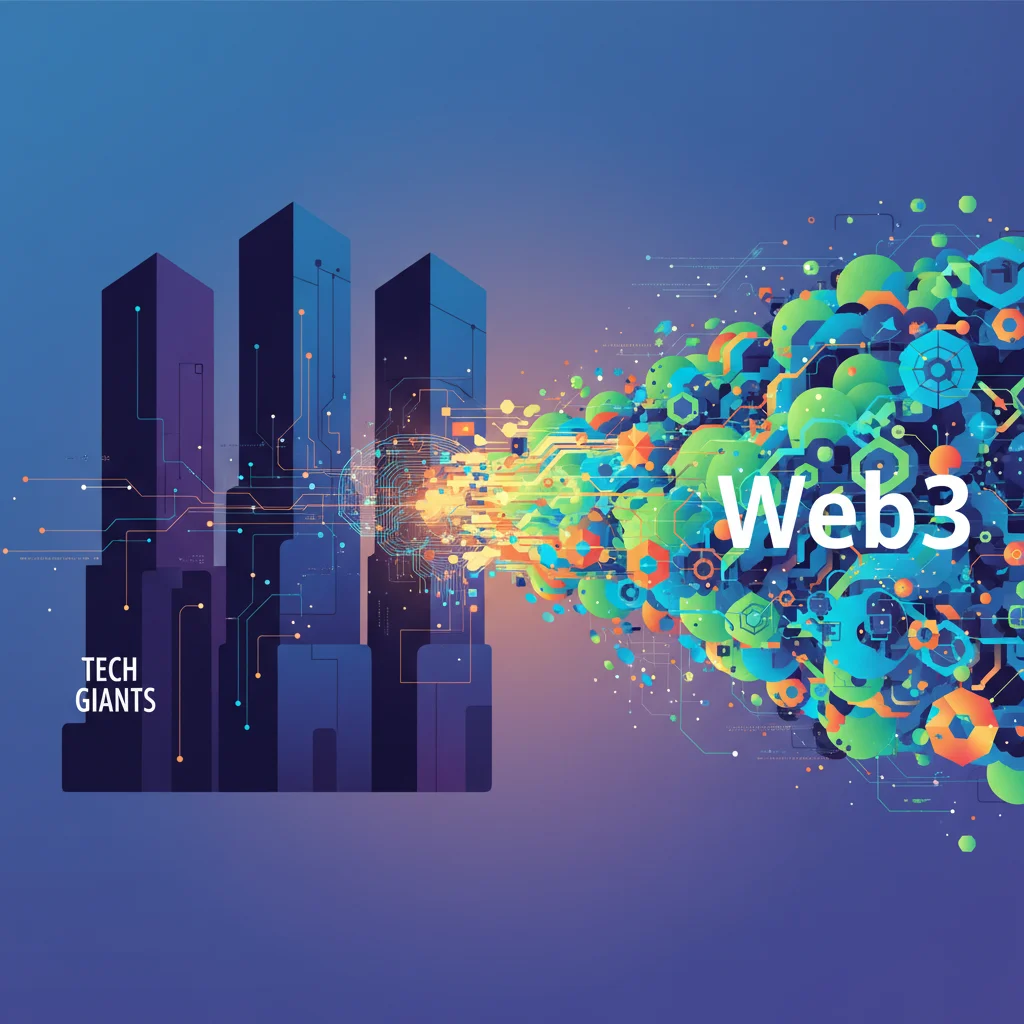
The race for artificial intelligence supremacy is on, and the frontrunners are already clear. A handful of technology titans—the likes of Microsoft, Google, and Nvidia—are rapidly becoming the new gatekeepers of our digital future. Their immense resources and control over essential infrastructure, from cloud computing to semiconductor chips, have created a powerful vortex of centralization. This concentration of power, as highlighted in a recent Financial Times analysis, poses significant risks to innovation, competition, and the broader economy. But what if there’s a different path forward?
In a compelling letter to the editor, Mebs Loghdey, founder of Neverthought.org, argues that the conversation is missing a crucial element: the rise of the decentralized web, or Web3. He posits that while the current trajectory points toward a future dominated by a few, the principles of blockchain and decentralization offer a powerful counter-narrative. This isn’t just a niche technological debate; it’s a fundamental question about the future architecture of our digital world, with profound implications for finance, investing, and the global economy.
This post will explore that very idea. We’ll dissect the current state of AI centralization, unpack the promise of the Web3 alternative, and analyze what this technological shift could mean for investors, business leaders, and the future of financial technology.
The New Digital Empires: AI’s Concentration of Power
To understand the solution, we must first appreciate the scale of the problem. The development of advanced AI, particularly large language models (LLMs), is astronomically expensive. It requires three key ingredients that only a few corporations possess in abundance: massive datasets, elite talent, and, most importantly, vast computational power. Companies like Nvidia, which produces the GPUs essential for AI training, have seen their valuations soar, reflecting their critical role in the ecosystem. In Q1 2024, Nvidia held an estimated 80% market share in AI chips, a staggering level of dominance.
This concentration creates several critical risks:
- Stifled Innovation: When a few companies control the foundational layer of a new technology, they can dictate the terms of access, potentially stifling smaller startups and independent developers who cannot afford the computational overhead.
- Economic Imbalance: The immense profits from AI are flowing to a small number of publicly traded companies, exacerbating wealth inequality and creating a “winner-takes-all” dynamic in the stock market. This affects everything from investment strategies to broader economics.
- Systemic Risk: Our growing reliance on a few centralized providers for critical digital infrastructure—from cloud services with Amazon’s AWS and Microsoft’s Azure to AI models—creates single points of failure. A significant outage or security breach at one of these giants could have cascading effects across the global economy.
For those in finance and investing, this landscape presents both an opportunity and a threat. While investing in these tech leaders has yielded incredible returns, over-concentration in any single area is a classic portfolio risk. The question for forward-thinking investors is: what comes next, and where can we find the next wave of disruptive growth?
Beyond the Flames: What a Hong Kong Tragedy Teaches Investors About 'Black Swan' Risks
A Different Paradigm: Unpacking the Web3 Vision
This is where the concept of Web3 enters the conversation. At its core, Web3 is an effort to re-decentralize the internet using blockchain technology. While Web1 was the static, “read-only” internet and Web2 is the interactive, “read-write” internet dominated by platforms, Web3 aims to be the “read-write-own” internet. It’s a shift from a platform-centric model to a user-centric one, where individuals, not corporations, control their data, identity, and assets.
To clarify the distinction, let’s compare the two models directly.
| Feature | Web2 (The Current Internet) | Web3 (The Decentralized Vision) |
|---|---|---|
| Data Ownership | Controlled and monetized by corporations (e.g., Google, Meta). | Owned and controlled by the individual user via cryptographic wallets. |
| Infrastructure | Centralized servers owned by companies like Amazon (AWS), Microsoft (Azure). | Decentralized networks of computers run by a global community of users. |
| Governance | Top-down decisions made by corporate management and boards. | Bottom-up governance through community voting via tokens (DAOs). |
| Financial System | Reliant on traditional banking and fintech intermediaries. | Native digital assets and decentralized finance (DeFi) protocols. |
| Identity | Platform-specific logins (e.g., “Sign in with Facebook”). | Self-sovereign, portable identity controlled by the user. |
This isn’t just a theoretical framework. As Mebs Loghdey noted, tangible projects are already building the foundational blocks of this new internet, creating direct, decentralized competitors to the services offered by Big Tech.
From Theory to Practice: Building a Decentralized Future
The promise of Web3 becomes clearer when we look at specific applications that directly challenge the centralized status quo, particularly in areas dominated by today’s tech giants.
Decentralized Storage vs. The Cloud Giants
Currently, a vast portion of the world’s data sits on servers controlled by Amazon, Google, and Microsoft. Decentralized storage networks like Filecoin and Arweave offer a radical alternative. Instead of renting space from a single corporation, these platforms create a peer-to-peer marketplace for data storage. Users can rent out their unused hard drive space, and in return, data is encrypted, split up, and distributed across a global network of computers. This model introduces censorship resistance—no single entity can delete the data—and has the potential to create a more competitive and resilient market for data storage, a critical component of the modern economy.
Decentralized Identity vs. Platform Logins
Every time you “Sign in with Google,” you are ceding a piece of your digital identity to a corporation. Decentralized Identity (DID) systems reverse this. Using blockchain, they allow individuals to manage their own identity credentials in a secure, private digital wallet. This has massive implications for fintech and banking, as it could streamline KYC (Know Your Customer) processes, reduce fraud, and give users granular control over who can access their personal and financial data. According to a report by McKinsey, digital ID could unlock significant economic value, equivalent to 3 to 13 percent of GDP by 2030.
Beyond the Hype: A Financial Analyst's Guide to Navigating the Black Friday Economy
However, dismissing the entire movement because of these obstacles would be a mistake. Think of it like the early days of the internet in the 1990s—it was slow, difficult to use, and its business model was unclear. Yet, the core principles of open connectivity and information access ultimately triumphed. Web3 should be viewed through a similar lens: a high-risk, high-reward frontier. For a business leader, it represents a potential disruption to watch. For an investor, it’s an asymmetric bet—a small allocation in a diversified portfolio that could hedge against the concentration risk of Big Tech and capture the upside of the next technological paradigm shift.
The Financial and Economic Implications of Decentralization
If Web3 gains even a fraction of its envisioned traction, the ripple effects on finance, trading, and the broader economy will be substantial. This technological shift isn’t just about building new apps; it’s about re-architecting the flow of value and power in the digital world.
A New Investment Landscape
For investors, Web3 introduces entirely new asset classes and investment theses. The focus shifts from investing in a company’s stock to investing in a protocol’s native token, which might represent utility (the right to use the network) or governance (the right to vote on its future). This requires a new playbook for financial analysis, moving beyond P/E ratios and towards metrics like network activity, tokenomics, and community engagement. While the stock market will remain dominant, a parallel financial system is being built, offering new opportunities for diversification and growth in financial technology.
Disruption in Banking and Fintech
The world of banking and fintech is ripe for disruption from decentralized principles. Decentralized Finance (DeFi) protocols are already offering automated, transparent, and globally accessible alternatives to traditional services like lending, borrowing, and trading. While still nascent and volatile, these systems eliminate the need for costly intermediaries, potentially lowering fees and increasing access to financial services for underserved populations. Traditional banking institutions and fintech companies must decide whether to view this as a threat or an opportunity to integrate blockchain technology into their own operations to improve efficiency and security.
A More Resilient and Competitive Economy
Ultimately, the most significant promise of a decentralized web is fostering a more dynamic and competitive digital economy. By lowering the barrier to entry for developers and entrepreneurs, it can enable a new wave of innovation without permission from the gatekeepers. A more distributed infrastructure is inherently more resilient to single points of failure, whether technical or political. This shift could lead to a more balanced digital economy where value is distributed more broadly among creators, users, and developers, rather than being concentrated at the top.
Canada's Pipeline Pivot: A High-Stakes Bet on Asia's Energy Future and What It Means for Investors
Conclusion: Choosing Our Digital Future
The current trajectory of AI development, for all its incredible promise, is concentrating immense power in the hands of a few. This is the reality of today. However, as the thoughtful critique from Mebs Loghdey reminds us, it does not have to be the blueprint for tomorrow. The principles of Web3—user ownership, decentralization, and open protocols—offer a compelling vision for a more equitable and resilient digital future.
The journey towards this decentralized paradigm is long and filled with uncertainty. Technical, user experience, and regulatory hurdles are immense. But the conversation is vital. As we stand at this critical juncture in technological history, we must look beyond the immediate hype cycles. For investors seeking the next frontier, business leaders navigating disruption, and anyone interested in the future of our economy, understanding the profound choice between a centralized and a decentralized digital world is no longer optional. It is the defining challenge of our time.