Crypto’s Long Winter: Is the Market Flywheel Broken or Just Hibernating?
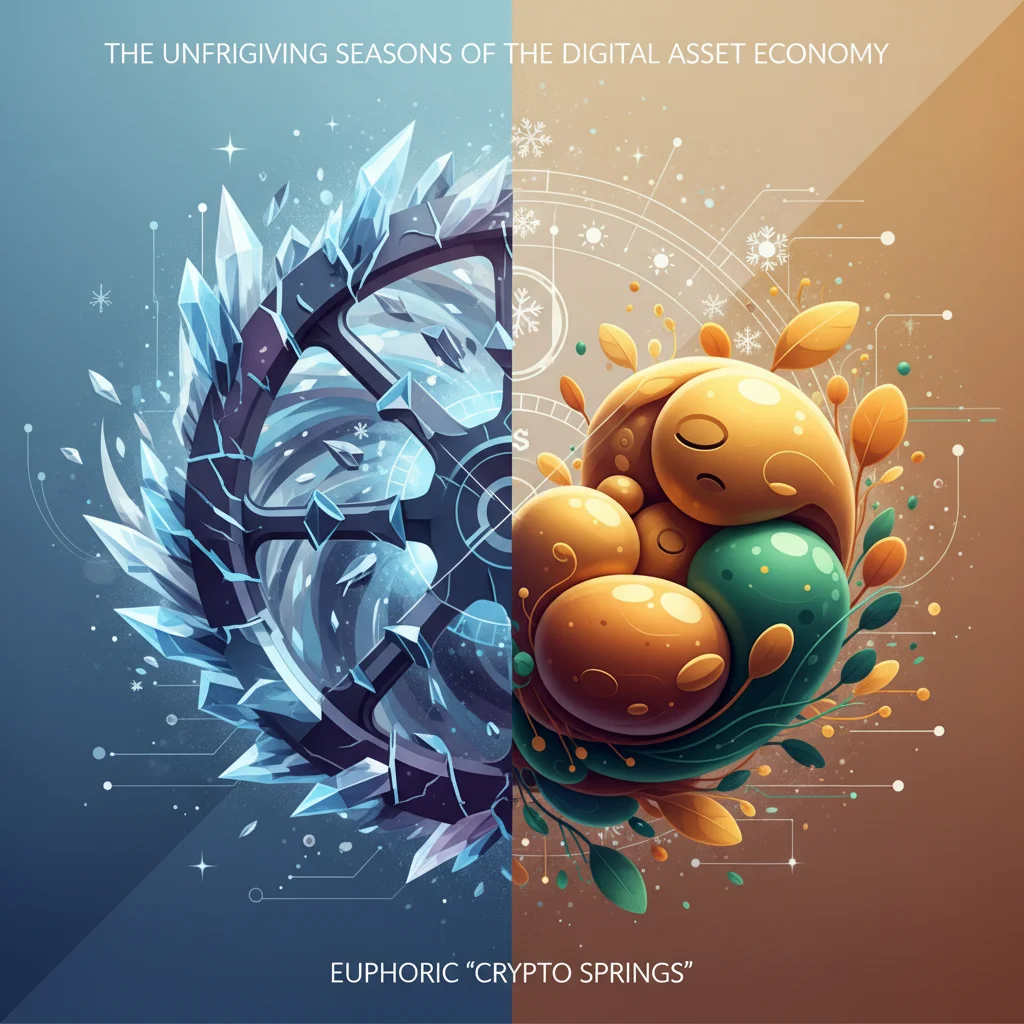
The Unforgiving Seasons of the Digital Asset Economy
In the world of finance and investing, few markets exhibit the dramatic seasonality of cryptocurrency. We’ve witnessed euphoric “crypto springs” where prices soar to dizzying heights, fueled by boundless optimism and a flood of new capital. These are inevitably followed by brutal “crypto winters”—prolonged periods of price stagnation, waning interest, and existential doubt. The market is currently deep in one such winter, and according to a recent analysis from the Financial Times, this one feels different. The central engine of crypto growth, a powerful mechanism often called the “flywheel,” appears to be sputtering, leaving even the most ardent believers to brace for a bitter chill.
The core of the issue, as the FT points out, is that “the flywheel is difficult to maintain if crypto’s animal spirits turn out to have been durably damped down.” This isn’t just about a temporary dip in the stock market or a cyclical downturn. It’s a fundamental challenge to the speculative, momentum-driven model that has defined crypto’s meteoric rise. To understand the gravity of the situation, we must first dissect this flywheel and then explore the powerful macroeconomic forces that have ground it to a halt.
Deconstructing the Crypto Flywheel: The Engine of Past Bull Runs
The “crypto flywheel” is a concept that perfectly describes the self-reinforcing loop that powered previous bull markets. It’s a powerful force in behavioral economics, driven by human psychology as much as by financial technology. The process works like this:
- Initial Price Catalyst: A new innovation, a positive news event, or simply market dynamics cause a notable increase in the price of a major asset like Bitcoin.
- Media and Social Amplification: The price surge attracts media attention and goes viral on social platforms. Stories of overnight millionaires and incredible returns create a powerful sense of FOMO (Fear Of Missing Out).
- Influx of New Capital: Attracted by the hype, a wave of new retail and, more recently, institutional investors enters the market. This surge in demand for a limited supply of assets pushes prices even higher.
- Validation and Expansion: The rising prices seem to validate the technology and the initial investment thesis. This encourages existing holders to invest more and developers to build new projects, creating more catalysts for the cycle to repeat.
This flywheel effect turned the blockchain space into one of the most explosive asset classes of the last decade. However, its primary fuel is what economist John Maynard Keynes famously termed “animal spirits”—the instincts, emotions, and confidence that drive human investment decisions. When those spirits are high, the flywheel spins at an incredible speed. But when they are dampened, the entire engine risks seizing up.
The End of an Era or a New Financial Strategy? Why a Top Art Gallery is Closing its New York Doors
The Great Freeze: How the Global Economy Put Crypto on Ice
Unlike previous crypto winters, which were often caused by internal market events like exchange collapses or protocol failures, the current downturn is largely driven by external, macroeconomic forces. For the better part of a decade, the global economy operated in a near-zero interest rate environment. This made holding cash or safe assets like government bonds unattractive, pushing investors further out on the risk curve in search of yield. Speculative assets like crypto thrived in this environment.
Today, the landscape has been completely reshaped. Central banks, led by the U.S. Federal Reserve, have aggressively raised interest rates to combat inflation. This has profound implications for crypto:
- The Rise of “Risk-Free” Returns: When investors can get a guaranteed 5% return from a U.S. Treasury bill, the appeal of a volatile, non-yielding asset like Bitcoin diminishes significantly for a large portion of the market. The opportunity cost of speculating on crypto has become much higher.
- Quantitative Tightening (QT): Beyond raising rates, central banks are shrinking their balance sheets, effectively pulling liquidity out of the financial system. This reduces the amount of “easy money” available to flow into speculative markets like crypto and the high-growth end of the stock market.
- A Stronger Dollar: Higher interest rates in the U.S. typically strengthen the dollar, which can act as a headwind for assets priced in USD, including Bitcoin.
This new paradigm has durably dampened the “animal spirits” required to power the flywheel. The speculative fervor has been replaced by a sober, risk-off approach to investing, a shift that fundamentally challenges crypto’s momentum-based growth model.
A Tale of Two Winters: Comparing the Current Downturn to the Past
To truly appreciate why this winter feels different, it’s helpful to compare the current market conditions with those of the last major crypto winter in 2018-2019. This comparison highlights a shift from internal industry problems to external economic pressures.
| Factor | 2018-2019 Crypto Winter | Current Crypto Winter (2023-Present) |
|---|---|---|
| Primary Cause | Bursting of the ICO (Initial Coin Offering) bubble; internal market saturation and fraud. | Aggressive global monetary tightening; high interest rates; persistent inflation. |
| Global Interest Rate Environment | Low to near-zero. Central banks were accommodative. | Highest levels in over a decade. Central banks are restrictive. |
| Institutional Involvement | Largely on the sidelines; considered a fringe asset class. | Significant. Major players like BlackRock and Fidelity have launched spot Bitcoin ETFs. |
| Dominant Narrative | “Programmable money” and decentralized applications (dApps). | “Digital Gold,” institutional adoption, and real-world asset (RWA) tokenization. |
| Main Challenge | Proving legitimacy and finding a product-market fit beyond speculation. | Competing for capital against high-yield, low-risk traditional assets. |
The table reveals a stark paradox. The crypto industry is more mature and institutionally accepted than ever before, with an estimated 420 million users worldwide in 2023. Yet, it faces a far more hostile macroeconomic environment that directly undermines its core growth mechanism.
LNG Titans at War: Venture Global Accuses Shell of a "Campaign of Sabotage"
The Institutional Paradox: Why Wall Street’s Embrace Wasn’t a Silver Bullet
The launch of spot Bitcoin ETFs in the United States in early 2024 was supposed to be the event that reignited the flywheel. The argument was simple: by providing a safe, regulated, and easy way for mainstream investors to get exposure via their brokerage accounts, a tsunami of institutional and retail capital would flood the market. Giants of traditional finance like BlackRock and Fidelity threw their weight behind it, and billions of dollars in assets under management quickly followed. Initial inflows were strong, pushing Bitcoin to new all-time highs.
However, the momentum proved short-lived. While the ETFs were a success in terms of asset gathering, they failed to trigger the kind of manic, retail-driven frenzy that characterized previous bull runs. The institutional capital that came in was more calculated, less emotional. It treated Bitcoin as another asset in a diversified portfolio, not a paradigm-shifting revolution. This type of investment provides a stable floor but lacks the explosive fuel to get the speculative flywheel spinning at escape velocity. The “animal spirits” of the average investor, now facing higher mortgage payments and better returns in savings accounts, remained on the sidelines.
Building in the Blizzard: The Future of Blockchain and Financial Technology
If the flywheel of speculation is broken, what comes next? As in past winters, the focus now shifts from trading to building. The most resilient and innovative teams in the blockchain space are using this downturn to focus on creating tangible value that can withstand the harshest economic climates. The key areas of development include:
- Real-World Asset (RWA) Tokenization: The process of creating digital tokens on a blockchain that represent physical or traditional financial assets like real estate, stocks, or bonds. This could be the bridge that truly connects decentralized finance with the multi-trillion dollar traditional finance world.
- Layer 2 Scaling Solutions: Technologies built on top of major blockchains like Ethereum to make transactions faster, cheaper, and more efficient. These are crucial for enabling mainstream applications in gaming, social media, and enterprise use.
- Sustainable Tokenomics: Designing digital asset economies that generate real revenue and provide utility, rather than relying solely on new investors to prop up prices.
This period of quiet, focused development may ultimately be more valuable than another hype-driven bull market. It forces the industry to answer the tough questions: What problems can this financial technology solve better than existing systems? How can it create products and services that people will use regardless of market speculation?
Europe's Drone Wall: A Multi-Billion Euro Bet on Co-ordination Over Code
Conclusion: From Animal Spirits to Enduring Value
The crypto faithful are indeed preparing for a bitter winter, one defined not by a lack of innovation but by a hostile global economic climate that has stilled the market’s “animal spirits.” The speculative flywheel that once seemed unstoppable is now choked by high interest rates and a market-wide shift away from risk. Even the landmark approval of Bitcoin ETFs by Wall Street’s biggest players wasn’t enough to restart the engine in a meaningful way.
Yet, this challenging period may be a necessary rite of passage. The future of the digital asset economy cannot be perpetually dependent on speculative momentum. Survival through this winter will require a pivot from hype to utility, from promises to products, and from a reliance on animal spirits to the creation of enduring, tangible value. The projects and platforms that emerge from this freeze will be stronger, more resilient, and better integrated into the broader fabric of global finance, ready for a new season of sustainable growth.

Related Posts

The Unexpected Disruptor: How a Local Council’s Funeral Service Signals a Tectonic Shift in a $20 Billion Industry

Solving the Global Economy: Why Modern Finance is the Ultimate Crossword Puzzle