The Ghost in the Machine: When AI Sings, Who Owns the Voice?
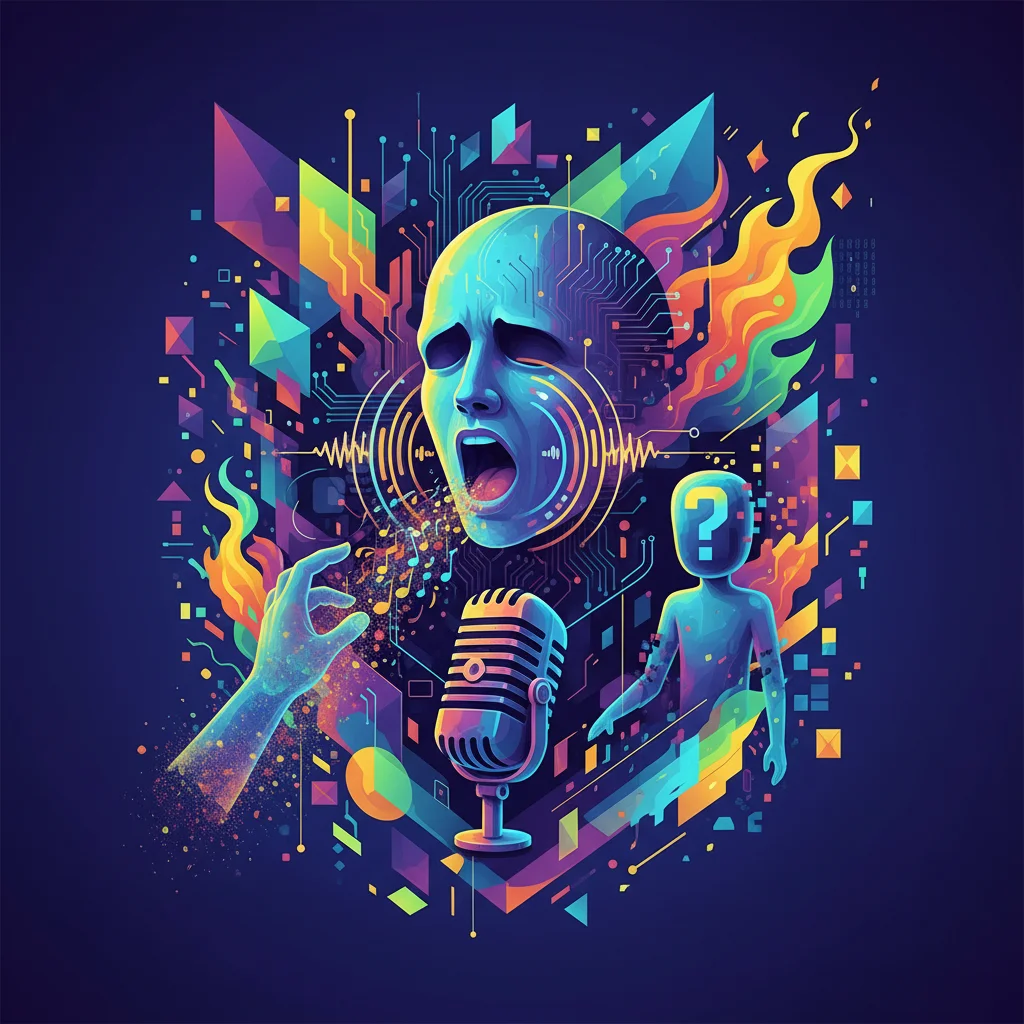
Picture this: a catchy new dance track climbs the charts, its vocals smooth, soulful, and uncannily familiar. Fans are captivated. But behind the scenes, a storm is brewing. The label for award-winning singer Jorja Smith is crying foul, claiming the voice on the hit song “I Run” by an artist named Haven isn’t just inspired by Smith—it’s an AI-generated clone of her unique vocal identity. The producer of the track denies it, but the accusation itself has ripped the curtain back on a terrifying and exhilarating new reality for the creative industries.
This isn’t just another music industry dispute. It’s a landmark case that sits at the volatile intersection of artificial intelligence, intellectual property, and the very essence of human creativity. For developers, entrepreneurs, and tech professionals, this story is more than just celebrity gossip; it’s a live-fire drill for the ethical and commercial challenges that generative AI is unleashing upon the world. What happens when an algorithm can perfectly replicate the one thing an artist thought was uniquely theirs? Who gets paid? And who, if anyone, is breaking the law?
Deconstructing the Digital Ghost: How AI Voice Cloning Works
To understand the gravity of the situation, we need to look under the hood. Creating an “AI clone” of a voice isn’t magic; it’s a sophisticated application of machine learning. The process, often called voice synthesis or voice cloning, typically involves training a deep learning model on a dataset of the target’s voice.
Here’s a simplified breakdown:
- Data Collection: The AI model is fed hours of high-quality audio recordings of the target person’s voice. For a public figure like Jorja Smith, this data is readily available from studio albums, interviews, and live performances. The more varied the data—different pitches, emotional tones, and phonetic sounds—the better the final result.
- Model Training: Using powerful computing resources, often hosted on the cloud, the model analyzes the intricate patterns of the voice: the timbre, pitch, cadence, and unique vocal tics. It learns to deconstruct the voice into its fundamental components and then reconstruct it to “say” anything you want.
- Synthesis & Generation: Once trained, the model can be given a new script or a melody, and it will generate a completely new audio file in the target’s voice. The quality of this output has improved exponentially in recent years, moving from robotic-sounding speech to nuanced, emotionally resonant singing.
The accessibility of this technology is a game-changer. What once required a research lab and a supercomputer can now be accomplished with off-the-shelf software, some of which is offered as a SaaS (Software as a Service) product. This democratization of powerful AI tools is a hallmark of modern tech innovation, but it also puts incredibly potent capabilities into the hands of millions, for better or for worse.
The AI Revolution is Hitting a Wall—And It's Buried in a Queue
The Legal Labyrinth: Copyright Code in a World of AI Clones
The Jorja Smith case throws a harsh spotlight on how outdated our legal frameworks are. Copyright law was designed to protect tangible expressions of an idea—a recording, a musical composition, a set of lyrics. But can you copyright a voice? The answer is a murky “not really.”
While a specific recording is protected, the characteristics of a person’s voice generally are not. This creates a massive loophole that AI is now exploiting. An AI model that learns from Jorja Smith’s recordings isn’t technically copying any single recording; it’s creating a new performance with a statistical representation of her voice. Is it a derivative work? A new instrument? Or is it a violation of her “right of publicity,” which protects against the unauthorized commercial use of one’s likeness?
These are the billion-dollar questions that courts, creators, and tech companies are now wrestling with. According to a 2023 report from Goldman Sachs, generative AI could add up to $7 trillion to the global economy, but this growth is contingent on establishing clear rules of the road. Without them, we risk a “Wild West” scenario where digital impersonation runs rampant, eroding trust and devaluing human talent.
A Double-Edged Sword: Threat vs. Tool for the Modern Creator
While the potential for misuse is terrifying, it’s crucial to recognize that AI voice technology isn’t inherently evil. For artists and creators, it presents as many opportunities as it does threats. This duality is what makes the conversation around artificial intelligence so complex.
Let’s examine the two sides of the coin. Below is a comparison of the potential risks and rewards AI voice synthesis poses for artists.
| The Threat: AI as an Adversary | The Opportunity: AI as a Collaborator |
|---|---|
| Unauthorized Use: Malicious actors can create deepfake audio for scams, misinformation, or unauthorized commercial releases, diluting an artist’s brand. | Vocal Preservation: An aging singer could train an AI on their voice from their prime, allowing them to perform with that vocal quality indefinitely. |
| Loss of Livelihood: If anyone can generate a track in a famous artist’s style, it devalues the original artist’s unique talent and reduces their earning potential. | Creative Exploration: An artist could use AI to experiment with different vocal styles, harmonies, or even sing in languages they don’t speak, all using their own voice model. |
| Consent and Identity Theft: The core of the issue is using someone’s identity without their permission, a profound ethical and cybersecurity breach. | Workflow Automation: AI could handle repetitive tasks like generating background vocals or demoing different melodic ideas, freeing up the artist to focus on higher-level creativity. |
| Market Saturation: A flood of high-quality, AI-generated music could make it harder for emerging human artists to get discovered and build a career. | New Revenue Streams: Artists could officially license their AI voice models to producers, advertisers, or fans for ethical and compensated use. |
The key difference between these two columns is consent and compensation. The future of ethical AI in the arts will depend on building systems that empower creators to control and monetize their digital likenesses, turning a potential threat into a powerful new tool for innovation.
The Role of the Tech Industry: Building an Ethical Future
This isn’t just a problem for the music industry to solve. The responsibility falls heavily on the shoulders of the tech professionals, developers, and entrepreneurs building these AI systems. The programming choices made today will shape the creative landscape of tomorrow.
Startups are already emerging to tackle this challenge head-on. Some are building platforms for artists to create, manage, and license their official AI voices. Others are developing sophisticated detection algorithms to help labels and streaming services identify unauthorized AI-generated content. A recent study highlighted that the market for AI content detection is expected to grow to over $1.4 billion by 2028, signaling a huge business opportunity born from this technological disruption.
For developers, the focus must shift towards “responsible AI.” This means building safeguards into AI models to prevent malicious use, embedding digital watermarks in generated content, and being transparent about how the models were trained. The goal is to foster an ecosystem where automation and AI augment human creativity, rather than replace or exploit it.
The Revolut Effect: How Fuse Energy's AI is Sparking a Billion Revolution in Energy
Conclusion: The Inescapable Duet of Humanity and AI
The controversy surrounding Jorja Smith and the AI-generated track “I Run” is far more than a fleeting news story. It is a defining moment, a canary in the coal mine for the profound societal shifts that artificial intelligence is forcing upon us. It challenges our notions of ownership, identity, and the very nature of art.
We are at a crossroads. One path leads to a future where creativity is devalued, and our digital identities are endlessly and unethically replicated. The other path leads to a future where AI becomes a powerful collaborator, unlocking new forms of expression and empowering artists in ways we can barely imagine. The path we take will be determined by the conversations we have, the laws we write, and the ethical principles we embed into the software that will define the next generation of creation. The ghost in the machine is here to stay; the question is, will we learn to sing with it?