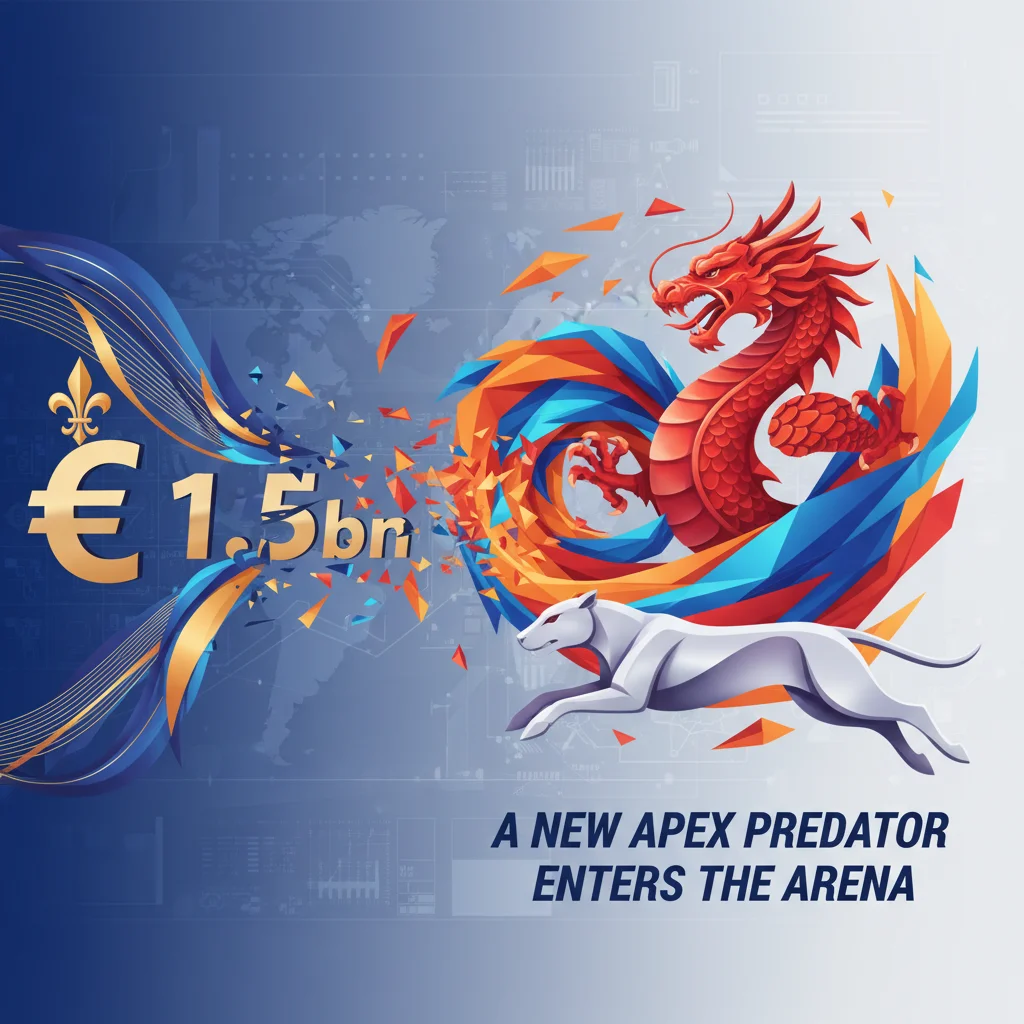
The €1.5bn Sportswear Shake-Up: Why a French Luxury Dynasty’s Exit and a Chinese Giant’s Entry Changes Everything for Puma
A New Apex Predator Enters the Arena
In the high-stakes world of global finance and corporate strategy, few moves resonate as loudly as a multi-billion-dollar stake changing hands. Recently, the financial world watched intently as Artémis, the investment arm of the billionaire Pinault family, announced its intention to offload a staggering €1.5 billion stake in Puma. The buyer? China’s sportswear behemoth, Anta Sports. This isn’t just a simple transaction; it’s a tectonic shift in the sportswear industry, a strategic pivot for a luxury empire, and a bold declaration of global ambition from one of Asia’s most powerful players. The sale of the 29% share signals the end of one era for the German sportswear brand and the dawn of a new, uncertain, yet potentially explosive one.
This deal is a masterclass in modern corporate maneuvering, touching upon every facet of the global economy, from international investing and stock market dynamics to the intricate strategies that define today’s business landscape. For investors, finance professionals, and business leaders, understanding the “why” behind this move is crucial to anticipating the future of not just sportswear, but global consumer markets as a whole.
The Strategic Chessboard: Deconstructing the Motives
To fully grasp the magnitude of this deal, one must look at the individual motivations of the three key players: the seller (Artémis/Kering), the company in play (Puma), and the buyer (Anta Sports). Each is making a calculated move on a global chessboard, with long-term dominance as the ultimate prize.
Artémis and Kering: The Pivot to Pure Luxury
The Pinault family, through their holding companies Artémis and Kering, are titans of the luxury world. Kering’s portfolio includes iconic brands like Gucci, Saint Laurent, and Balenciaga. For years, Puma was an outlier in this collection of high-fashion houses. While Kering had already spun off most of its Puma shares to its own shareholders in 2018, Artémis retained a significant 29% stake, acting as a strategic anchor. The decision to now offload this stake is the final, decisive step in Kering’s long-term strategy: to become a pure-play luxury group.
Luxury goods operate on a different economic model than sportswear. They command higher margins, are less susceptible to certain economic downturns, and rely on a brand narrative of exclusivity and heritage. By divesting from Puma, Kering frees up capital and, more importantly, management focus to double down on its core high-end business. This move streamlines their portfolio and sends a clear signal to the stock market about their future direction. It’s a classic case of strategic portfolio optimization, pruning a healthy but non-core asset to better cultivate the primary garden. Beyond Borders: How Tata's Defence Ambitions are Reshaping India's Role on the World Stage
Puma: In Search of a New Growth Catalyst
Puma has long been the “challenger brand,” a formidable competitor forever nipping at the heels of the Nike-Adidas duopoly. Under CEO Bjørn Gulden’s leadership, the company has undergone a remarkable turnaround, successfully blending performance wear with fashion-forward “athleisure” appeal through high-profile collaborations with celebrities like Rihanna and Jay-Z. However, to truly close the gap, Puma needs to unlock new avenues of growth, particularly in the colossal Asian market.
The exit of a long-term investor like Artémis could have created instability. However, the entry of Anta Sports as a potential major shareholder presents a tantalizing opportunity. While the Financial Times article notes the stake is being offered to institutional investors with Anta as a likely cornerstone, Anta’s involvement provides a strategic gateway into China, the world’s most critical consumer growth engine. This isn’t just about capital; it’s about market access, local expertise, and supply chain synergies that could supercharge Puma’s ambitions in the East. For Puma, this transition is a calculated risk to swap a passive, albeit powerful, European shareholder for a dynamic, strategically-aligned Asian partner.
Anta Sports: The Dragon’s Global Ambition
Anta Sports is a name that every investor and business leader needs to know. While less of a household name in the West, Anta is a dominant force in China. Through a savvy combination of organic growth and strategic acquisitions, it has built an empire. The company already owns the rights to Fila in China, Hong Kong, and Macao, and in 2019 led a consortium to acquire Finland’s Amer Sports, the owner of iconic brands like Arc’teryx, Salomon, and Wilson, for a staggering $5.2 billion.
Acquiring a significant stake in Puma is a logical, and brilliant, next step in Anta’s global conquest. It offers several key advantages:
- Market Penetration: It gives Anta an immediate and significant foothold in the European and American markets where Puma has a strong presence.
- Brand Prestige: Associating with a globally recognized and respected brand like Puma elevates Anta’s international profile.
- Knowledge Transfer: It provides a front-row seat to learn how a legacy Western brand operates in terms of marketing, R&D, and global distribution.
- Portfolio Diversification: It adds a major global “fast-fashion” sportswear brand to its portfolio, complementing its high-performance outdoor brands from Amer Sports.
This move is a clear example of the shifting tides in the global economy, where capital and ambition from emerging markets are actively reshaping established Western industries.
The Global Sportswear Market: A Numbers Game
To put this power play into perspective, it’s helpful to see how these giants stack up against each other. The global sportswear market is a battlefield dominated by a few key players, with billions of dollars in revenue and market capitalization on the line. The following table provides a snapshot of the competitive landscape, illustrating why this deal is so significant for the industry’s pecking order.
Note: Figures are approximate and subject to market fluctuations.
| Company | Approx. Annual Revenue (USD) | Approx. Market Cap (USD) | Key Market Strength |
|---|---|---|---|
| Nike Inc. | $51.5 Billion (source) | $150 Billion | Global Dominance, Brand Recognition |
| Adidas AG | $24.0 Billion | $40 Billion | Strong in Europe & Soccer, Lifestyle Appeal |
| Puma SE | $9.1 Billion | $9 Billion | Fashion/Lifestyle Crossovers, Strong Turnaround |
| Anta Sports | $8.7 Billion | $25 Billion | Dominance in China, Aggressive M&A |
As the data shows, while Puma’s revenue is competitive, Anta’s market capitalization is significantly higher, reflecting the stock market’s confidence in its growth trajectory, particularly within the lucrative Chinese market. An alliance between Puma and Anta could create a new powerhouse with the potential to more seriously challenge the long-standing dominance of Nike and Adidas. The Gen Z Investor: Misunderstood Gambler or Disciplined Strategist?
Implications for the Broader Financial and Economic Landscape
This deal reverberates far beyond the stadium or the runway. It offers profound insights into several key trends shaping modern finance and economics.
- The Rise of Strategic M&A: We are seeing a move away from purely financial acquisitions towards deals with deep strategic logic. Anta isn’t just buying shares; it’s buying market access, expertise, and brand synergy. This is a crucial lesson for anyone involved in corporate trading and investment.
- The Power of Asian Capital: This transaction underscores the increasing influence of Asian investors and corporations on the global stage. The sophisticated banking and advisory services that support these cross-border deals are becoming more critical than ever.
- The Future of Financial Technology: While not a direct fintech play, a deal of this scale relies heavily on advanced financial technology for execution. From secure communication platforms to complex cross-currency settlement systems, fintech is the invisible backbone that makes modern global finance possible. Looking ahead, one could even envision a future where blockchain technology provides unprecedented transparency and security for tracking assets and supply chains in such globally integrated companies.
For investors, the key takeaway is the need to look beyond quarterly earnings and understand the long-term strategic narratives driving companies. For business leaders, the lesson is the importance of a global mindset and the recognition that your next major competitor, or partner, could come from anywhere on the map. India's Tax Earthquake: Supreme Court Ruling Shakes Foreign Investment Landscape
Conclusion: A New Race Begins
The Pinault family’s divestment from Puma and Anta Sports’ strategic entry is a landmark event. It is the culmination of Kering’s laser-focused luxury strategy, a pivotal moment in Puma’s quest for growth, and a powerful statement of intent from one of China’s most ambitious companies. It’s a deal that perfectly encapsulates the dynamic, interconnected, and rapidly evolving nature of the 21st-century global economy.
As the dust settles, a new competitive landscape emerges. The sportswear industry’s “Big Two” now have a formidable new force to contend with—a German design and marketing powerhouse potentially backed by a Chinese market and manufacturing juggernaut. The starting gun has been fired on a new race, and for those watching the worlds of investing, finance, and global business, the outcome will be fascinating to behold.

Related Posts

Beyond the Leaping Cat: Why Anta’s €1.5B Puma Play Signals a New Era in Global Sportswear

The Hidden Liability: How Airline Compensation Practices Impact Investor Confidence and the Economy