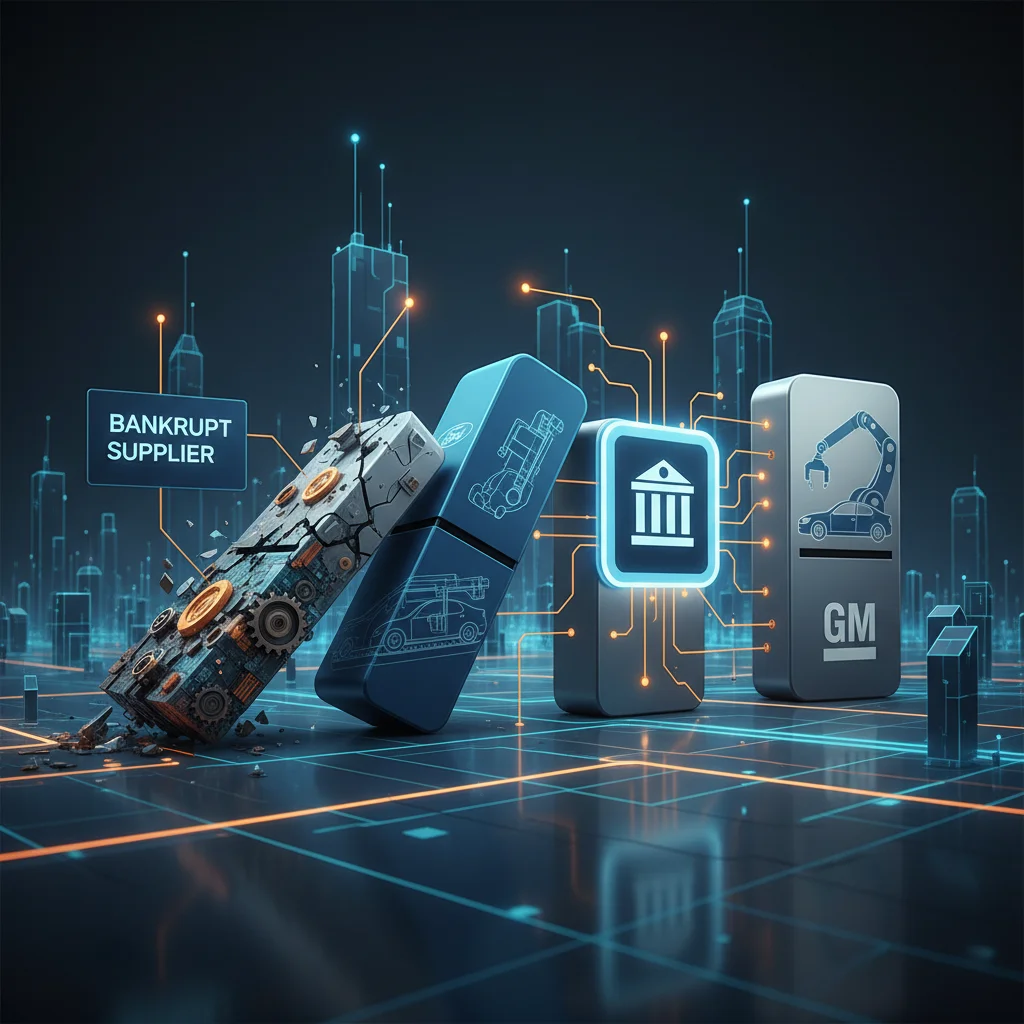
The Domino Effect: Why Ford and GM are Bailing Out a Bankrupt Supplier
In the intricate ballet of modern manufacturing, every partner’s step matters. When one falters, the entire performance is at risk. This is the drama currently unfolding in the American automotive sector, where industry titans Ford and General Motors are stepping in to rescue a critical, yet bankrupt, parts supplier. The two automotive giants are deep in negotiations to provide rescue financing for First Brands Group, a move that highlights the fragile interdependence of the global supply chain and offers a masterclass in strategic corporate finance.
This isn’t just a simple loan; it’s a calculated maneuver to prevent a catastrophic disruption that could halt production lines, delay vehicle deliveries, and send shockwaves through the economy. As reported by the Financial Times, these discussions are centered on providing “much-needed cash” to keep First Brands operational. For investors, business leaders, and anyone interested in the mechanics of our modern economy, this situation is a crucial case study in risk management, corporate strategy, and the unseen forces that keep our industries moving.
The Anatomy of a Supply Chain Crisis
To understand the gravity of the situation, one must first appreciate the role of a company like First Brands. It’s not a household name like Ford or GM, but it’s an essential cog in the vast machine that produces our cars. First Brands manufactures a portfolio of critical aftermarket parts, including filters, brakes, and wipers under well-known labels. While many of its products are for the aftermarket, its operational health is indicative of the immense pressure on the entire parts manufacturing ecosystem—an ecosystem that the original equipment manufacturers (OEMs) like Ford and GM depend on.
When a supplier of this scale files for Chapter 11 bankruptcy, the ripple effects are immediate and severe. The primary threat is a disruption in the supply of parts. A modern vehicle contains over 30,000 individual components. The absence of just one can bring a multi-billion dollar assembly plant to a grinding halt. This is the nightmare scenario for any OEM, leading to:
- Production Delays: Lost production days can never be fully recovered and result in millions of dollars in lost revenue.
- Increased Costs: Sourcing parts from alternative, often more expensive, suppliers at short notice can destroy profit margins.
- Damaged Reputation: Inability to deliver vehicles to dealerships and customers erodes brand trust and loyalty.
The negotiations underscore a fundamental truth of modern economics: in a just-in-time manufacturing world, your supplier’s financial health is, in many ways, your own.
The Price of Prestige: How Leadership Ego Impacts Global Markets and Your Portfolio
Decoding the Rescue: A Look at DIP Financing
The “rescue financing” being discussed is a specific tool used in corporate restructuring known as Debtor-in-Possession (DIP) financing. When a company files for Chapter 11 bankruptcy, it seeks protection from creditors while it attempts to reorganize. To continue operating during this period—paying employees, buying raw materials, and keeping the lights on—it needs cash. This is where DIP financing comes in.
DIP loans are unique and powerful instruments in the world of banking and corporate finance. Here’s why:
- Super-Priority Status: DIP lenders are given priority over almost all other creditors, including pre-bankruptcy lenders and bondholders. This means they are first in line to be paid back, significantly reducing their risk.
- Control and Influence: By providing the critical funding, the DIP lender (in this case, potentially Ford and GM) gains significant influence over the bankruptcy proceedings and the future direction of the reorganized company.
- Attractive Returns: Due to the inherent risk and urgency, DIP loans typically carry higher interest rates and fees, making them a potentially lucrative form of investing for the lenders.
For Ford and GM, providing this financing is a multi-faceted strategic decision. On one hand, it’s a defensive move to stabilize a critical supplier and protect their own production schedules. On the other, it’s an offensive play. By becoming the primary lender, they can ensure the company is restructured in a way that benefits them, potentially securing favorable long-term supply contracts and preventing a competitor or a private equity firm from seizing control of a vital asset. According to the initial reports, the talks are a clear signal of how seriously the automakers are taking this potential disruption (source).
Market Implications and Stakeholder Analysis
This development has significant implications for the stock market and investors monitoring the automotive sector. The news can be interpreted in several ways. For shareholders of Ford (F) and General Motors (GM), it can be seen as a prudent, proactive measure to de-risk their operations. While it involves a financial outlay, the cost is likely a fraction of what would be lost in a prolonged production shutdown. For the broader auto parts sector, it sends a mixed signal: while it highlights the intense financial pressure they are under, it also shows that systemically important suppliers may have a powerful backstop.
Analyzing the potential outcomes for each party involved reveals the complex dynamics at play in this high-stakes negotiation.
Here is a breakdown of the risks and rewards for the key stakeholders in this potential DIP financing deal:
| Stakeholder | Potential Risks | Potential Rewards |
|---|---|---|
| Ford & General Motors | Financial loss if First Brands fails to reorganize; setting a precedent for bailing out other suppliers. | Supply chain stability; control over a key supplier; favorable future contracts; potential profit from the high-interest loan. |
| First Brands Group | Loss of some autonomy; strict oversight from lenders; potential for liquidation if reorganization fails. | Immediate cash infusion to continue operations; a chance to successfully restructure and emerge from bankruptcy. |
| Other Creditors | Their claims are subordinated to the new DIP lenders, reducing their chances of a full recovery. | A successful reorganization is better than liquidation, which could increase their ultimate recovery amount. |
| Investors & Traders | Increased volatility in auto sector stocks; risk of a wider supply chain contagion if the rescue fails. | Clarity on how industry leaders are managing systemic risk; potential trading opportunities based on the outcome. |
This situation also touches upon the evolution of financial technology. While this specific deal relies on traditional corporate finance structures, the underlying management of supply chain risk is becoming increasingly tech-driven. Companies are using advanced analytics and AI to model supply chain vulnerabilities. In the future, technologies like blockchain could offer transparent, immutable ledgers for tracking parts from source to factory, providing earlier warnings of financial or operational distress within the supplier network.
The Nobel Prize and the Stock Market: Why a Leader's Ego is a New Economic Indicator
A Lesson from History and a Glimpse of the Future
This private-sector intervention draws interesting parallels to the 2008-2009 financial crisis, when the U.S. government bailed out GM and Chrysler. The key difference here is that the rescue is being initiated by industry peers, not taxpayers. This reflects a strategic understanding that in a deeply interconnected system, sometimes you have to save your partners to save yourself. The automakers are essentially acting as their own lenders of last resort, a role typically reserved for central banks in the broader economy.
The fact that two fierce rivals like Ford and GM are collaborating on this financing package speaks volumes about the severity of the threat (source). It is a rare moment of cooperation born of mutual necessity. Looking ahead, this event may trigger a strategic rethink across the industry:
- Reshoring and Diversification: Companies may accelerate efforts to bring manufacturing closer to home and diversify their supplier base to reduce reliance on any single entity.
- Deeper Financial Vetting: OEMs will likely implement more rigorous financial health checks on their critical suppliers, integrating financial risk into their procurement and supply chain management processes.
- Strategic M&A: We may see more vertical integration, where automakers acquire critical suppliers to gain full control over their supply chain.
Ultimately, the negotiations between Ford, GM, and First Brands are more than a line item in a financial report. They represent a critical stress test for the American automotive industry’s resilience. The outcome will not only determine the fate of one company but will also set a precedent for how the entire sector confronts the inevitable disruptions of a volatile global economy. For those engaged in investing, trading, or simply leading a business, the lesson is clear: in today’s world, your counterparty’s risk is your own, and managing it requires creativity, collaboration, and a deep understanding of corporate finance.

Related Posts
The €1.5bn Sportswear Shake-Up: Why a French Luxury Dynasty’s Exit and a Chinese Giant’s Entry Changes Everything for Puma

Beyond the Leaping Cat: Why Anta’s €1.5B Puma Play Signals a New Era in Global Sportswear