Beyond the Headline: Why Trump’s 25% Tariff on South Korea is a Major Signal for the Global Economy
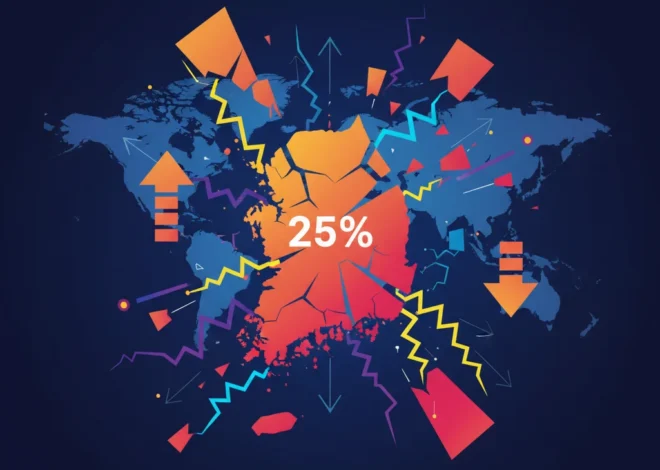
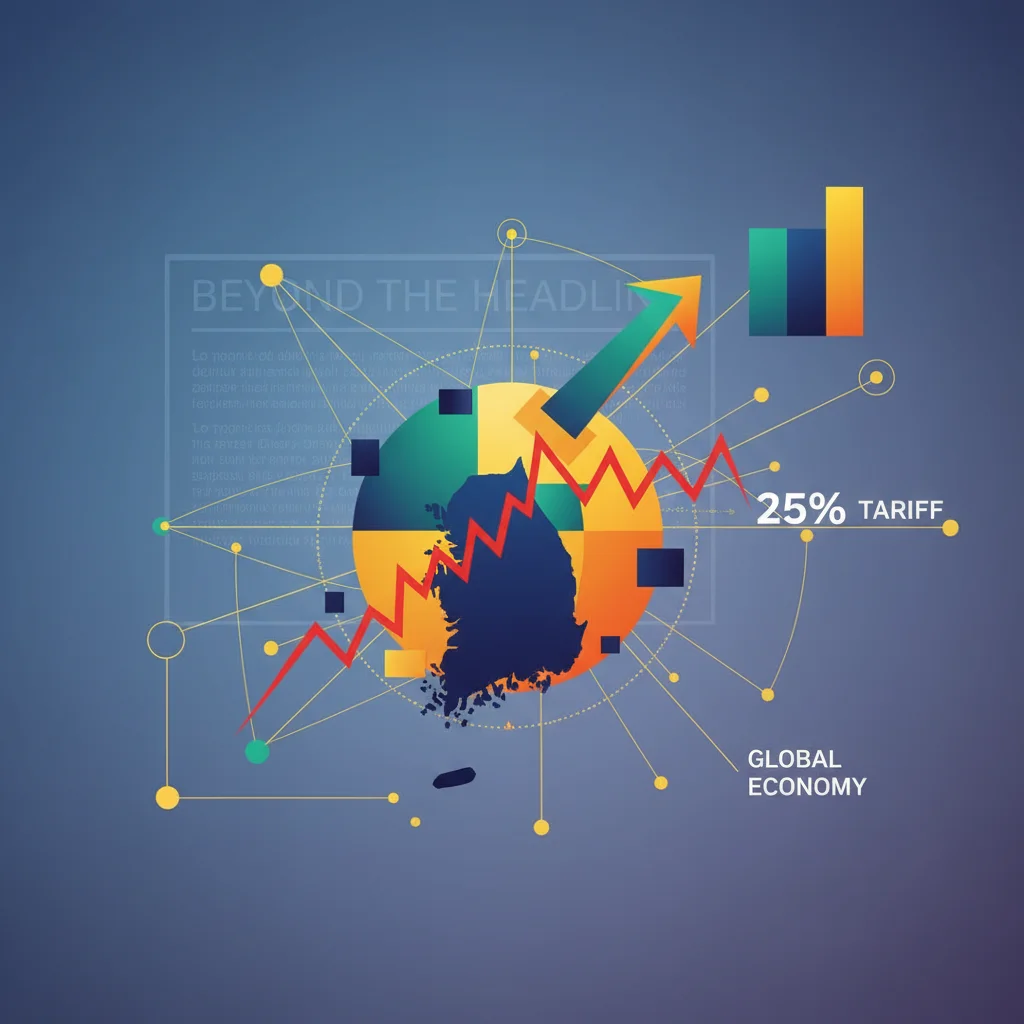
In a move that sent ripples through the international finance community, the White House has announced a significant escalation in trade tensions, imposing a 25% tariff on a range of imports from South Korea. The official justification, as cited in a brief statement, points to frustration over the delayed approval of a revised trade deal by lawmakers in Seoul. However, to see this as a simple political maneuver is to miss the forest for the trees. This decision is a critical data point for investors, business leaders, and anyone tracking the health of the global economy, signaling a continued commitment to protectionist policies that have profound implications for the stock market, supply chains, and international relations.
The announcement, first reported by the BBC, may seem sudden, but it’s the latest chapter in a long and complex story of trade negotiations between the two allied nations. This tariff isn’t just a tax; it’s a strategic move with consequences that will unfold across boardrooms, factory floors, and trading desks worldwide. Understanding its context, from the history of the U.S.-Korea Free Trade Agreement (KORUS FTA) to the potential economic fallout, is essential for navigating the volatile landscape of modern global commerce.
The Stalled Deal: A Look Inside the KORUS FTA Impasse
To grasp the significance of this new tariff, one must first understand the foundation of the U.S.-South Korea trade relationship: the KORUS FTA. Originally implemented in 2012, the agreement was a landmark deal designed to slash tariffs and other barriers to trade between the two economic powerhouses. However, it was a frequent target of criticism from then-President Trump, who renegotiated the pact, with a revised agreement being reached in principle in 2018.
The core of the current friction lies in the fact that this revised deal, while agreed upon by negotiators, has yet to be formally ratified by South Korea’s National Assembly. This delay is not merely bureaucratic red tape. It reflects deep-seated political divisions within South Korea, concerns from agricultural and manufacturing sectors about the new terms, and the complex legislative process required for approval. The U.S. administration’s patience has clearly worn thin, leading to the use of tariffs as a tool of leverage—a tactic that has become a hallmark of its approach to international economics.
The U.S. is South Korea’s second-largest trading partner, and the relationship is deeply intertwined. According to the Office of the United States Trade Representative, total two-way trade in goods and services between the nations exceeded $168 billion in 2019. This tariff action throws a wrench into a massive and intricate economic engine.
Analyzing the Economic Shockwave: From Seoul to Wall Street
A 25% tariff is a significant economic barrier. Its effects are multifaceted, creating a ripple effect that touches consumers, corporations, and the broader financial markets. Let’s break down the key areas of impact.
First, key South Korean industries will face immediate pressure. Giants in the automotive and electronics sectors, such as Hyundai, Kia, Samsung, and LG, are particularly vulnerable. These companies not only export finished goods to the U.S. but are also integral parts of a global supply chain. A tariff on their products or components can make them less competitive in the U.S. market, potentially leading to reduced sales, lower profits, and a need to rethink production and pricing strategies.
Below is a simplified look at the top U.S. imports from South Korea that could be impacted, based on recent trade data.
| Category | Key Products | Potential Impact of a 25% Tariff |
|---|---|---|
| Vehicles & Auto Parts | Passenger cars, automotive components, tires | Increased sticker price for U.S. consumers, reduced competitiveness against other brands, supply chain disruption for U.S. assembly plants. |
| Electronics & Machinery | Semiconductors, mobile phones, home appliances | Higher costs for U.S. tech companies using Korean components, increased prices for consumer electronics, potential shift in sourcing. |
| Iron & Steel | Steel products used in construction and manufacturing | Higher input costs for U.S. manufacturers, potentially leading to inflation in industrial and construction sectors. |
| Petroleum Products | Refined oil and related products | Impacts on the energy sector’s complex global supply chain and pricing structures. |
For the U.S. economy, the effects are a double-edged sword. While the tariff aims to protect domestic industries, it also raises costs for American businesses and consumers. U.S. manufacturers that rely on South Korean components will see their input costs rise, which could either squeeze their profit margins or be passed on to consumers in the form of higher prices, contributing to inflationary pressures. This is a classic dilemma in trade economics that often complicates protectionist policies.
The Role of Financial Technology in Navigating Trade Volatility
In an era of unpredictable trade policy, technology becomes a crucial tool for mitigating risk. The world of finance and logistics is increasingly turning to fintech solutions to build resilience. For instance, sophisticated financial technology platforms now help companies manage currency fluctuations and hedge against the risks associated with tariffs. Advanced supply chain finance solutions can provide liquidity to suppliers who are squeezed by new costs and payment delays.
Furthermore, technologies like blockchain are gaining traction as a means to create more transparent and efficient supply chains. A distributed ledger can provide an immutable record of a product’s journey from factory to consumer, which is invaluable when navigating complex customs and tariff regulations. While not a mainstream solution yet, the current environment of trade uncertainty is accelerating investment and innovation in this space. For those involved in global banking and trade finance, adopting these technologies is becoming a competitive necessity rather than a luxury.
The Credit Score Paradox: Why Financial Health Makes You a Target for More Debt
A New Playbook for Investors and Business Leaders
So, what does this mean for your investment portfolio or business strategy? The imposition of tariffs on a major trading partner like South Korea underscores the need for a proactive approach to geopolitical risk.
For Investors:
- Sector Analysis: Re-evaluate your exposure to sectors heavily reliant on U.S.-South Korea trade. This includes U.S. automakers, consumer electronics retailers, and industrial manufacturers that may face margin compression.
- Geographic Diversification: This event highlights the risk of concentrating investments in regions susceptible to trade disputes. A globally diversified portfolio is more crucial than ever.
- Focus on Resilience: Look for companies with diversified supply chains and low dependence on single-country sourcing. These businesses are better positioned to weather trade-related shocks. As one analysis from the Peterson Institute for International Economics shows, trade conflicts can create clear winners and losers in the stock market.
For Business Leaders:
- Supply Chain Audit: Conduct a thorough review of your supply chain to identify vulnerabilities related to South Korean imports or components.
- Scenario Planning: Model the financial impact of a sustained 25% tariff on your costs and pricing. Develop contingency plans, including identifying alternative suppliers or exploring domestic sourcing options.
- Technology Adoption: Invest in fintech and supply chain management tools that provide greater visibility and control, helping you react more nimbly to policy changes.
The Midas Touch of Uncertainty: How Geopolitical Threats Forge Gold and Silver Highs
Conclusion: A Barometer of Global Tensions
The decision to raise tariffs on South Korean imports is far more than a footnote in trade policy. It is a powerful barometer of the ongoing shift away from multilateral free trade towards a more transactional, and often confrontational, approach to global economics. While the immediate goal may be to force the ratification of the KORUS FTA, the long-term consequences could include strained diplomatic relations, reconfigured global supply chains, and persistent volatility for the financial markets.
For everyone from the professional investor managing a multi-billion dollar fund to the small business owner importing components, this event is a stark reminder that the rules of global trade are in flux. Success in this new era requires not just economic acumen, but a deep understanding of the geopolitical forces shaping our world. Paying attention to these signals is no longer optional—it’s essential for survival and growth.