Ryanair’s Rising Fares: Decoding the Economic Turbulence for Investors and Travelers
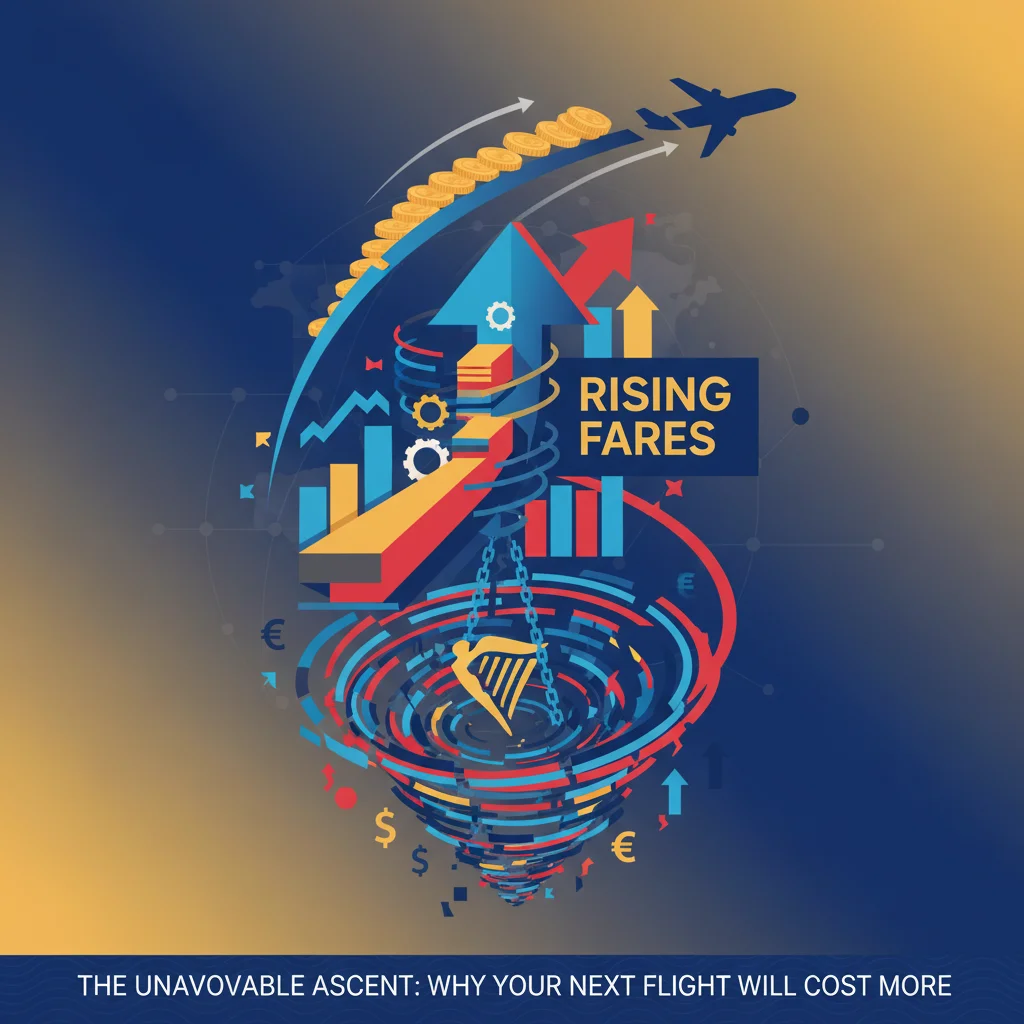
The Unavoidable Ascent: Why Your Next Flight Will Cost More
For anyone planning a European getaway, the familiar blue and yellow harp of Ryanair has long symbolized accessible, budget-friendly travel. However, the winds are changing in the aviation industry. In a recent announcement that sent ripples through the market, Ryanair, Europe’s largest airline by passenger numbers, has forecasted that its fares could increase by a “high single-digit percent,” potentially up to 9%, over the coming year. This news, delivered directly by the airline, isn’t just a minor price adjustment; it’s a clear signal of the powerful economic crosscurrents shaping the global travel landscape.
While on the surface this seems like bad news for travelers, it presents a fascinating case study for those interested in finance, investing, and the intricate dance of supply and demand. The decision is not being made in a vacuum. It is a direct consequence of soaring passenger demand meeting a bottlenecked aircraft supply chain, a scenario that has profound implications for the airline’s profitability, its stock market valuation, and the broader economy. In this analysis, we will dissect the layers of this announcement, exploring the critical factors driving the price hike and what it means for consumers, investors, and business leaders alike.
Supply Chain Woes and the Boeing Bottleneck
At the heart of Ryanair’s constrained capacity is a well-documented issue with its primary aircraft supplier, Boeing. The airline has been a major customer for the fuel-efficient Boeing 737 MAX aircraft, a cornerstone of its strategy to lower operational costs and expand its fleet. However, production delays at Boeing have significantly slowed the delivery schedule. Ryanair had expected to receive 57 new Boeing 737 MAX 8200 jets by the end of June, but now anticipates receiving only 40. This shortfall has a direct and immediate impact on the airline’s summer schedule, which is the most lucrative period for European carriers.
According to the initial report from the BBC, this delay forces Ryanair to reduce its flight schedule, effectively capping the supply of available seats. This is a classic lesson in micro-economics: when supply is constrained and demand remains robust (or even grows), prices inevitably rise. Each seat becomes more valuable, and the airline must optimize its revenue from a smaller-than-planned fleet. This situation highlights the immense vulnerability of airlines to their manufacturing partners and the far-reaching consequences of industrial production challenges.
For investors, this dependency is a critical risk factor. While Ryanair has a stellar track record of cost control, external factors like the Boeing delays can materially impact growth projections. The airline’s forecast of carrying 205 million passengers this year, an upward revision from 184 million last year, is now tempered by this manufacturing reality. The ability to meet that target, and the profitability associated with it, hinges on extracting more revenue per passenger—hence the fare increase.
China's Economic Paradox: Decoding the Boom, the Doubts, and the Global Impact
Anatomy of an Airline’s Profitability
To fully grasp the significance of a fare hike, it’s essential to understand the key performance indicators (KPIs) that define success in the airline industry. This isn’t just about ticket prices; it’s a complex equation of efficiency, volume, and ancillary revenue. The fare increase is a strategic lever being pulled to balance this equation in light of new constraints.
Below is a simplified table illustrating the key metrics that Ryanair’s management and savvy investors monitor closely. The 2024/25 figures are projections influenced by the recent announcements.
| Metric | Description | Recent Performance (FY 2023/24) | Projected Impact (FY 2024/25) |
|---|---|---|---|
| Passenger Numbers | Total number of passengers carried in a period. | 184 million (source) | Targeting 205 million (contingent on deliveries) |
| Load Factor | The percentage of available seats filled with paying customers. | Consistently high, often above 92% | Expected to remain very high due to constrained capacity. |
| Average Fare | The average price paid per one-way ticket, excluding ancillary fees. | Approx. €44-€48 | Projected to increase by up to 9%. |
| Ancillary Revenue | Revenue from non-ticket sources (e.g., baggage, seat selection, onboard sales). | A significant portion of total revenue, often over 30%. | Likely to remain a key focus for profit maximization. |
This data illustrates that while the headline passenger growth is impressive, the airline’s ability to maintain its profit margins will depend heavily on increasing the average fare and maintaining its robust ancillary revenue streams. The fare hike is a direct strategy to protect the revenue-per-passenger metric in a year where fleet expansion has been stymied. This is a critical point for anyone involved in trading airline stocks; understanding the operational drivers behind financial results is paramount.
Broader Implications for the Financial Ecosystem
The story of Ryanair’s fares extends far beyond the departure gate. It touches upon inflation, consumer behavior, and sophisticated financial technology that underpins the modern economy.
From a macroeconomic perspective, rising air travel costs contribute to service-sector inflation. Central banking institutions, like the ECB and the Federal Reserve, monitor these trends closely. Persistent inflation in services can influence monetary policy, potentially leading to higher interest rates for longer, which in turn affects everything from mortgages to business loans. A 9% jump in fares from a market leader like Ryanair is not an isolated event; it’s a data point reflecting broader inflationary pressures.
Furthermore, the airline industry is a massive consumer of fintech. Dynamic pricing algorithms, which adjust fares in real-time based on demand, competitor pricing, and historical data, are a prime example of financial technology at work. These systems will be working overtime to optimize revenue for every single seat. Behind the scenes, airlines use sophisticated financial instruments for fuel hedging—a form of trading to lock in fuel prices and protect against market volatility. While more speculative, the conversation around efficiency and security in the industry sometimes touches on emerging technologies like blockchain for ticketing and loyalty programs, aiming to reduce fraud and streamline operations, though widespread adoption remains a distant prospect.
The Midas Touch of Uncertainty: How Geopolitical Threats Forge Gold and Silver Highs
Actionable Insights for Different Audiences
This development offers different takeaways depending on your perspective. The key is to look beyond the headline and understand the underlying dynamics.
- For the Traveler: The era of ultra-low-cost fares may be pausing. The primary advice is to book travel, especially for peak seasons, as far in advance as possible. Be prepared for higher base fares and continue to be mindful of ancillary costs, which are unlikely to decrease. Flexibility with dates and destinations will remain the best tool for finding deals.
- For the Investor: This is a signal of pricing power. An airline’s ability to raise fares without a significant drop in demand (i.e., high price inelasticity) is a bullish sign for its financial health. When analyzing an airline stock, look beyond passenger numbers. Scrutinize fleet management, exposure to supply chain risks (like the Boeing issue), fuel hedging strategies, and debt levels. The current situation may favor established carriers with strong balance sheets like Ryanair, which can weather these operational storms. A deeper dive into IAG, Lufthansa Group, and EasyJet’s recent statements could provide a valuable comparative analysis (source).
- For the Business Leader: Ryanair’s situation is a powerful reminder of the critical importance of supply chain resilience. Single-sourcing key components or equipment, whether it’s an aircraft or a microchip, creates significant vulnerability. This event should prompt leaders in all industries to re-evaluate their supply chains, diversify their supplier base where possible, and build contingency plans for unexpected disruptions.
The Credit Score Paradox: Why Financial Health Makes You a Target for More Debt
Conclusion: Navigating the New Altitude
Ryanair’s decision to increase fares is far more than a simple price adjustment. It is a calculated response to a complex interplay of booming consumer demand, significant supply chain failures, and the relentless pursuit of profitability. It serves as a barometer for the health of the consumer, the fragility of global manufacturing, and the pricing power of market leaders.
For those engaged in the world of finance and investing, it offers a live-action lesson in corporate strategy and risk management. For the average traveler, it signals a new reality where the cost of exploring the world is on an upward trajectory. As the summer travel season approaches, all eyes will be on the skies—not just to watch the planes, but to see how these powerful economic forces play out on balance sheets and booking confirmations around the globe.

Related Posts

Bitcoin’s Bull Run on Pause? Why Macroeconomics Is Holding the Leash

The £300k Catalyst: How Strategic Philanthropy is Reshaping Finance, Technology, and the Modern Economy