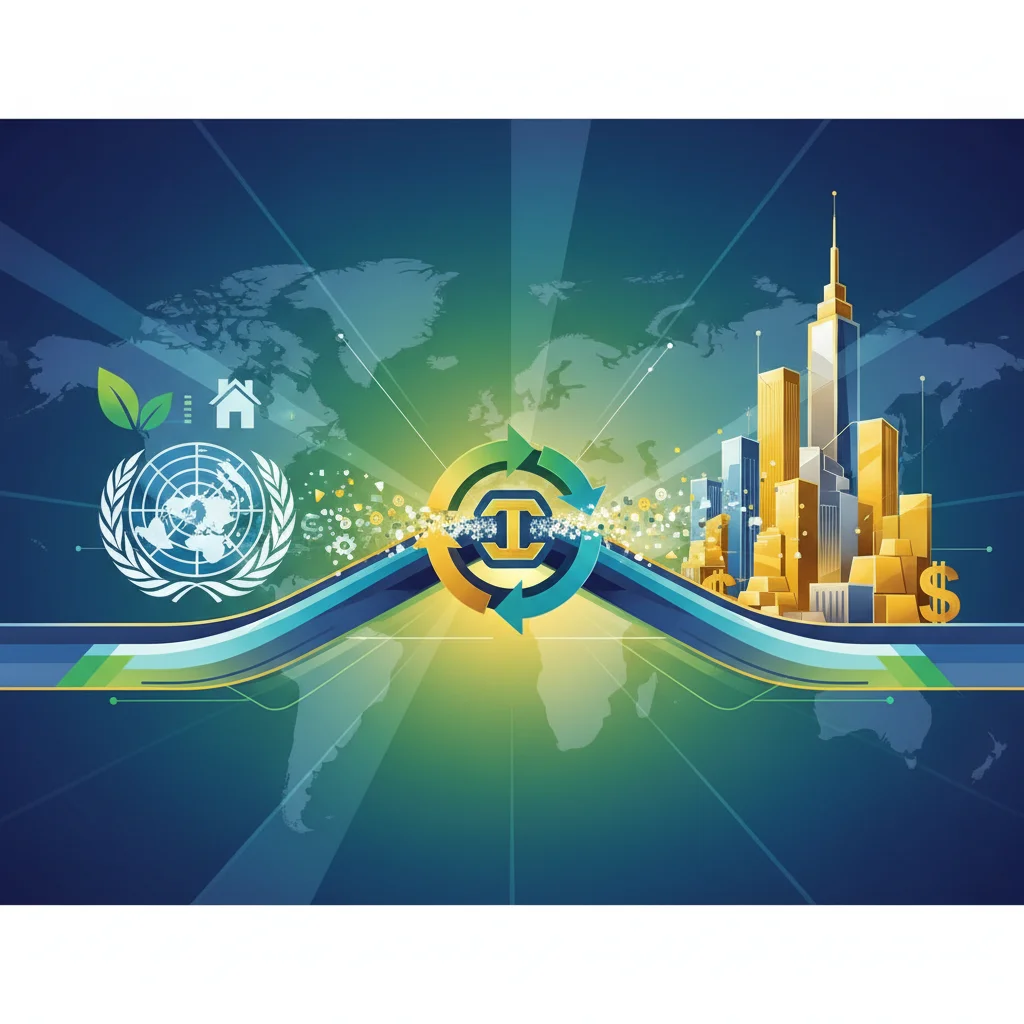
The Trillion-Dollar Pivot: Why the UN Is Courting Wall Street to Fund Global Development
A Paradigm Shift in Global Economics
For decades, the blueprint for global development was clear: governments of developed nations, through aid agencies and multilateral institutions like the United Nations, would provide the primary funding for economic and welfare projects in the developing world. This public-sector-led model, while achieving significant successes, is now facing an unprecedented challenge. A seismic shift is underway, driven by a stark reality: the money is running out. Western governments, most notably the United States, are tightening their belts and scaling back on international development support, as reported by the Financial Times. This has left a gaping hole in the budget for the world’s most ambitious agenda—the UN’s Sustainable Development Goals (SDGs).
The SDGs represent a universal call to action to end poverty, protect the planet, and ensure that all people enjoy peace and prosperity by 2030. The price tag for this vision is staggering, with an estimated annual funding gap of $2.5 to $4.5 trillion. With public coffers dwindling, the UN and other development bodies are turning to an unlikely-yet-powerful new partner: the global private sector. This isn’t just a request for corporate charity; it’s a fundamental re-engineering of development finance, framing global challenges as multi-trillion-dollar investment opportunities for businesses, banks, and individual investors. This pivot marks a critical juncture in modern economics, blending the lines between profit and purpose and challenging our traditional understanding of the global economy and investing.
The Anatomy of the Funding Crisis
The retreat of government funding isn’t happening in a vacuum. It’s a symptom of broader economic and political trends reshaping the post-pandemic world. High inflation, soaring national debts, and a renewed focus on domestic issues have led many Western nations to re-evaluate their international commitments. The political will to allocate billions to foreign aid is waning when citizens at home are facing a cost-of-living crisis. This pullback creates a direct and immediate threat to progress on everything from climate action and public health to education and infrastructure in developing countries (source).
This new reality forces a difficult question: if governments can no longer foot the bill, who will? The answer, increasingly, is the vast reservoir of private capital circulating in the global financial system. We’re talking about assets managed by pension funds, insurance companies, sovereign wealth funds, and investment banks—a pool of capital estimated to be over $300 trillion. If even a tiny fraction of this could be mobilized, it would dwarf all government aid combined. The challenge, and the focus of this new era, is to create the mechanisms, incentives, and safeguards to channel this private finance towards sustainable development.
Crypto's High-Stakes Gamble: Why the Industry Is Suddenly Fighting the Regulation It Begged For
Blended Finance: The Bridge Between Profit and Planet
To entice private investors who are naturally risk-averse, especially when it comes to emerging markets, a new model has gained prominence: blended finance. This innovative approach uses public or philanthropic funds strategically to “de-risk” investments for private capital. Essentially, development institutions like the World Bank or UN agencies act as a financial cushion. They might offer a first-loss guarantee, provide low-interest loans to a project, or take an equity stake that absorbs initial losses, making the overall investment far more attractive to a commercial bank or investment fund.
This model fundamentally changes the dynamic of development projects. Below is a comparison of the traditional aid model versus the emerging blended finance approach.
| Feature | Traditional Aid Model | Blended Finance Model |
|---|---|---|
| Primary Funder | Governments & Philanthropies | Private Sector (Pension Funds, Banks, etc.) |
| Source of Capital | Taxpayer money, donations (grants) | Investment capital (equity, debt) |
| Primary Goal | Humanitarian/Social outcome | Financial Return + Measurable Impact (Double/Triple Bottom Line) |
| Role of Public Funds | Directly fund the entire project | Catalyze/de-risk to attract private investment |
| Scale | Limited by public budgets (Billions) | Potentially vast, limited by market appetite (Trillions) |
| Mechanism | Grants, direct aid | Guarantees, structured funds, social impact bonds |
This shift means that conversations about development are no longer confined to the halls of the UN; they are now happening in the boardrooms of the world’s largest financial institutions. The language is changing from aid to investing, from donations to deals.
Beyond Sanctions: A Central Banker's Stark Warning on Preparing Europe's Financial System for War
The Role of Financial Technology in a New Era of Development
This massive undertaking would be nearly impossible without the parallel revolution in financial technology (fintech). Technology is the essential lubricant that can make these complex financial structures work on the ground, ensuring transparency, efficiency, and accountability.
- Fintech and Mobile Banking: In many developing nations, mobile penetration is higher than access to traditional banking. Fintech platforms allow for the direct disbursement of funds—whether micro-loans or payments for services—to individuals and small businesses, bypassing layers of bureaucracy where corruption can occur. This enhances the efficiency of capital and ensures it reaches its intended target.
- Blockchain for Transparency: One of the biggest hurdles for private investors is the lack of transparency in development projects. Blockchain technology offers a potential solution. By creating an immutable, distributed ledger, a blockchain can track every dollar from an investor’s portfolio on a major stock market to the purchase of specific materials for a school or clinic in a remote village. This level of traceability is a game-changer for building investor confidence.
- AI and Data Analytics: Advanced data analytics can help investors better understand and price risk in emerging markets. By analyzing satellite imagery, market data, and social sentiment, AI-powered platforms can provide insights into everything from agricultural yields to political stability, making trading and investing in these markets less of a leap of faith and more of a calculated decision. The UN itself is looking to leverage such technologies to better coordinate and monitor the flow of private capital (source).
For Investors and Business Leaders: The Greatest Commercial Opportunity in History?
While the risks are undeniable—political instability, currency fluctuations, and regulatory hurdles—the narrative is shifting to frame the SDGs as the most significant market opportunity of our time. Solving the world’s biggest problems is, by definition, a growth industry.
Consider the sheer scale of the demand. There is a need for clean energy infrastructure, sustainable agriculture, affordable healthcare solutions, and educational technology for billions of people. For businesses, engaging in these markets isn’t just about corporate social responsibility; it’s about future-proofing their own growth. Companies that build the sustainable infrastructure of tomorrow will secure their supply chains, open up new consumer markets, and attract top talent who want to work for purpose-driven organizations.
For the finance industry, this represents a whole new asset class. We are already seeing the proliferation of green bonds, social impact bonds, and ESG-focused funds. As measurement and reporting standards improve, “impact” will become a quantifiable metric alongside risk and return, fundamentally altering how portfolios are constructed and how the stock market values companies.
Iran's Tense Calm: A Deep Dive into the Economic Fault Lines and Investment Risks
The Path Forward: A Cautious but Necessary Alliance
The pivot towards private finance for global development is born of necessity, but it holds the seed of a more sustainable and scalable model for tackling our shared global challenges. The era of relying solely on the goodwill of governments is over. The new landscape of global economics demands a pragmatic alliance between the public sector’s development expertise and the private sector’s capital and innovation.
This transition will be complex and fraught with challenges. It requires new forms of collaboration, robust regulatory frameworks to prevent exploitation, and a genuine commitment from business leaders to pursue a double bottom line. However, the potential reward is immense: a global economy where investing in a better future for all is also the smartest financial decision. The UN’s call to the business world is not just a plea for help; it’s an invitation to lead and to profit from building a more sustainable and equitable world.

Related Posts
The Eynsham Economy: Why a Children’s Clothes Swap is a Masterclass in Modern Finance
The G20’s Multi-Billion Dollar Blind Spot: How the UK Can Turn a Remittance Headache into a Climate Finance Goldmine
