Prediction Markets: The Future of Forecasting or a Trader’s Wild West?
The Alluring Promise of a Financial Crystal Ball
Imagine a financial market that doesn’t trade stocks or bonds, but the likelihood of future events. Will the Federal Reserve cut interest rates next quarter? Will a specific company’s new product launch be a success? Will a certain bill pass through Congress? This is the tantalizing world of prediction markets, a corner of the fintech universe where the collective wisdom of the crowd is aggregated into real-time, tradable probabilities. For decades, economists and technologists have championed these markets as powerful forecasting tools, capable of outperforming traditional polls and expert panels by providing unfiltered, financially-incentivized insights into the future.
The core principle is elegant: the “wisdom of the crowds.” The theory posits that a diverse group of individuals, each with their own piece of information, will collectively produce a forecast more accurate than any single expert. In the world of economics and finance, where accurate prediction is the holy grail, this concept is revolutionary. It suggests a future where strategic business decisions, investment theses, and even public policy could be guided by the aggregated, real-time intelligence of the masses. However, as these platforms move from academic experiments to mainstream financial technology, a far more complex and perilous picture is emerging. The promise of a perfect forecasting engine is clashing with the messy realities of human behavior, market mechanics, and regulatory oversight.
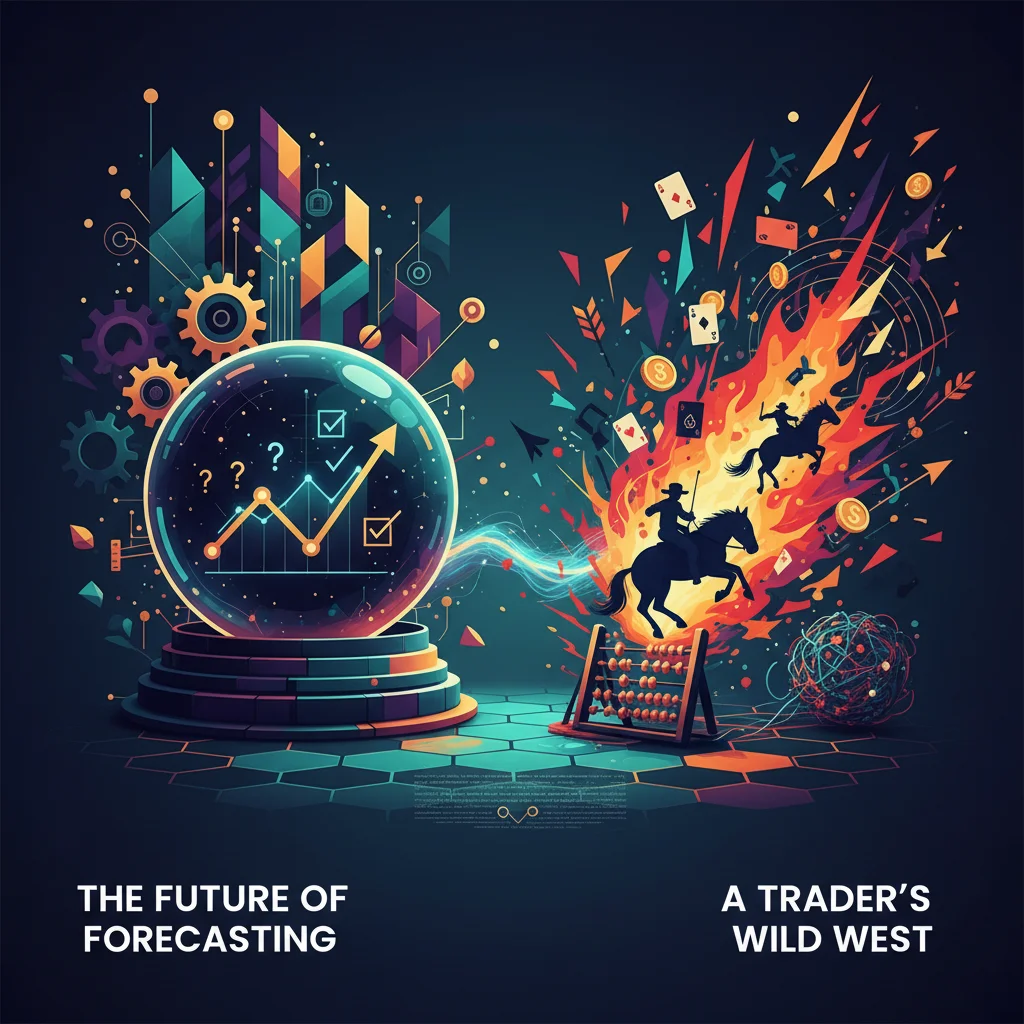
The journey from theoretical tool to tradable asset has been fraught with challenges that threaten to undermine their very purpose. Issues like insider betting, chronically low liquidity, and a gaping chasm in regulation are turning these would-be instruments of enlightenment into what some critics call digital casinos. Are prediction markets the next evolution in investing and data analysis, or are they a financial Wild West, too volatile and vulnerable to be trusted?
The Greenland Gambit: Trump's Tariff Threat Ignites a New Era of Geopolitical Economics
From Theory to Trading: The Mechanics of a Bet on the Future
At its heart, a prediction market operates like a stock market for events. Participants buy and sell “shares” in the outcome of a specific event. For instance, in a market asking, “Will Company X’s quarterly revenue exceed $1 billion?”, you could buy “Yes” shares or “No” shares. If the event occurs, the “Yes” shares pay out at full value (e.g., $1 each), and the “No” shares become worthless. The market price of a “Yes” share at any given moment reflects the crowd’s collective belief in the probability of that outcome. A price of $0.65 implies a 65% perceived chance of the event happening.
Platforms like Kalshi, which is regulated by the Commodity Futures Trading Commission (CFTC) in the US, offer markets on economic and financial events. Meanwhile, decentralized platforms built on blockchain technology, such as Polymarket, operate in a grayer regulatory space, allowing users to bet on a much wider, and often more controversial, range of outcomes. The potential applications are vast, from helping a company gauge the market reception for a new product to providing a real-time indicator of economic trends for policymakers.
The Three Hurdles on the Path to Legitimacy
Despite their theoretical elegance, prediction markets face three fundamental obstacles that complicate their transition into reliable financial tools. These aren’t minor glitches; they are deep-seated problems that challenge the integrity and accuracy of the information these markets produce.
1. The Insider Information Dilemma
In traditional stock markets, trading on material non-public information is illegal. Insider trading laws are designed to ensure a level playing field. Prediction markets, however, operate in a different paradigm. Their very purpose is to uncover and aggregate private information. This creates a perverse incentive: the most profitable trader is the one with inside knowledge. As one market maker noted, “The whole point is that people with information come and trade” (source).
Imagine a market on whether a pharmaceutical company’s drug will receive FDA approval. A lab technician with early knowledge of the trial results could make a fortune. This isn’t just about profiting from a leak; it could incentivize the leak itself. The potential for abuse is enormous, blurring the line between clever forecasting and illicit activity. This fundamental conflict makes regulators deeply uncomfortable and raises serious questions about fairness and market integrity.
2. The Liquidity Trap
For any market to be efficient and its prices trustworthy, it needs sufficient liquidity—a large volume of buyers and sellers. Many prediction markets, especially for niche events, are “thin.” They lack the trading volume to absorb large bets without the price swinging wildly. A single, wealthy participant can potentially manipulate the market, distorting the “wisdom of the crowds” into the “whim of a whale.”
This low liquidity creates a vicious cycle. Serious traders and institutional investors, who could provide the necessary capital, are hesitant to enter a market they perceive as easily manipulated or too small to be worth their time. According to the Financial Times, even on a popular platform, a bet of just a few thousand dollars could significantly move the odds on a major political event (source). Without deep liquidity, the prices on these markets may not reflect collective wisdom, but rather the noise of a few dominant players.
3. The Regulatory Wild West
Perhaps the biggest hurdle is the uncertain regulatory landscape. Are prediction markets a form of commodity trading, a new type of derivative, or simply gambling? Regulators are struggling to keep up with the pace of financial technology. In the U.S., the CFTC has taken a cautious and often restrictive approach. They shut down an ambitious project by PredictIt and have an ongoing legal battle with Polymarket, which operates offshore and uses cryptocurrency to sidestep traditional banking and financial systems.
This regulatory ambiguity creates a fragmented market. Regulated platforms like Kalshi are limited to “yes/no” questions on topics deemed to be of economic value and not against the public interest, which has included rejecting markets on election outcomes. Meanwhile, decentralized platforms thrive in the gray area, offering a wider array of markets but with fewer consumer protections. This division prevents the emergence of a unified, trusted marketplace for information.
Comparing Market Structures
To understand the unique challenges of prediction markets, it’s helpful to compare them to the traditional stock market. While both are systems for price discovery, their underlying assets and regulatory frameworks are fundamentally different.
| Feature | Traditional Stock Market | Prediction Markets |
|---|---|---|
| Underlying Asset | Equity in a company; a claim on future cash flows. | A binary outcome of a future event. |
| Information Source | Public financial statements, economic data, industry analysis. | Dispersed, often private or specialized knowledge. |
| Insider Trading | Strictly illegal and heavily prosecuted. | A legal and ethical gray area; often integral to the market’s function. |
| Primary Regulator (U.S.) | Securities and Exchange Commission (SEC) | Commodity Futures Trading Commission (CFTC), with significant ambiguity. |
| Primary Challenge | Ensuring fair access to information and preventing fraud. | Attracting sufficient liquidity and navigating uncertain regulations. |
The Price of a Turnaround: Inside Rolls-Royce's Multimillion-Pound CEO Pay Plan
The Path Forward: From Casino to Consensus Engine
For prediction markets to realize their potential, they must evolve. The path forward requires a multi-pronged approach involving smarter platform design, clearer regulation, and a focus on use cases where their unique strengths shine.
First, platforms could implement mechanisms to mitigate manipulation. This might include circuit breakers that halt trading during extreme volatility or reputation systems that give more weight to traders with a proven track record of accuracy. For example, some platforms are exploring dynamic liquidity models to create deeper markets. The total value locked in Polymarket’s contracts has reportedly grown to tens of millions, indicating a growing, albeit still niche, interest (source).
Second, a clearer regulatory framework is essential. Rather than an outright ban, regulators could create a sandbox environment for these markets to operate under supervision. This would allow for innovation while providing guardrails against the most egregious forms of abuse. A framework that clearly defines what constitutes an acceptable market—perhaps focusing on events with clear economic utility and broad public interest—could foster legitimacy and attract institutional capital.
Finally, the most promising immediate application may not be in the public sphere, but within corporations themselves. Companies like Google and Ford have used internal prediction markets to forecast project deadlines, sales figures, and strategic risks with remarkable accuracy. In these controlled environments, the risk of insider trading is moot (as all participants are insiders), and the goal is purely to aggregate internal knowledge, not to offer a public investment vehicle.
The Canary in the Coal Mine: What One Pensioner's Story Reveals About Our Economic Future
Conclusion: A Powerful Tool Still in Beta
Prediction markets represent a fascinating frontier in finance and data science. They hold the potential to revolutionize how we forecast the future, offering a dynamic, real-time alternative to static polls and biased experts. The “wisdom of the crowds” is a powerful force, and these markets provide a mechanism to harness it.
However, the road from a promising concept to a trusted financial tool is paved with significant challenges. The issues of insider information, low liquidity, and regulatory uncertainty are not just teething problems; they are fundamental obstacles that must be addressed. Without solutions, these markets risk remaining a niche, speculative arena—more of a digital casino than a sophisticated forecasting engine for the global economy.
For investors, business leaders, and finance professionals, the takeaway is one of cautious optimism. It is crucial to understand the profound limitations of these markets in their current form. But it is equally important to recognize their disruptive potential. The evolution of prediction markets will be a key storyline in the ongoing narrative of fintech innovation, a test case for whether our financial and regulatory systems can adapt to accommodate powerful, new, and unpredictable technologies.

Related Posts
Deepfake Deception: Why Ofcom’s Probe into Elon Musk Scams on X is a Watershed Moment for Finance and Tech

The Cardboard Box Economy: Unpacking Hidden Value in the Foundations of Finance