From Dirge to Dividend: What a 1975 Rock Anthem Teaches Us About Corporate Turnarounds
In the spring of 1975, a song with an irresistibly upbeat tempo, a soaring chorus, and a killer acoustic guitar solo shot to Number 1 on the UK charts. “Make Me Smile (Come Up and See Me)” by Steve Harley & Cockney Rebel became an enduring anthem of defiant joy. Listen to it, and you feel a sense of triumph, a call to a carefree celebration. Yet, beneath this shimmering surface lies a story of betrayal, bitterness, and a forced transformation—a story that offers a profound and unexpectedly relevant lesson for the world of finance, investing, and corporate strategy.
The song, as it turns out, is one of the most commercially successful revenge tracks ever written. It was penned by Steve Harley in the aftermath of a bitter dispute that led to the breakup of his original band. The lyrics are dripping with venom: “You’ve done it all, you’ve broken every code,” he sings, “And pulled the rebel to the floor.” The original version, according to Harley himself, was a “slow, bluesy, dirge-like” piece (source). It was a product with a solid, emotional core but commercially unviable packaging.
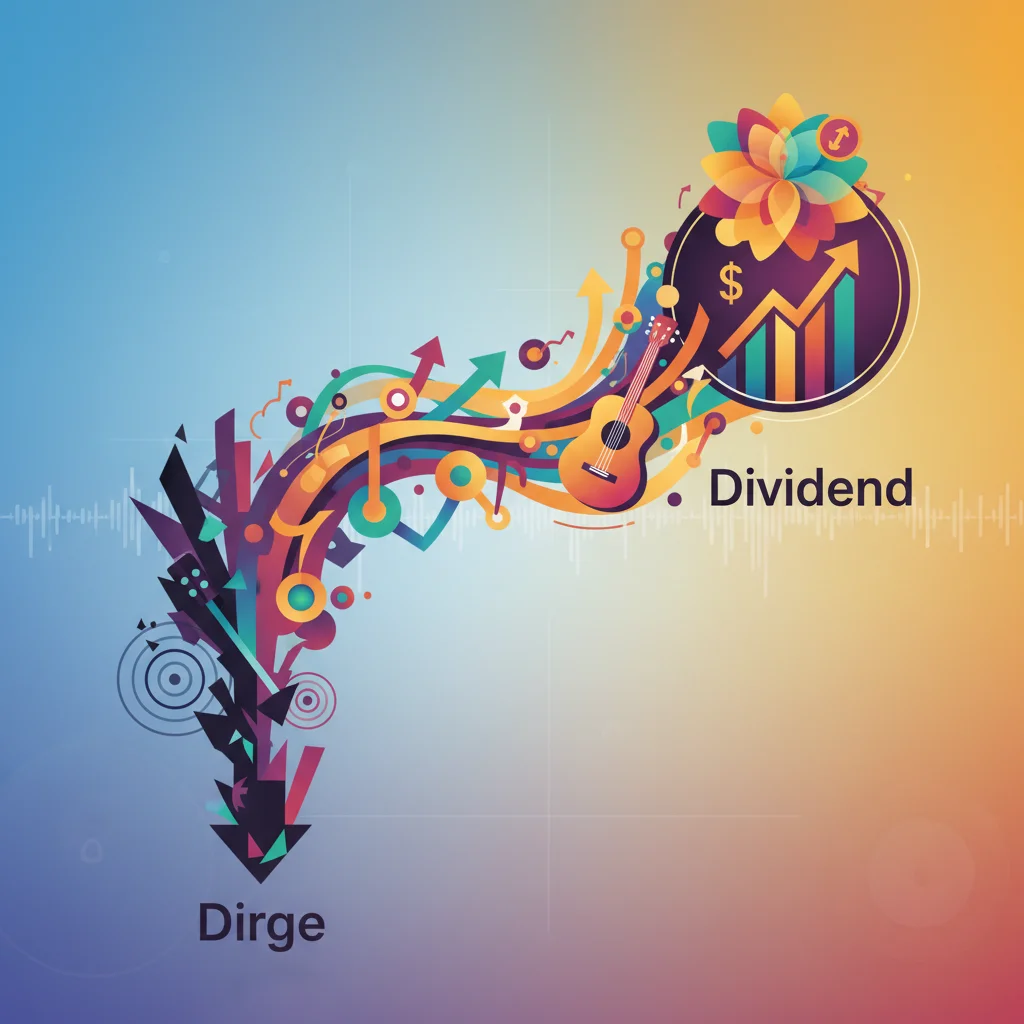
This is the story of how that dirge became a dividend-paying hit. It’s a case study in recognizing hidden value, the critical role of an outside catalyst, and the often-painful process of creative destruction that is essential for growth in both music and the modern economy.
The Underperforming Asset: A Brilliant Idea, A Flawed Execution
Every seasoned investor has seen a company like the original “Make Me Smile.” It possesses a great product, a unique patent, or a dedicated founder, yet it languishes. The stock market ignores it, customers are indifferent, and its potential remains locked away. This was Harley’s song in its initial form—a raw, honest expression of anger that was, by his own admission, unlistenable to a mass audience.
In business terms, this is the equivalent of a company with:
- A Misaligned Strategy: A brilliant technology stuck in a declining market segment.
- Dysfunctional Leadership: A talented team paralyzed by internal conflict, much like Harley’s original band.
- Poor Capital Allocation: Resources being poured into a “passion project” with no clear path to profitability.
These companies are the “dirges” of an investment portfolio. They possess intrinsic value, but their structure, strategy, or leadership prevents that value from being realized. They are assets waiting for a catalyst, a change agent who can see not what they are, but what they could become.
The Activist Investor: Enter the Producer
For Steve Harley, that catalyst was producer Alan Parsons, already famous for his work on Pink Floyd’s The Dark Side of the Moon. Parsons heard the song and immediately recognized its potential, but he also saw its fatal flaws. He delivered a blunt assessment: the song was a dirge, and it needed a radical overhaul to succeed.
Parsons’ intervention is a perfect parallel to the role of an activist investor or a new, transformative CEO. He didn’t write a new song; he re-engineered the existing one. He demanded changes that were initially resisted by the artist. He sped up the tempo, introduced uplifting harmonies, and layered in the now-iconic Spanish-style acoustic guitar solo. As the Financial Times notes, Parsons “injected uplift and harmonies” into what was a fundamentally bleak track . He restructured the asset for commercial appeal without destroying its core emotional message.
This process mirrors countless corporate turnarounds. Think of a legacy banking institution forced to adapt by the rise of fintech. The core business of managing money remains, but the delivery mechanism—the “tempo” and “harmony”—must change. This means embracing mobile apps, leveraging blockchain for secure transactions, and streamlining operations through new financial technology. The original “dirge” of bureaucratic, branch-based banking is re-orchestrated into a dynamic, customer-centric “hit.”
The table below illustrates this parallel between musical production and business transformation:
| Musical Transformation (“Make Me Smile”) | Corporate Turnaround (Business Analogy) |
|---|---|
| Original “Dirge”: Slow, bluesy, raw, and uncommercial. | Stagnant Company: Legacy processes, low morale, declining market share, poor stock performance. |
| The Catalyst (Producer Alan Parsons): An external expert with a fresh perspective and a track record of success. | The Catalyst (Activist Investor/New CEO): An external force demanding strategic change, operational efficiency, and a focus on shareholder value. |
| The Intervention: Speed up tempo, add harmonies, introduce new instrumentation (guitar solo). | The Restructuring: Divest non-core assets, invest in R&D and technology, overhaul marketing, and change leadership. |
| The Result (A #1 Hit): Commercially successful, critically acclaimed, enduring asset. | The Result (A Market Leader): Increased profitability, rising stock price, renewed competitive advantage. |
Market Sentiment vs. Fundamentals: The Joyful Sound of Vengeance
The most fascinating aspect of “Make Me Smile” is the stark contrast between its sound and its substance. The music is euphoric, while the lyrics are a brutal takedown of former colleagues. This dichotomy is a masterclass in understanding the difference between market sentiment and underlying fundamentals.
In the stock market, the “music” is the daily price fluctuation, the media narrative, the hype. It can be driven by emotion, speculation, and short-term trading trends. The “lyrics” are the company’s balance sheet, its cash flow statements, its competitive moat, and the long-term economics of its industry. A skilled investor, like a careful listener of Harley’s song, learns to appreciate both but never mistake one for the other.
We often see “meme stocks” where the music is a deafening rock concert of social media hype, while the lyrics reveal a company with mounting debt and no viable business model. Conversely, there are undervalued “value stocks” where the music is a quiet, ignored dirge, but the lyrics tell a story of solid earnings and a fortress balance sheet. The greatest opportunities in investing are often found where there is a significant disconnect between the two. Harley and Parsons created a hit by making the music so undeniably good that people didn’t care about the darkness of the lyrics—a strategy some high-flying tech companies seem to have perfected.
The VAR Paradox: Why We Forgive Human Error But Despise Flawed Algorithms in Finance
The Bittersweet Triumph of Creative Destruction
The success of “Make Me Smile” was a triumph for Steve Harley, but a bittersweet one. It made him a star and financially secure, but it was born from the ashes of his first band and the pain of betrayal. The song became a UK Number 1 in February 1975 (source), cementing his victory in the most public way possible.
This outcome is a perfect embodiment of the economist Joseph Schumpeter’s concept of “creative destruction.” For the new, more successful entity (Steve Harley & Cockney Rebel) to be born, the old, dysfunctional one (the original Cockney Rebel) had to be destroyed. This process is the engine of capitalism and progress. Old industries must shrink to make way for new ones. Inefficient companies must fail so their capital and talent can be reallocated to more productive ventures. It is a process that is often painful for those involved but is essential for the health of the overall economy.
The rise of financial technology is a modern example. The emergence of neobanks, robo-advisors, and decentralized finance (DeFi) on the blockchain is creating immense value and offering consumers better services. However, this innovation is simultaneously dismantling traditional business models in banking and asset management, leading to job losses and difficult transitions. It is a bittersweet triumph for the economic system as a whole.
Conclusion: Finding the Hit in the Dirge
A 45-year-old rock song about a band breakup may seem like an unusual place to find lessons for navigating the complexities of modern finance. Yet, the story of “Make Me Smile” is a timeless parable of transformation. It teaches us that:
- Value is Often Hidden: The most promising opportunities can be disguised as underperforming or flawed assets. The key is to look past the current execution and see the underlying potential.
- Catalysts are Crucial: Change rarely happens on its own. It requires an external force—a new leader, an activist investor, a disruptive technology—to challenge the status quo and force a re-evaluation.
- Transformation is Painful: The path from a dirge to a dividend is paved with difficult decisions, broken partnerships, and the destruction of old ways of thinking. Success is often bittersweet.
- Perception Matters, but Reality Wins: While market sentiment can create short-term hits, long-term value is ultimately built on solid fundamentals. The best strategy is to align a compelling narrative with a strong underlying reality.
The next time you hear that joyful, triumphant chorus, remember the bitter dirge it once was. Remember the painful breakup, the producer’s harsh critique, and the radical transformation. It’s a powerful reminder that in investing, business, and even art, the greatest returns often come not from creating something out of nothing, but from brilliantly re-engineering what is already there.
The Santana Effect: How to Transform an Undervalued Asset into a Multi-Million Dollar Success