The Illusion of Consensus: Why Europe’s ‘Polite Silence’ is a Ticking Economic Time Bomb
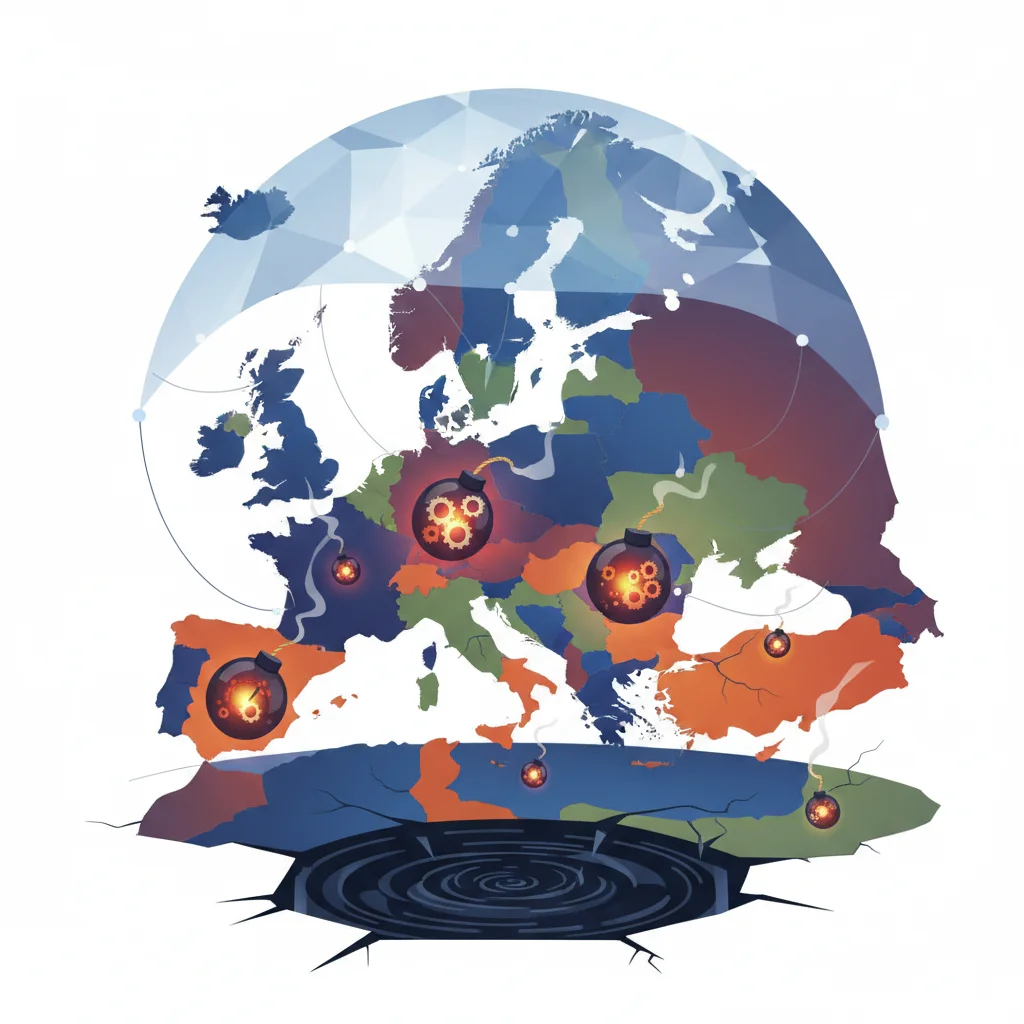
In the world of high-stakes policy and international relations, consensus is often hailed as the ultimate prize. It signals unity, strength, and a clear path forward. But what if that consensus is merely an illusion? What if, beneath the surface of unanimous agreement, lies a deep-seated reluctance to discuss the difficult, costly, and potentially disruptive realities of ambitious policies? This is the provocative argument put forth by Piotr Arak, Chief Economist at VeloBank, in a recent letter to the Financial Times. He suggests that the European Union isn’t suffering from political gridlock, but from a far more insidious problem: a “polite silence” on the true costs and consequences of its grand strategies.
This isn’t just an academic debate. For investors, finance professionals, and business leaders, this silence represents a hidden and unquantified risk. When the difficult questions about implementation, cost allocation, and economic trade-offs are avoided, it creates a dangerous gap between political rhetoric and economic reality. This gap can lead to market volatility, mispriced assets, and a fragile economic foundation. In this article, we will dissect this concept of “polite silence,” explore its impact on key EU policies, and analyze the profound implications for the economy, the stock market, and the future of investing in Europe.
The Anatomy of “Polite Silence”
Groupthink is a well-documented phenomenon where the desire for harmony or conformity in a group results in an irrational or dysfunctional decision-making outcome. Arak’s argument takes this a step further. He contends that in the EU, groupthink doesn’t manifest as loud, misguided enthusiasm, but as a collective, unspoken agreement to not discuss the inconvenient details. There is broad consensus on the big picture—combating climate change, regulating the digital sphere, and achieving “strategic autonomy”—but a profound silence on the “how” and the “at what cost.”
This creates a precarious situation where policies are designed in a vacuum, insulated from the harsh realities of economics and implementation. The result is a series of initiatives that are laudable in their ambition but fraught with unexamined risks. Let’s examine the three core areas where this polite silence is most deafening.
Case Study 1: The Green Transition’s Unspoken Price Tag
The European Green Deal is one of the most ambitious policy packages in modern history, aiming to make the continent climate-neutral by 2050. The objective is universally supported, and rightly so. The silence, however, descends when the conversation turns to the staggering financial and social costs involved. The transition requires a complete overhaul of our energy, transportation, and industrial systems. While politicians celebrate the goals, they are far quieter on who will bear the financial burden.
Will it be consumers through soaring energy bills and carbon taxes? Will it be taxpayers through massive government subsidies, leading to higher national debt? Or will it be industries forced to invest billions in compliance, potentially eroding their global competitiveness and leading to de-industrialization? The answer is likely “all of the above,” yet a transparent, public debate on this distribution of costs is conspicuously absent. This avoidance is not just a political tactic; it’s a market risk. For those involved in finance and investing, the lack of clarity makes it nearly impossible to accurately price the long-term impact on corporate earnings, inflation, and sovereign debt.
Beyond the Farmgate: The Brutal Economics of the Milk Price Crisis
Case Study 2: Digital Regulation – A Shield or a Shackle?
The EU has positioned itself as the world’s preeminent regulator of financial technology and the digital economy. Landmark legislation like the General Data Protection Regulation (GDPR) and the Digital Markets Act (DMA) has set global standards, a phenomenon known as the “Brussels Effect.” The stated goal is to protect consumers and ensure fair competition. Again, a noble objective.
The polite silence here is on the trade-off between protection and innovation. While the EU excels at writing rules, it has struggled to foster a tech ecosystem that can compete with the giants of Silicon Valley or Shenzhen. Is the heavy regulatory burden inadvertently stifling the next generation of European fintech and AI startups? Venture capital investment in European tech, while growing, still lags significantly behind the US (source). The debate is often framed as a simple choice between an American “wild west” and a European “safe garden,” ignoring the complex economic reality. This silence prevents a more nuanced discussion about creating a regulatory framework that fosters both safety and dynamic growth, which is critical for the future of Europe’s stock market and its position in the global economy.
Case Study 3: The Ambiguous and Expensive Quest for “Strategic Autonomy”
In response to supply chain disruptions and geopolitical shifts, “strategic autonomy” has become a central tenet of EU policy. The goal is to reduce dependence on other powers, particularly China for critical goods and the US for security. This involves re-shoring industries, building resilient supply chains, and increasing defense spending.
The silent part? The astronomical cost. Rebuilding entire industrial ecosystems is an undertaking that will require trillions of euros in public and private investment over decades. This raises fundamental questions for the European economy. How will this be funded? Will it be through the issuance of more common EU debt, a politically sensitive topic? Or will it fall to individual member states, potentially exacerbating economic divergences within the bloc? Arak points out that this silence on the financial realities creates a chasm between the ambition of autonomy and the practical ability to achieve it, leaving the banking sector and investors guessing about future fiscal policy and its impact on the euro.
The Unspoken Costs: A Tabular View
To better visualize the gap between rhetoric and reality, let’s break down the unspoken challenges associated with these core EU policies.
| EU Policy Initiative | Stated Public Goal (The “Consensus”) | Unspoken Challenges (The “Polite Silence”) |
|---|---|---|
| Green Transition | Achieve climate neutrality by 2050, lead the world in green technology. | Massive costs for consumers/taxpayers, risk of de-industrialization, social unrest over unequal burden-sharing, impact on inflation. |
| Digital Regulation (DMA, GDPR) | Protect consumer data, ensure fair competition, and create a safe digital space. | Potential to stifle fintech and tech innovation, creates high compliance costs for startups, widens the gap with US/China tech ecosystems. |
| Strategic Autonomy | Reduce dependence on foreign powers for critical goods and security. | Trillions in required investment, questions over funding (common debt vs. national), potential for protectionism and reduced economic efficiency. |
Signal vs. Noise: What a Paracetamol Study Teaches Investors About Market Volatility
Financial Fallout: What This Means for the Economy and Your Portfolio
The consequences of this polite silence extend far beyond the halls of Brussels. They have tangible effects on the real economy, financial technology, and investment strategies.
- Economic Stagnation: A combination of high energy costs from a poorly managed green transition, a less dynamic tech sector, and the inefficiencies of protectionism could lead to a period of sluggish economic growth for the bloc. This directly impacts corporate earnings and stock market performance.
- Inflationary Pressures: The green transition and re-shoring are inherently inflationary. Building new, secure supply chains is more expensive than leveraging existing global ones. This “greenflation” could force the European Central Bank to maintain a tighter monetary policy, affecting everything from banking profitability to trading volumes.
- Investment Uncertainty: For those investing in European markets, this silence creates a fog of uncertainty. How can you build a 30-year financial model for a utility company without clarity on who will pay for grid upgrades? How do you value a fintech startup without knowing the future regulatory landscape? This uncertainty increases the risk premium for European assets, potentially depressing valuations.
The silence creates a paradox: while the EU’s goals are designed to create a more stable and prosperous future, the refusal to debate their implementation fosters an unstable and unpredictable present for anyone involved in finance and economics.
The Milk Market Meltdown: Why a Dairy Crisis is a Red Flag for the Global Economy
Breaking the Silence: The Path to a More Resilient Europe
The solution, as Arak implies, is not to abandon these ambitious goals but to embrace a more honest, transparent, and even confrontational debate about how to achieve them. A healthy political and economic system is not one devoid of disagreement; it is one that channels disagreement into productive outcomes.
This requires several shifts:
- Transparent Cost-Benefit Analysis: Policymakers must be upfront about the costs of their proposals. Every major initiative should be accompanied by a clear analysis of its economic impact and a plan for mitigating the negative consequences.
- Encouraging Dissent: EU institutions should create forums for dissenting voices and contrarian views to be heard without fear of being labeled “anti-European.” A culture of robust debate strengthens policy, not weakens it.
- Letting Markets Work: Financial markets can be a powerful truth-teller. If policies are economically unviable, the bond and stock markets will eventually reflect that. Allowing market signals to inform the policy debate, rather than trying to shield politics from economics, is crucial.
Ultimately, transforming this polite silence into a constructive dialogue is the only way to ensure the long-term success of the European project. It is the path to building policies that are not only ambitious in their vision but also resilient and realistic in their execution. For investors, a Europe that openly debates its challenges is a far more predictable and attractive place to allocate capital than one that pretends those challenges don’t exist.

Related Posts

Wanted: A Chief Innovation Killer—The Perils of Over-Regulation in Finance
The Aga Oven Economy: What a Self-Service Irish Breakfast Teaches Us About the Future of Finance