TikTok’s Great Wall: Inside the Deal That Split a Tech Giant and Redefined US-China Investing
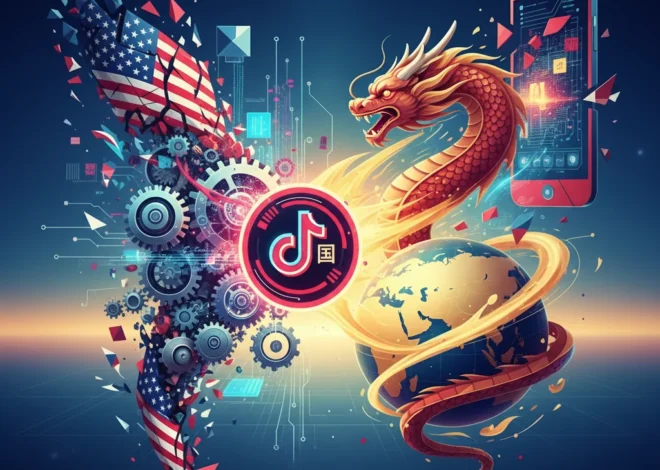
In the high-stakes world where global technology, international finance, and geopolitics collide, few stories are as compelling as the saga of TikTok. Once a simple platform for viral dance challenges, the app found itself at the epicenter of a superpower showdown, forcing a corporate restructuring that serves as a landmark case study for the modern global economy. The deal, brokered under the intense pressure of the Trump administration, aimed to create a U.S.-based entity, TikTok Global, to allay national security fears. Yet, a closer look reveals a complex, and to some, a compromised arrangement that left the app’s core intellectual property—its “secret sauce”—in the hands of its Chinese parent, ByteDance.
This post will dissect the intricate anatomy of the TikTok Global deal, exploring its financial architecture, the motivations of its key players, and the seismic shifts it signals for investors, business leaders, and the future of cross-border technology. We’re moving beyond the headlines to understand the deep-seated economic and political currents that shaped this unprecedented transaction and what it means for the future of investing in a fractured world.
The Anatomy of a Geopolitical Tightrope Walk
The saga began with a simple but powerful accusation: that TikTok, with its 100 million American users, posed an unacceptable national security risk. The concern, articulated in a series of executive orders, was that the Chinese government could compel ByteDance to hand over sensitive U.S. user data or use the platform’s powerful algorithm to subtly influence public opinion. The ultimatum was clear: sell TikTok’s U.S. operations to an American company, or face a complete ban.
What emerged was not a straightforward sale but a complex joint venture. As reported by the Financial Times, the plan involved creating a new US-based company, TikTok Global, with American software giant Oracle and retail behemoth Walmart taking significant stakes. Oracle was positioned as the “trusted technology partner,” tasked with hosting all U.S. user data on its secure cloud infrastructure and reviewing TikTok’s source code to ensure its integrity. Walmart, in turn, saw a golden opportunity to integrate its e-commerce and fulfillment services into TikTok’s massive social commerce platform, a move aimed at supercharging its digital strategy.
This structure was a masterclass in corporate diplomacy, designed to satisfy Washington’s demands for American control while allowing ByteDance to avoid a forced fire sale of its most prized asset. However, the devil was, and remains, in the details.
The Spy in the Boardroom: Cold War Lessons on Trust, Treachery, and Modern Financial Risk
The Billion-Dollar Question: Who Controls the “Secret Sauce”?
The central point of contention in the deal, and the reason it drew sharp criticism from China hawks, was the fate of TikTok’s recommendation algorithm. This is not just a piece of code; it’s the engine of the app’s success. It’s the sophisticated AI that learns user preferences with uncanny accuracy, creating the hyper-personalized and addictive “For You” page. This algorithm is arguably one of the most valuable pieces of intellectual property in the consumer tech world.
Under the proposed deal, while U.S. user data would be secured by Oracle, the core algorithm and its ongoing development would remain with ByteDance (source). TikTok Global would license the algorithm, and while Oracle could inspect the code for malicious backdoors, it would not own or control the fundamental technology. For critics, this was the deal’s fatal flaw. They argued that if the “brain” of the operation remained in China, the potential for manipulation and data leakage, however indirect, still existed.
To clarify this complex arrangement, here is a breakdown of the proposed operational structure of TikTok Global:
| Component | Proposed Control/Ownership | Implications for Security & Finance |
|---|---|---|
| U.S. User Data | Hosted by Oracle in the U.S. | Physically secures data within U.S. borders, mitigating direct data seizure. A major win for Oracle’s cloud business. |
| Core Recommendation Algorithm | Licensed from ByteDance (China) | The key IP and competitive advantage remains with the Chinese parent, a major point of contention for security hardliners. |
| Source Code & Updates | Developed by ByteDance, reviewed by Oracle | Oracle acts as a watchdog, but fundamental R&D and innovation remain outside U.S. control. |
| Corporate Governance | U.S.-majority board, including a national security director | Provides American oversight on paper, but questions remain about its influence over ByteDance’s core technology decisions. |
Financial Fallout: Stock Market Jitters and Fintech Ambitions
The proposed deal was not just about security; it was a monumental event for the worlds of finance and investing. A key component of the agreement was the plan for TikTok Global to launch an Initial Public Offering (IPO) on a U.S. stock exchange within a year. This event was poised to be one of the largest tech IPOs in history, creating a frenzy of interest in the stock market.
For investors, this presented a unique opportunity and a complex risk profile. On one hand, they could gain exposure to a hyper-growth platform with a massive, engaged user base. On the other, they would be investing in a company with a convoluted ownership structure and an unprecedented level of geopolitical baggage. The valuation, governance, and long-term stability of TikTok Global were all subject to the shifting winds of U.S.-China relations. This made traditional trading and investment models difficult to apply; political analysis became as important as financial analysis.
The deal also had a profound impact on the established players. Oracle, traditionally an enterprise software company, saw its stock price react positively to the news. This was a strategic pivot into the consumer data and cloud security space, a move that could reshape its future growth trajectory. For Walmart, it was a bold leap into the world of social commerce and financial technology (fintech), positioning it to compete more effectively against Amazon by integrating e-commerce directly at the point of discovery. The potential for integrating payment systems and other banking services into the platform highlighted the blurring lines between social media, e-commerce, and fintech. According to the Financial Times, the deal valued the new US unit at around $60bn (source), a number that electrified the investment community.
Political Chess: How Delayed Elections Could Impact the UK Economy and Your Investments
The New Rules of the Global Tech Game
The TikTok saga did not happen in a vacuum. It is the most visible manifestation of a broader trend: the fragmentation of the global internet and the rise of data sovereignty. For decades, the tech industry operated on a largely borderless model. Today, nations are increasingly erecting digital walls, demanding that data be stored locally and that tech platforms comply with national security and economic priorities.
This has profound implications for the global economy and for any company with international operations:
- Geopolitical Risk as a Core Business Metric: The TikTok deal cemented the idea that for tech companies, geopolitical risk is no longer a secondary concern but a primary operational and financial variable. Investors must now price this risk into their valuations.
- The “Splinternet” Becomes Reality: We are moving away from a single, global internet towards a “splinternet” with distinct American, Chinese, and European spheres of influence, each with its own regulations, data standards, and dominant players.
- A Blueprint for Cross-Border Tech: While the deal was ultimately shelved by the Biden administration, the model of creating semi-independent, locally-partnered entities could become a template for other global tech firms navigating sensitive markets. This could affect everything from cloud computing to emerging technologies like blockchain, which promise decentralization but may face localization pressures.
This new paradigm forces a re-evaluation of global investment strategies. The economics of a company are no longer enough; understanding the political landscape in which it operates is now paramount for anyone involved in finance, from institutional banking to retail trading.
Beyond Division: Why 100+ UK Business Leaders Are Making the Economic Case for Political Unity
The Unwritten Chapter: A Cautionary Tale for the Future
Although the urgency of the Trump-era executive orders faded and the Biden administration put the deal on indefinite hold, the fundamental tensions exposed by the TikTok saga have not disappeared. The questions it raised about data privacy, algorithmic influence, and national sovereignty are more relevant than ever. The U.S. government continues to scrutinize Chinese technology, and the debate over how to manage the risks without stifling innovation and the global economy rages on.
The TikTok Global deal, even in its unexecuted form, serves as a crucial cautionary tale. It was a wake-up call for Silicon Valley and Wall Street, demonstrating that the era of frictionless globalization for tech is over. For business leaders and finance professionals, the key takeaway is the need for resilience and adaptability. Future success in the international arena will depend on the ability to navigate complex regulatory environments, build trusted local partnerships, and design corporate structures that can withstand geopolitical shocks.
The dance between global ambition and national interest is far from over. TikTok was just the opening act. For anyone involved in technology, finance, and investing, the most important question is no longer just “what’s the next big thing?” but “where in the world will it be allowed to operate?”