The Great Rupture: Mark Carney’s Blueprint for Navigating a Fractured Global Economy
We are living through an era of profound disruption. The stable, interconnected world that defined the post-Cold War period is fracturing before our eyes. From persistent inflation and geopolitical conflict to the existential challenge of climate change, the foundational assumptions of the global economy are being rewritten in real-time. For investors, business leaders, and finance professionals, navigating this new landscape is the defining challenge of our time.
Few are better positioned to dissect this complex reality than Mark Carney. As the former Governor of both the Bank of Canada and the Bank of England, Carney has stood at the helm of the global financial system during some of its most turbulent moments. In a recent, wide-ranging conversation with the Financial Times’ Gideon Rachman, he laid out a stark diagnosis of a “world in rupture” and offered a compelling vision for what must come next.
This post delves into Carney’s critical insights, translating his high-level analysis into actionable intelligence for anyone involved in finance, investing, and strategic business planning. We’ll explore the end of hyper-globalization, the new rules of central banking, and the monumental task of financing our planet’s future.
The End of an Era: De-Globalization and the New Economic Playbook
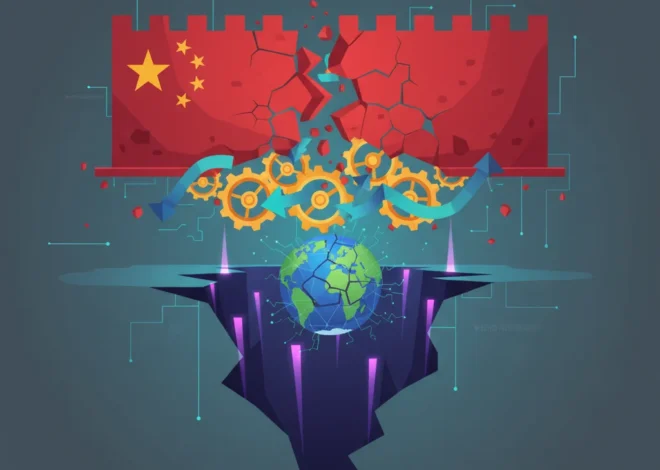
For decades, the global economy operated on a simple premise: relentless integration. Capital, goods, and information flowed across borders with increasing ease, creating complex global supply chains optimized for maximum efficiency. Carney argues this era is definitively over. We have entered a period of fragmentation, driven by two primary forces: the strategic competition between the US and China, and the geopolitical shockwaves of the war in Ukraine.
The consequences are a fundamental rewiring of the global economic machine. The focus is shifting from pure efficiency to resilience and security. Concepts like “reshoring,” “near-shoring,” and “friend-shoring” are no longer academic; they are boardroom imperatives. This structural shift, Carney notes, introduces new frictions into the system. As he points out, this fragmentation inherently creates “a series of supply shocks,” which are fundamentally inflationary.
This marks a stark departure from the disinflationary tailwinds of the past 30 years, which were powered by a steady stream of cheap labor and goods from emerging markets. For central bankers, this means the playbook has to change. The fight against inflation is no longer just about managing demand; it’s about navigating a world of constrained supply and heightened geopolitical risk.
Spring in Their Step: Why UK Property Market Optimism is a Bellwether for the Broader Economy
Comparing the Economic Eras
To understand the magnitude of this shift, it’s helpful to contrast the old paradigm with the new reality Carney describes. The following table breaks down the key differences for leaders in finance and economics.
| Economic Factor | The Old Era (Hyper-Globalization) | The New Era (Fragmentation & Rupture) |
|---|---|---|
| Primary Driver | Efficiency & Cost Optimization | Resilience & Security |
| Supply Chains | Global, Just-in-Time | Regional, Diversified, Just-in-Case |
| Inflationary Pressure | Disinflationary / Deflationary | Structurally Inflationary |
| Geopolitical Risk | Considered a tail risk | A primary driver of economic outcomes |
| Central Bank Focus | Demand management | Navigating supply shocks & volatility |
The Trillion-Dollar Challenge: Financing the Green Transition
Beyond geopolitics, the other great rupture is the urgent need to address climate change. As the UN Special Envoy on Climate Action and Finance, Carney is at the forefront of mobilizing the capital required for the net-zero transition. The scale is staggering. He emphasizes that the investment required is in the realm of “$120 to $150 trillion over the next 30 years.”
This isn’t just a cost; Carney frames it as the greatest commercial and investment opportunity in modern history. It requires a complete re-plumbing of the global financial system, where climate risk and opportunity are integrated into every investment decision, from the stock market to private equity.
The role of financial technology, or fintech, becomes critical here. Innovations in data analytics, AI-driven risk modeling, and even transparent reporting via blockchain can provide the tools needed to measure, manage, and verify climate-related investments. The challenge is moving from pledges to projects, ensuring capital flows to where it’s needed most, particularly in emerging economies.
Heathrow's £33 Billion Gambit: A High-Stakes Bet on the UK's Economic Future
From Market Value to Human Values: Reimagining Capitalism
Perhaps Carney’s most profound argument is a philosophical one, drawing from his book, Value(s): Building a Better World for All. He contends that for too long, society has conflated market price with intrinsic value. This has led to a system that prioritizes short-term financial gains over long-term societal well-being, resilience, and sustainability.
The ruptures we are now experiencing—from climate crises to social inequality—are, in his view, the inevitable result of this imbalance. The solution is to rebuild our economic framework around a more holistic set of human values. This isn’t about abandoning markets, but about shaping them to serve broader goals.
For those in the world of trading and investment, this has tangible implications:
- Expanded Risk Management: Geopolitical and climate risks are no longer externalities but core components of any robust financial model.
- Purpose-Driven Investing: A growing demand for investments that deliver both financial returns and positive social or environmental outcomes (Impact Investing/ESG).
– Stakeholder Capitalism: A shift from prioritizing only shareholder returns to considering the impact on employees, customers, suppliers, and the community.
This re-calibration requires a new kind of leadership—one that can balance profit with purpose and navigate a world where a company’s social license to operate is as important as its balance sheet. The future of economics, Carney suggests, lies in its reconnection with ethics and social purpose.
Decoding Labour's Pivot: What the Workers' Rights U-Turn Means for the UK Economy and Your Portfolio
Conclusion: A Call for Resilience and Responsibility
Mark Carney’s analysis is not a message of doom, but a clear-eyed call to action. The world is not merely in a cyclical downturn; it is undergoing a fundamental structural transformation. The comfortable certainties that underpinned the global economy for a generation are gone, replaced by a new era of volatility, fragmentation, and systemic challenges.
For investors, executives, and financial professionals, the key takeaways are clear. First, resilience must supplant efficiency as the guiding principle in strategy and operations. Second, long-term value creation will be inextricably linked to solving the world’s biggest problems, particularly climate change. Finally, a sustainable future requires a financial system that is not just a passive allocator of capital, but an active agent of positive change.
The path forward is complex and fraught with uncertainty. But as Carney argues, these moments of rupture are also moments of opportunity—a chance to rebuild a more resilient, sustainable, and equitable global economy. The leaders who understand this new reality and adapt their strategies accordingly will be the ones who thrive in the world that comes next.