The Dutch Giant Behind Your AI: Why No One Can Challenge ASML’s Tech Monopoly
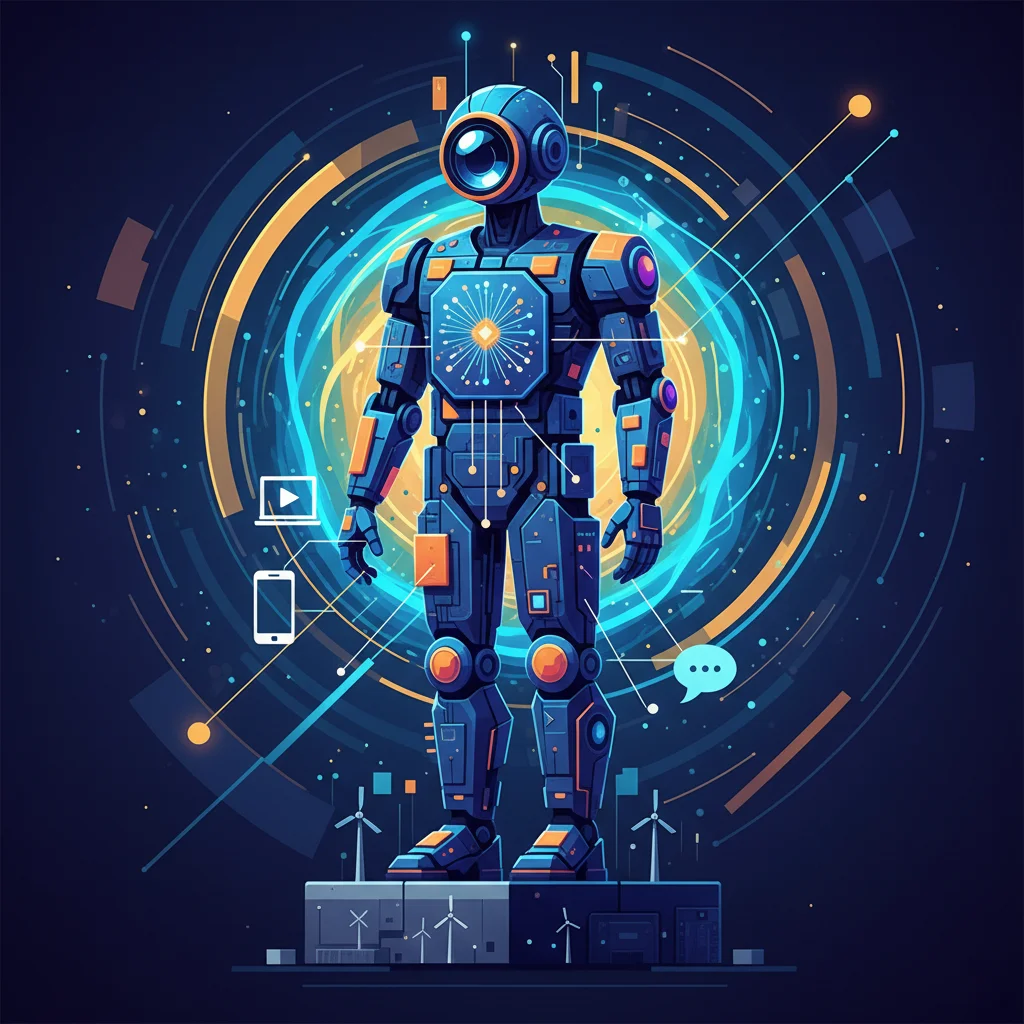
Every time you use ChatGPT, stream a movie, or marvel at the power of your smartphone, you’re experiencing the end result of a technological miracle. But this miracle doesn’t start in Silicon Valley or a bustling Asian tech hub. It begins in a quiet town in the Netherlands, at a company you’ve probably never heard of: ASML.
ASML isn’t a software company. They don’t build apps or run cloud platforms. They build the machines that build the chips that power our entire digital world. And in the most critical segment of this industry, they don’t just lead; they are the only player. They have a 100% monopoly on the technology required to make the world’s most advanced semiconductors.
In an age of fierce tech competition, how did one European company achieve a dominance so absolute that even the combined might of the US and Asia can’t produce a rival? The answer is a story of breathtaking complexity, long-term vision, and a multi-billion dollar bet that paid off, shaping the future of everything from artificial intelligence to global geopolitics.
What Exactly Is This “Magic” Machine?
At the heart of every processor is a silicon wafer, and on that wafer are billions of tiny transistors—the on/off switches that form the basis of modern computing. The more transistors you can cram onto a chip, the more powerful and efficient it becomes. This is the essence of Moore’s Law.
To “print” these impossibly small circuits onto silicon, you need a process called lithography. Think of it as a highly advanced form of photography. For decades, companies like Japan’s Nikon and Canon were leaders, using a technique called deep ultraviolet (DUV) lithography. But as transistors needed to get even smaller, DUV light waves were too thick to draw the fine lines required.
The industry needed a new kind of light. Enter Extreme Ultraviolet (EUV) lithography, a technology so mind-bendingly difficult that many thought it was impossible. EUV light has a wavelength of just 13.5 nanometers, allowing it to etch circuits that are mere atoms wide. ASML is the only company in the world that has mastered it.
Their EUV machines are modern marvels. Each one is the size of a double-decker bus, costs upwards of €200 million, and contains hundreds of thousands of components sourced from a global network of specialists. These are the machines that enable chipmakers like TSMC, Samsung, and Intel to produce the cutting-edge chips that are the bedrock of today’s tech revolution. Without ASML, there is no advanced AI, no next-generation cloud computing, and no powerful machine learning on a global scale.
Monzo Down: What a Single Outage Reveals About the Fragile Future of Cloud Banking
The Secret Sauce: A Global Ecosystem Decades in the Making
ASML’s monopoly wasn’t an accident; it was built on a foundation of three key pillars that competitors have found impossible to replicate.
1. A Long-Term, High-Risk Bet
The journey to master EUV wasn’t a quick sprint; it was a marathon that started in the 1990s. While competitors like Nikon and Canon focused on refining existing DUV technology for more immediate profits, ASML poured billions into the high-risk, high-reward gamble of EUV. This is a powerful lesson for today’s startups and tech leaders: true, defensible innovation often requires a level of patience and long-term investment that clashes with the quarterly-results mindset.
2. An Unbeatable Supply Chain Federation
Perhaps the most critical element of ASML’s success is that they didn’t try to do it all themselves. Instead, they orchestrated a “federation” of hundreds of specialized suppliers, each a world leader in its own right. Two examples stand out:
- Carl Zeiss (Germany): This company produces the massive, flawless mirrors needed to direct the EUV light. These mirrors are so smooth that if you scaled one up to the size of Germany, the largest bump would be less than a millimeter high.
- Trumpf (Germany): They created the incredibly powerful laser system that generates the EUV light itself. It involves firing a laser 50,000 times a second at a microscopic droplet of molten tin, vaporizing it into a plasma that emits the EUV light.
Replicating this intricate web of trust, co-development, and specialized expertise is a far greater challenge than just reverse-engineering a machine. It’s an ecosystem built over 20 years, a feat of global collaboration and automation that no single country has been able to match.
3. Customer-Fueled Innovation
In a brilliant strategic move, ASML brought its biggest customers—Intel, Samsung, and TSMC—on board not just as buyers, but as investors. They poured billions into ASML’s R&D, effectively funding the development of the very machines they would later line up to buy. This created a powerful symbiotic relationship, ensuring ASML had the capital to pursue its ambitious goals while giving the chipmakers a stake in its success.
So, Where Were the Tech Superpowers?
The US dropped out of the lithography race decades ago, leaving Japan’s Nikon and Canon as ASML’s main rivals. While they remain strong players in the older DUV market, they balked at the astronomical cost and uncertainty of EUV. They made the seemingly rational business decision to stick with what they knew, a classic case of the “Innovator’s Dilemma” where incumbents fail to adapt to disruptive technology.
This has created a starkly divided market, as shown below.
| Technology Type | ASML Market Share | Key Competitors | Notes |
|---|---|---|---|
| EUV (Extreme Ultraviolet) | 100% (source) | None | Required for all cutting-edge chips (e.g., 5nm, 3nm) powering modern AI and supercomputers. |
| DUV (Deep Ultraviolet) | ~60% | Nikon, Canon (Japan) | Used for a wide range of less advanced but still critical chips for cars, IoT, and more. |
China is now desperately trying to build its own lithography capabilities, but it’s estimated to be over a decade behind. Furthermore, geopolitical tensions have led the US to pressure the Dutch government to block ASML from selling its advanced EUV machines to China, turning this technological dominance into a powerful geopolitical chokepoint and raising major questions about national cybersecurity and technological sovereignty.
A Glimpse into 2026: Decoding the Future of Gadgets, Assistive AI, and Gaming
Why This Matters for Developers, Founders, and Tech Pros
It’s easy to dismiss this as a niche hardware story, but ASML’s dominance has profound implications for everyone in the tech ecosystem.
- For Developers & Programmers: The continuous improvement in chip performance, largely driven by ASML’s machines, is what allows your software to become more powerful. The complex programming behind large language models and realistic graphics is only feasible because the underlying hardware keeps getting better. ASML is the silent partner in every line of code you write.
- For Entrepreneurs & Startups: The ASML saga is a masterclass in building a “deep tech” company with an unbreachable moat. It demonstrates that true, lasting dominance can come from solving incredibly hard physics and engineering problems, not just from a clever SaaS model. It’s a reminder that fundamental innovation requires patience and a robust ecosystem.
- For the Future of AI: The insatiable demand for more computing power from the artificial intelligence industry is the primary driver for EUV technology. The next leap forward in AI capabilities depends directly on ASML’s ability to deliver the next generation of machines. They are, quite literally, the gatekeepers of Moore’s Law and the future of AI.
Humanity First: Why Warhammer's Creator Banned AI and What It Means for the Future of Tech
The Unseen Giant Shaping Our World
The story of ASML is a compelling reminder that behind the elegant interfaces of our software and the seemingly limitless power of the cloud lies a world of immense physical complexity. It’s a world of lasers, vacuums, and nanometer-perfect mirrors, orchestrated by a single company that won a decades-long bet.
While the US and Asia continue to dominate the headlines in chip design and software, they remain utterly dependent on this quiet Dutch giant for manufacturing. No rival is on the horizon, and none is likely to be for at least a decade. So the next time you ask an AI a question or launch your favorite app, remember the invisible, indispensable force in Veldhoven, Netherlands, that made it all possible.