Code, Components, and Conflict: The Hidden Tech Supply Chain Deciding Ukraine’s Drone War
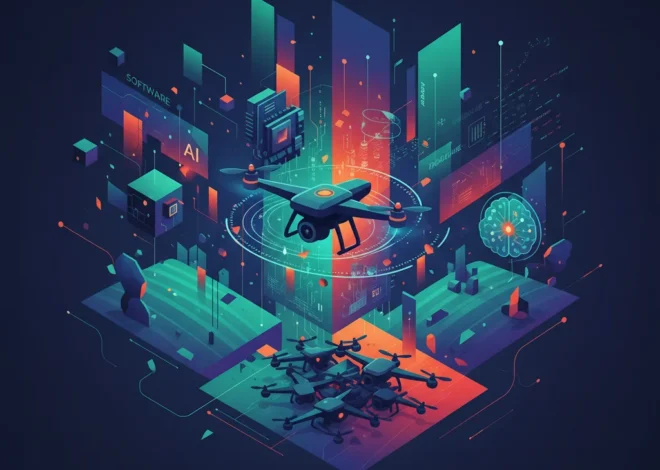
In the skies over Ukraine, a 21st-century war is being fought with 21st-century weapons. But these aren’t just billion-dollar stealth jets. The real game-changer is a swarm of small, agile, and terrifyingly effective drones, often assembled from off-the-shelf parts. This new era of warfare, driven by rapid innovation and DIY ingenuity, has a critical vulnerability: the supply chain. And as both Ukraine and Russia scramble for the components to build their aerial arsenals, the battle is increasingly being decided not on the front lines, but in the bustling electronics markets of Shenzhen, China.
A recent investigation by the Financial Times has pulled back the curtain on this shadow economy, revealing a complex and often opaque network of suppliers, intermediaries, and front companies. The findings suggest a stark imbalance, with Russian buyers appearing to have a significant, and perhaps deliberate, advantage in sourcing these critical parts. This isn’t just a story about hardware; it’s a story about how globalized manufacturing, dual-use technology, and the power of software have fundamentally reshaped modern conflict.
For developers, tech professionals, and entrepreneurs, this situation is more than just a distant geopolitical headline. It’s a real-world case study in supply chain fragility, the ethics of technology, and the incredible speed at which commercial innovation can be weaponized. Let’s dive into the silicon, circuits, and code that are defining this new battlefield.
The FPV Revolution: From Hobbyist Gadget to Precision Weapon
Early in the conflict, the drone war was dominated by consumer-grade quadcopters like those from DJI. But the landscape has evolved dramatically. The new king of the battlefield is the FPV (First-Person View) drone. These are fast, highly maneuverable drones, originally designed for racing and acrobatic flight, that have been adapted into potent “kamikaze” weapons.
What makes them so effective?
- Cost-Effectiveness: An FPV drone can be built for a few hundred dollars, yet it can destroy a multi-million dollar tank. This asymmetric advantage is a cornerstone of Ukraine’s defense strategy.
- Precision: Piloted via a video headset, FPV drones offer a direct, immersive view, allowing operators to guide them with incredible accuracy to strike weak points on armored vehicles.
- Adaptability: Their modular nature means they can be quickly modified. The open-source programming communities that grew around the FPV hobby have been instrumental, enabling rapid development of new flight controllers and software features.
But this modularity is a double-edged sword. To build these drones at scale, you need a constant flow of components: flight controllers, video transmitters, motors, and cameras. And virtually all roads for these components lead to one place: China.
An Unlikely Alliance: Why Apple Is Swallowing Its Pride to Power Siri with Google AI
The Shenzhen Bottleneck: A Global Hub with a Decisive Role
China’s dominance in electronics manufacturing is no secret. For the niche but now-critical FPV drone component market, it’s an almost total monopoly. This has created a situation where Chinese suppliers hold immense leverage, whether they choose to exercise it overtly or not.
The Financial Times investigation, based on analysis of Russian import data, paints a concerning picture. It reveals that Chinese exports of drones and their components to Russia surged in the past year. While Ukraine also sources parts from China, its buyers face a far more challenging landscape. They often rely on volunteers, crowdfunding, and complex networks of intermediaries to smuggle parts out, frequently facing order cancellations and shipping restrictions. In contrast, Russian buyers, including companies with direct ties to the military, appear to be sourcing components with relative ease.
According to the Molfar agency, a Ukrainian intelligence analysis group, Ukrainian drone makers are forced to source components through a web of distributors, whereas Russian companies can often buy directly from manufacturers (source). This creates a significant disparity in both cost and availability.
To illustrate the disparity, consider the typical procurement process for each side:
| Procurement Aspect | Experience for Ukrainian Buyers | Experience for Russian Buyers |
|---|---|---|
| Sourcing Channel | Complex network of volunteers, intermediaries, and international distributors. Often disguised as hobbyist purchases. | More direct access to manufacturers and large-scale distributors, sometimes via front companies. |
| Payment & Shipping | Often blocked. Face frequent order cancellations and export restrictions from Chinese platforms. | Smoother transactions, with established logistics channels directly into Russia. |
| Scale & Consistency | Inconsistent and difficult to scale. Reliant on crowdfunding and piecemeal efforts. | Able to place large, consistent orders, suggesting a more formalized and state-supported effort. |
| Cost per Unit | Higher due to multiple layers of intermediaries and smaller order sizes. | Lower due to bulk purchasing and more direct sourcing. |
This imbalance is having a tangible impact. As one Ukrainian drone operator noted, the struggle to get parts is a constant battle. “We are losing a lot of time and people because we don’t have enough drones,” he stated in a report cited by the FT.
Beyond Hardware: The Growing Role of AI, Software, and Automation
While the focus is often on the physical components, the real force multiplier is the software and intelligence layered on top. This is where the world of hobbyist electronics collides with cutting-edge military tech, and where concepts like artificial intelligence and machine learning come into play.
Initially, FPV drones were entirely manually piloted. But the race is on to make them smarter. Both sides are experimenting with:
- AI-Powered Targeting: Integrating machine learning models that can automatically identify and track targets, such as tanks or personnel. This “terminal guidance” allows the drone to lock on, freeing the pilot from making micro-adjustments in the final, crucial seconds.
- Autonomous Navigation: Using AI to navigate complex environments without a constant GPS or pilot signal. This is a critical countermeasure to GPS jamming and electronic warfare—a major aspect of modern cybersecurity on the battlefield.
- Swarm Intelligence: The ultimate goal is to move from single drones to coordinated swarms that can overwhelm defenses through sheer numbers and synchronized attacks. This level of automation requires sophisticated algorithms and communication protocols, likely managed through a distributed or cloud-based command system.
This technological arms race highlights a crucial point: even if the basic hardware is a commoditized Chinese product, the winning edge will come from superior software. This is an area where Western tech expertise could theoretically give Ukraine an advantage, but that advantage is blunted if they can’t secure a reliable supply of the basic hardware platforms to run the code on.
A Glimpse into 2026: Decoding the Future of Gadgets, Assistive AI, and Gaming
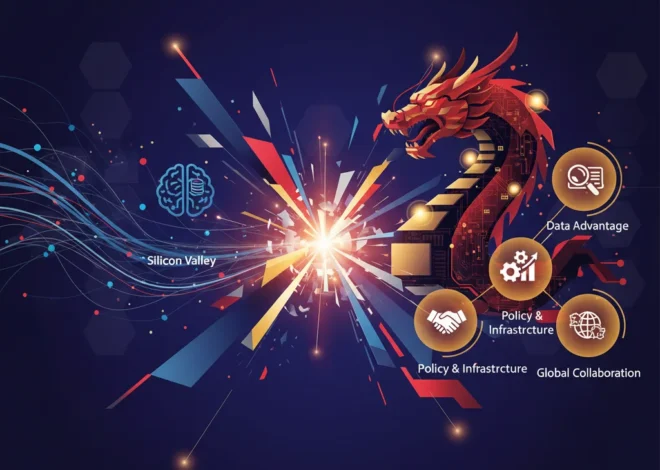
However, it’s also a stark warning about supply chain dependency. The West, particularly Silicon Valley, has focused heavily on software, assuming the hardware would always be cheaply and readily available from Asia. The Ukraine war proves this assumption is a critical strategic vulnerability. If you can’t get the servers, the chips, or in this case, the drone motors, your brilliant SaaS platform or AI model is useless. This should be a massive wake-up call for VCs and founders to start thinking about “full-stack” resilience, investing in domestic manufacturing, and diversifying supply chains, even if it comes at a higher cost. The future of national security may depend on it.
The Sanctions Paradox and the Dual-Use Dilemma
Why can’t Western sanctions stop this flow of components to Russia? The answer lies in the “dual-use” nature of the technology. The same video transmitter used by a hobbyist to race drones on a Sunday is the same one used in a kamikaze drone on the front line. The same flight controller can power a cinematic drone for a filmmaker or a weapon for a soldier. The market for these components is “enormous and incredibly diffuse,” making it nearly impossible to police.
Russia exploits this by using a network of shell companies and civilian-facing entities to procure parts, claiming they are for non-military purposes. Tracing and blocking these transactions is a monumental task that existing sanctions regimes are ill-equipped to handle. It’s a classic cybersecurity and intelligence challenge: how do you identify malicious intent within a massive volume of legitimate-looking commercial traffic?
This presents a significant challenge for Western governments and a moral quandary for Chinese manufacturers. While Beijing officially claims neutrality and insists it does not sell weapons to either side, its inaction or tacit approval of these component sales is having a decisive effect on the war. For the companies themselves, it’s a gray area. Are they responsible for how their hobby-grade products are used by the end customer?
Netflix's Ultimate Endgame: Why a Warner Bros. Bid is a High-Stakes Play for AI and Cloud Dominance
Conclusion: The New Front Line is the Global Supply Chain
The struggle for drone components in Ukraine is a microcosm of a larger shift in global conflict and technology. It reveals a world where commercial innovation from startups and hobbyist communities can be militarized overnight, where battlefield success depends as much on logistics and procurement as it does on strategy, and where the lines between civilian and military technology have all but disappeared.
The key takeaway for the tech world is that the geopolitical landscape is now inextricably linked to the technology ecosystem. The abstract concepts of supply chain management, SaaS business models, and AI development have concrete, life-or-death consequences. The drone war demonstrates that dominance in manufacturing critical components is a powerful form of strategic leverage, and that the most sophisticated software is powerless without the hardware to run it on.
As this conflict continues to evolve, the race to innovate—not just in building better drones, but in building more resilient and secure supply chains—will be paramount. The unseen hand of the global electronics market will continue to shape the visible realities on the battlefield, proving that in modern warfare, the factory floor is just as important as the front line.