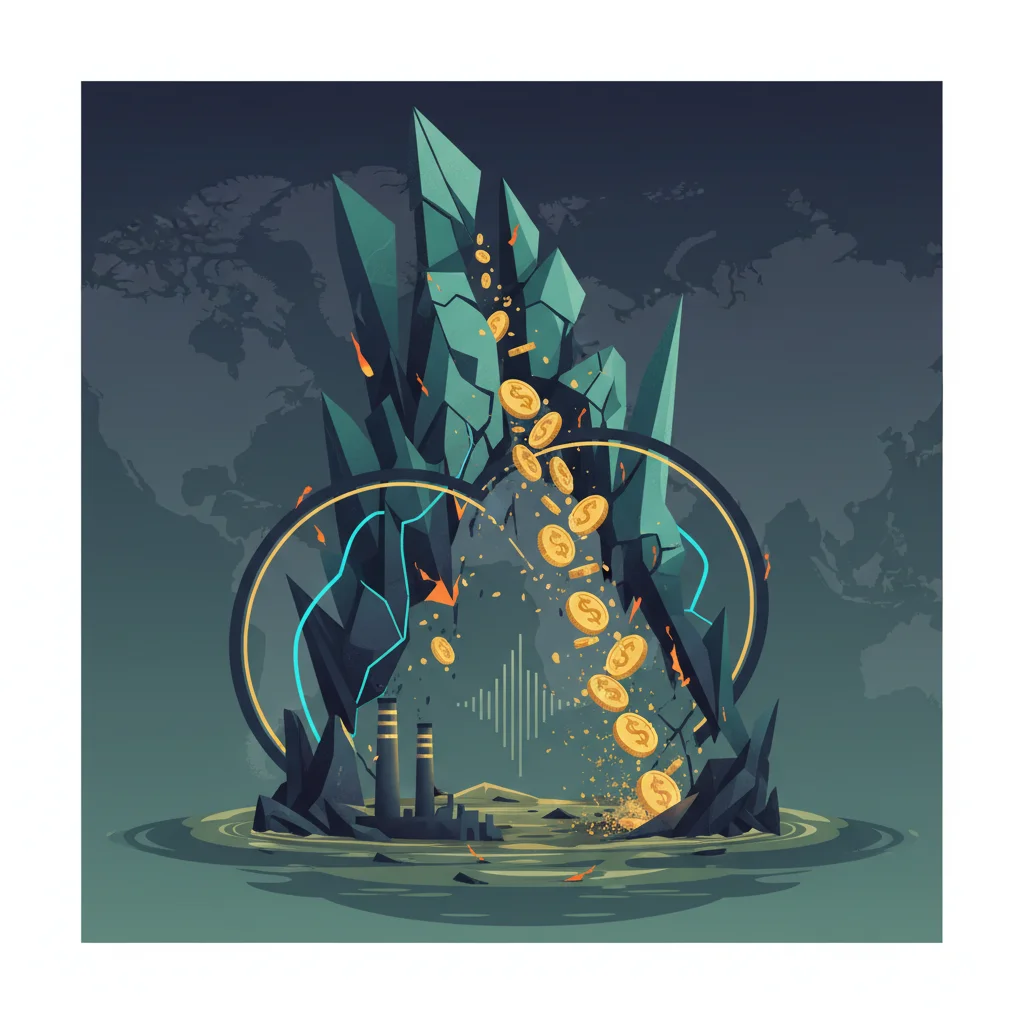
The High Price of Silence: Why Corporate America’s Climate Inaction is a Systemic Risk to the Global Economy
The Sound of Silence: A Dangerous Shift in the C-Suite
In 2017, when the Trump administration announced its intention to withdraw the United States from the Paris Agreement on climate change, a chorus of corporate leaders voiced their dissent. From Silicon Valley to Wall Street, CEOs publicly reaffirmed their commitment to sustainability, arguing that climate action was not just an ethical imperative but a sound business strategy. Fast forward to today, and as the political landscape churns once more, that chorus has faded to a disquieting whisper. The very leaders who once championed climate goals are now conspicuously silent, creating a vacuum that poses a profound and underappreciated risk to the global economy and the future of responsible investing.
This calculated silence is not a neutral stance. It’s a strategic decision, and one that carries a far higher price than many in the business world seem to realize. While the short-term calculus might appear pragmatic—avoiding political backlash and currying favor for potential deregulation and tax cuts—it represents a dangerous failure of leadership. It’s a high-stakes bet against the long-term stability of our financial markets, supply chains, and the very foundations of stakeholder capitalism that many of these companies claim to uphold. This isn’t just about politics; it’s about pricing systemic risk, and right now, the market is getting it dangerously wrong.
The Calculus of Complicity: Fear, Greed, and a Failure of Foresight
Why the dramatic shift from vocal opposition to strategic silence? The motivations are a complex cocktail of fear and opportunism. On one hand, CEOs are acutely aware of the “go woke, go broke” backlash, fearing that any public stance could make their companies a target for boycotts and political attacks in an increasingly polarized environment. The potential for a president to use the levers of power against a specific company is a threat that no board can ignore.
On the other hand, there is the powerful allure of short-term financial gain. The promise of sweeping deregulation, particularly for the fossil fuel and banking sectors, and further corporate tax cuts presents a tantalizing upside for quarterly earnings reports and the stock market. In this context, silence is seen as the price of admission for a seat at the policy-making table. As the Financial Times noted, this quiet acquiescence is a stark contrast to previous corporate stands on social issues, suggesting that when direct financial incentives are on the line, principles can become negotiable (source).
This approach, however, is a classic case of prioritizing immediate gratification over long-term resilience. It ignores the fundamental truth that climate change is not a distant, abstract threat but a clear and present danger to economic stability. The very systems that enable modern finance and global trading are predicated on a level of climate predictability that is rapidly eroding.
Beyond the Balance Sheet: How Reading Fiction Unlocks Superior Financial Acumen
Unpriced Risk: The Financial Time Bomb of Climate Inaction
For investors and finance professionals, the C-suite’s silence should be a flashing red light on their risk dashboards. The potential economic benefits of deregulation are finite and easily modeled. The costs of unchecked climate change are exponential, complex, and potentially infinite. A failure to speak out against policies that would accelerate climate change is, in effect, a failure to manage the single greatest systemic risk facing the 21st-century economy.
This risk manifests in two primary ways:
- Physical Risks: These are the direct costs of climate change. They include supply chain disruptions from extreme weather events, damage to physical assets from floods and wildfires, and decreased agricultural productivity. These are not abstract future events; they are already impacting corporate bottom lines today.
- Transition Risks: These risks arise from the inevitable shift to a low-carbon economy. A sudden, disorderly transition forced by delayed action could lead to trillions of dollars in stranded assets (e.g., fossil fuel reserves that can never be extracted), massive regulatory write-downs, and market shocks. Companies that fail to prepare for this transition are setting their shareholders up for a major financial reckoning.
The short-term focus of many corporate leaders creates a dangerous disconnect between immediate political strategy and long-term financial reality. Here is a simplified comparison of the perceived benefits of silence versus the tangible long-term risks:
| Perceived Short-Term Benefits of Silence | Long-Term Financial & Economic Risks of Inaction |
|---|---|
| Potential for corporate tax reductions | Increased insurance costs and uninsurable assets |
| Rollback of environmental regulations | Severe supply chain and operational disruptions |
| Avoiding political and consumer backlash | Massive writedowns of stranded assets in key sectors |
| Favorable treatment from a new administration | Increased market volatility and systemic financial instability |
| Temporary boost in stock price for certain sectors | Erosion of brand value and loss of investor confidence (ESG risk) |
This table illustrates the fundamental mismatch in time horizons. The “benefits” are temporary and concentrated, while the risks are permanent, widespread, and threaten the stability of the entire financial system. This is a classic “tragedy of the horizons” scenario, where the catastrophic consequences are beyond the typical business planning and political cycles.
Germany's Military Meltdown: A Hidden Risk to the European Economy and Your Portfolio
Beyond the Balance Sheet: A Crisis of Leadership and a Call to Action
The implications of this corporate silence extend far beyond financial statements. It signals a retreat from civic responsibility and undermines the credibility of the business community as a constructive force in society. When corporate leaders, who command immense resources and influence, refuse to defend fact-based, long-term policy, they create a vacuum filled by ideology and short-termism. This erodes public trust and weakens the democratic institutions that are essential for a stable and predictable business environment—the very environment that sectors like financial technology and global banking depend on to thrive.
Innovations like blockchain could offer transparent and immutable ledgers for carbon credits and supply chain emissions, providing the market with better tools for climate accounting. But such fintech solutions are only as good as the policy frameworks they operate within. Without corporate leadership demanding robust climate policy, these technological advancements risk becoming tools for a system in decline rather than engines of a sustainable future.
So, what is the path forward? The responsibility cannot rest on CEOs alone. This is a moment for active stewardship from the guardians of capital:
- Investors: Institutional investors, pension funds, and asset managers must move beyond polite ESG engagement. They need to use their proxy voting power and direct influence to demand that boards and executives articulate a clear, long-term strategy for navigating climate risk, regardless of the political climate. A failure to do so is a dereliction of their fiduciary duty.
- Boards of Directors: Boards have a duty to oversee long-term strategy and risk management. They must challenge the short-term thinking of their executive teams and ensure that corporate political activity and public statements align with the company’s long-term interests, which are inextricably linked to a stable climate.
- Finance Professionals: Analysts, traders, and economists must get better at pricing climate risk into their models. The silence from the C-suite should be interpreted not as a neutral or positive signal, but as a significant, unmanaged risk factor that warrants a higher discount rate and a lower valuation.
The Silent Shock: How Energy Poverty is Reshaping the US Economy and Your Investment Portfolio
The Verdict: Courage is the New Currency
The current silence from corporate America is not a sophisticated strategy; it’s a dangerous gamble with our collective economic future. It mistakes political expediency for prudent risk management and ignores the overwhelming scientific and economics consensus on climate change. By choosing not to speak, these leaders are making a loud and clear statement: that short-term profits are more important than the long-term stability of the markets and the planet on which they depend.
True leadership is not about navigating the path of least resistance. It’s about having the courage and foresight to steer through turbulence toward a more resilient and sustainable future. For investors, boards, and the public, the time has come to demand that courage. The price of silence is simply too high to pay.

Related Posts

The Greenland Gambit: Trump’s Tariff Threat Ignites a New Era of Geopolitical Economics
The Price of a Turnaround: Inside Rolls-Royce’s Multimillion-Pound CEO Pay Plan