The Investor’s Dilemma: Decoding Modern Finance Like a Crossword Polymath
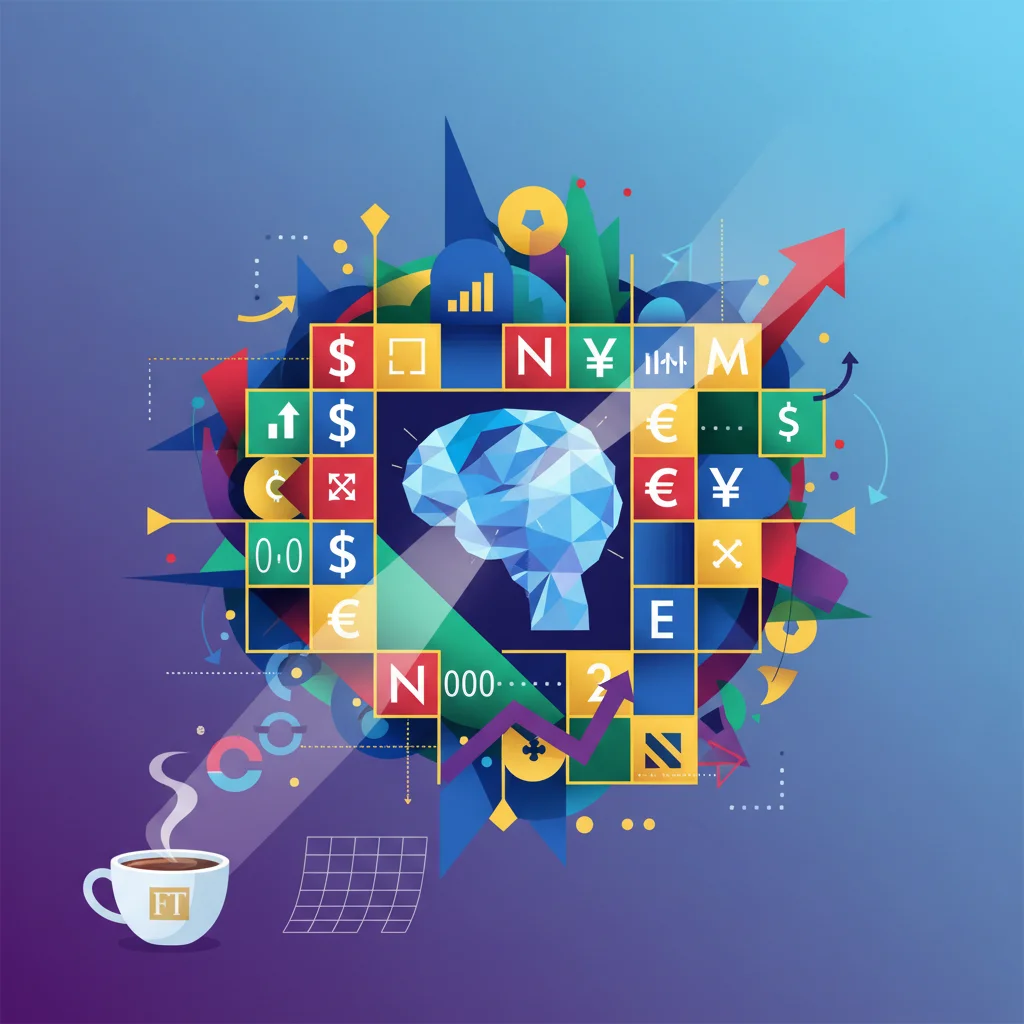
Every week, enthusiasts settle in with a cup of coffee to tackle the Financial Times Crossword, a celebrated ritual of intellectual sparring. The Polymath puzzle, in particular, is a formidable challenge, a labyrinth of cryptic clues, anagrams, and intersecting knowledge. It demands more than just a strong vocabulary; it requires lateral thinking, pattern recognition, and the ability to connect seemingly disparate pieces of information into a coherent whole. In this intricate dance of words and wit, there lies a powerful metaphor for navigating the equally complex world of modern finance.
Just like the crossword grid, the global economy is a tapestry of interconnected variables. A shift in monetary policy in one country can ripple through the global stock market. A breakthrough in financial technology can redefine the very nature of banking. To the untrained eye, it can seem like a chaotic jumble. But for the discerning investor, business leader, or finance professional, it’s a puzzle waiting to be solved. Success no longer belongs to the narrow specialist, but to the polymath—the individual who can read the clues, understand the connections, and see the bigger picture.
The Anagrams of Opportunity: Finding Value in Market Noise
One of the most satisfying moments in solving a crossword is untangling an anagram. The letters are all there, but they’re jumbled, presenting a facade of nonsense. The solver’s job is to rearrange them to reveal the hidden word. This is a perfect analogy for value investing and identifying opportunities in a noisy stock market. The essential data and potential of a company are often present in its financial statements and market position, but they can be obscured by short-term market sentiment, sensationalist headlines, or a temporary downturn in its sector.
The “polymath investor” looks past the noise. They don’t just see a falling stock price; they see the same letters—strong fundamentals, a solid balance sheet, a durable competitive advantage—and recognize that they are merely scrambled. They perform deep due diligence, much like a cruciverbalist tests different letter combinations. This approach requires patience and a contrarian spirit, a willingness to buy when others are fearful. It’s about recognizing that the market has momentarily misspelled a company’s true worth and having the conviction to arrange the letters correctly in your own portfolio before everyone else figures it out.
This skill is increasingly crucial in an era of high-frequency trading and algorithm-driven strategies, where market movements can become disconnected from underlying fundamentals. The ability to look at the raw data and see the coherent, valuable company within is a timeless investing principle.
The Venezuelan Oil Gambit: Why Trump's 0 Billion Pitch Clashed with Corporate Reality
Decrypting the Clues: How to Read Economic Indicators
Crossword clues are often cryptic, using wordplay, double meanings, and clever misdirection. A clue like “Listen to the sound of the herd” might lead to the answer “CATTLE,” but the journey requires a moment of interpretive insight. Similarly, key economic indicators—from Consumer Price Index (CPI) reports to unemployment figures and GDP growth rates—are the market’s cryptic clues. They are rarely straightforward.
A strong jobs report, for instance, might seem unequivocally positive. But a polymath thinker in finance immediately asks follow-up questions. Does this signal an overheating economy that could prompt the central bank to raise interest rates? If so, how will that affect bond yields, growth stock valuations, and the cost of capital for businesses? This multi-layered analysis is essential. The headline number is just the surface clue; the real “answer” lies in its second- and third-order effects on the broader economy and various asset classes.
To better understand this, consider how different indicators provide different pieces of the puzzle:
| Economic Indicator | What It Measures | Potential Market Interpretation (The “Cryptic” Layer) |
|---|---|---|
| Consumer Price Index (CPI) | The average change in prices paid by urban consumers for a basket of goods and services. | High CPI (inflation) can lead to higher interest rates, hurting growth stocks and bonds, but may benefit commodities. |
| Gross Domestic Product (GDP) | The total monetary value of all goods and services produced within a country’s borders. | Strong GDP growth is good for the stock market, but if it’s “too strong,” it can also signal future inflation and rate hikes. |
| Unemployment Rate | The percentage of the labor force that is jobless and actively looking for work. | A very low rate can signal a tight labor market, leading to wage inflation and pressure on corporate profit margins. |
| Purchasing Managers’ Index (PMI) | An index of the prevailing direction of economic trends in the manufacturing and service sectors. | A reading above 50 indicates expansion, but a rapid increase can signal supply chain pressures and future inflation (source). |
Effective financial strategy, whether in personal investing or corporate finance, depends on this ability to interpret, not just read, the data. It’s the art of understanding the nuance behind the numbers, a core tenet of modern economics.
The Treasury's Grand Slam: Deconstructing the US's "Homerun Deal" on the Argentine Peso
The Intersecting Grid: Thriving in a Hyper-Connected Global Market
No crossword answer exists in a vacuum. Each word is constrained and confirmed by the letters of the words it crosses. This interdependence is the grid’s fundamental organizing principle. It’s also the defining characteristic of the 21st-century global economy. The idea that any national stock market, industry, or company can be analyzed in isolation is a dangerous fiction. A semiconductor shortage in Taiwan impacts auto manufacturers in Germany and technology giants in the United States. A shift in monetary policy by the European Central Bank influences currency trading in London and investment flows into emerging markets.
This interconnectedness is both a source of systemic risk and immense opportunity. The polymath investor understands these linkages. They track not just their own domestic market but also international trade policies, geopolitical tensions, and global commodity flows. They recognize that a new financial technology or fintech platform launched in Singapore could be a disruptive threat to traditional banking institutions in North America within a few years. According to a 2023 report by EY, the global fintech adoption rate continues to climb, demonstrating how quickly these disruptions can cross borders.
Navigating this grid requires a global perspective. It involves diversifying not just across asset classes but across geographies, and understanding that the most significant risks and rewards may originate far from your home market. The original FT Crossword itself is a global creation, enjoyed by a worldwide audience—a small reflection of the interconnected world it inhabits.
The Polymath’s Advantage: Why Finance Demands Multi-Disciplinary Thinking
Ultimately, the FT puzzle is named “Polymath” for a reason. It draws on knowledge from history, science, art, and geography. The winner is not the person with the biggest vocabulary, but the one with the broadest base of knowledge. This is the final and most crucial lesson for modern finance.
The days of succeeding with a singular focus on discounted cash flow models are over. Today’s financial landscape is a fusion of disciplines:
- Technology: Understanding concepts like blockchain, artificial intelligence in trading, and the architecture of financial technology is no longer optional. These are not just IT concerns; they are fundamental drivers of value and disruption in the banking and investing sectors.
- Psychology: The field of behavioral economics has proven that markets are not perfectly rational. Understanding cognitive biases—like herd mentality, loss aversion, and confirmation bias—is essential for making sound investment decisions and for not getting swept up in market manias or panics.
- Geopolitics: From trade wars to international conflicts, political events are now primary market movers. A deep understanding of international relations is a prerequisite for effective risk management.
- Data Science: The ability to work with and interpret large datasets is becoming a core competency in finance, from quantitative trading to corporate financial planning.
Building this polymathic skill set is the ultimate challenge. It requires a commitment to continuous learning and intellectual curiosity. It means reading beyond financial reports—consuming books on history, technology, and science—and constantly seeking to connect the dots. Just as a crossword solver fills in the final letter to complete the grid, the polymath investor assembles diverse insights to form a complete, coherent, and profitable view of the world.
A New Economic Era: Unpacking the EU-Mercosur Trade Deal 25 Years in the Making
The next time you see a complex crossword, see it not just as a pastime, but as a training ground. It teaches us to look for hidden patterns, to interpret cryptic signals, to understand interdependence, and to draw upon a wide range of knowledge. These are the very skills that define success in the intricate, challenging, and ultimately rewarding puzzle of modern finance.

Related Posts
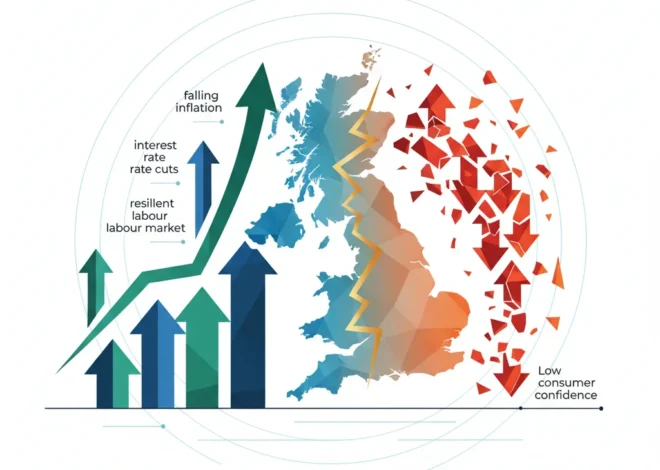
The UK’s Economic Paradox: Why Consumer Confidence Reveals a Nation Divided
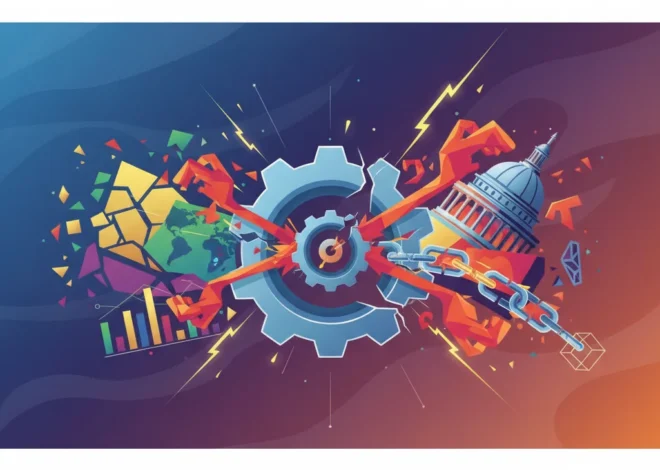
The High-Stakes Showdown: Why Political Interference with the Federal Reserve Threatens Your Portfolio and the Global Economy