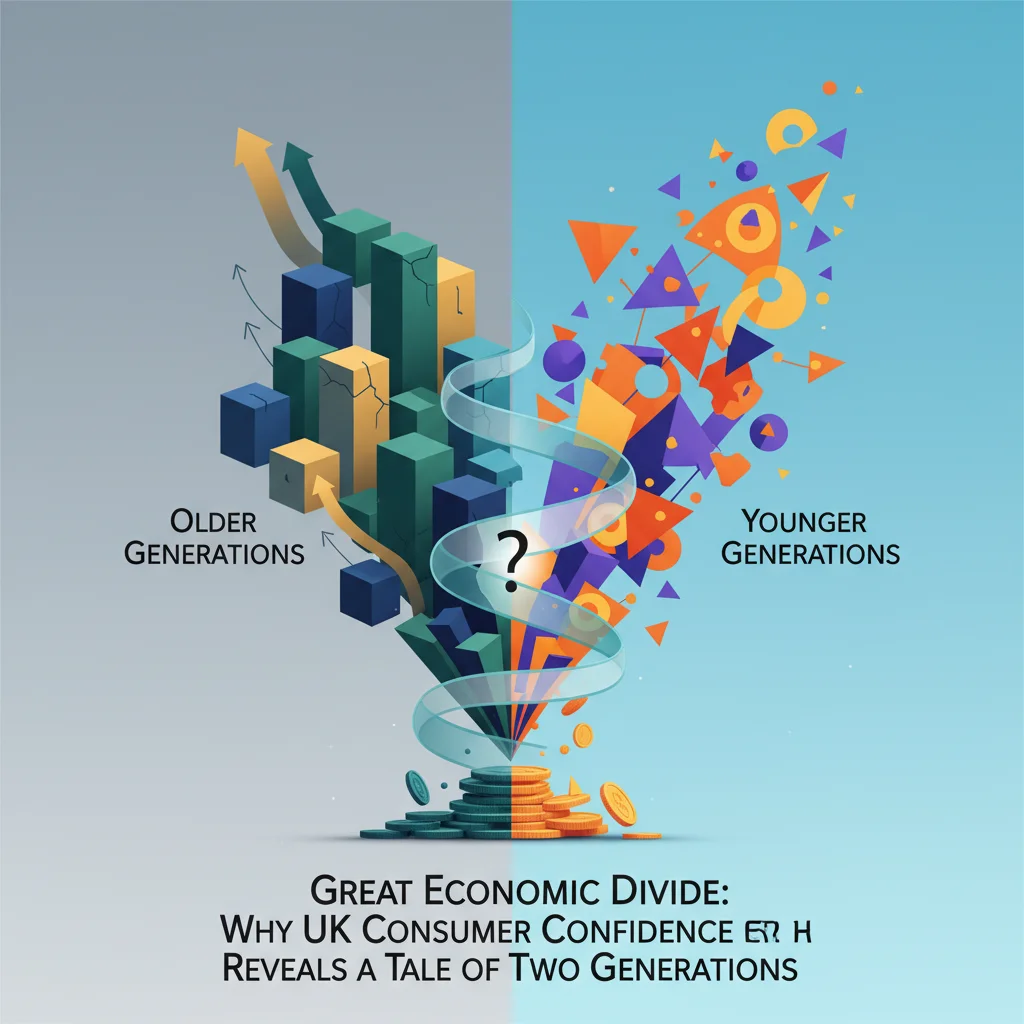
The Great Economic Divide: Why UK Consumer Confidence Reveals a Tale of Two Generations
A Glimmer of Hope or a Statistical Mirage?
In the complex world of economics, sentiment is a powerful, albeit intangible, force. It can dictate spending habits, influence business investment, and ultimately shape the trajectory of an entire nation’s financial health. Recently, a flicker of optimism has appeared on the UK’s economic horizon. New data suggests that consumer sentiment levels are beginning to rebound, a welcome sign after a period of prolonged uncertainty marked by high inflation and geopolitical instability. This nascent recovery hints at a potential “new leaf” for the economy as we look towards 2026.
However, peeling back the layers of this headline figure reveals a more complex and fractured reality. This newfound confidence is not a universally shared experience. A significant generational divide is emerging, with younger demographics feeling the winds of change while older generations remain anchored in pessimism. This divergence isn’t just a curious footnote; it’s a critical indicator that tells a deeper story about the state of the UK economy, the challenges of modern finance, and the long-term implications for investing, banking, and wealth creation.
This post will delve into the nuances of this consumer confidence gap. We’ll explore the underlying economic factors driving this split, analyze what it means for the stock market and various asset classes, and consider the long-term consequences for policymakers and individuals alike. Is this a sign of a two-speed recovery, and what can it truly tell us about the financial landscape of tomorrow?
Decoding the Data: A Fractured Recovery
At its core, consumer confidence is a measure of how optimistic people feel about their own financial situation and the economy’s health. When confidence is high, consumers are more likely to make major purchases—cars, homes, holidays—which fuels economic growth. When it’s low, they tend to save more and spend less, which can slow the economy down. That’s why economists and investors watch these figures so closely.
The recent rebound, while positive on the surface, is heavily skewed. The analysis from the BBC’s Faisal Islam points out a stark contrast: while some (primarily younger) consumers are beginning to feel more secure, their older counterparts seem “immune” to this wave of optimism (source). To understand this chasm, we must examine the distinct economic pressures and opportunities facing each group.
Below is a breakdown of the key factors influencing the economic sentiment across different generations:
| Economic Factor | Perspective of Younger Generations (Under 45) | Perspective of Older Generations (Over 55) |
|---|---|---|
| Interest Rates | Potentially beneficial for first-time savers, but high mortgage rates are a major barrier to homeownership and increase costs for existing variable-rate mortgage holders. | Higher rates provide a much-needed boost to income from savings and fixed-income investments, but can devalue existing bond portfolios. |
| Inflation | High inflation erodes wage growth and purchasing power, particularly for essentials like rent, food, and energy, which make up a larger portion of their budget. | Devastating for those on fixed incomes or pensions. The rising cost of living directly reduces their standard of living with little opportunity to increase income. |
| Job Market & Wages | A relatively tight labor market has provided some wage growth and job security, especially in high-demand sectors like technology and green energy. | Less direct participation in the job market. Concerns are more focused on the long-term stability of pensions and investments rather than immediate wage gains. |
| Asset Ownership | Less likely to own significant assets like property. May have more exposure to volatile assets like equities or cryptocurrencies through modern trading apps and fintech platforms. | Often asset-rich (e.g., homeowners who have paid off their mortgage) but cash-flow sensitive. Their wealth is tied to property values and the performance of traditional investment portfolios. |
This table illustrates that the same economic indicator—for example, a rise in interest rates—can be perceived very differently depending on one’s stage of life and financial standing. For a young professional, it’s a barrier to a mortgage; for a retiree, it’s a welcome boost to their savings income.
The Lego Principle: What "Smart" Toys Teach Us About Dumb Investments
Why the Generational Pessimism Gap Matters
The immunity of older generations to the recent uptick in confidence is a significant red flag for the broader economy. This demographic holds a disproportionate amount of the nation’s wealth and has traditionally been a reliable source of consumer spending. Their continued caution could act as a powerful brake on a full-throated economic recovery.
Several deep-seated factors contribute to this entrenched pessimism:
- The Scars of Past Crises: Older individuals have lived through more economic downturns—the recessions of the 80s and 90s, the dot-com bust, the 2008 global financial crisis. This experience fosters a greater sense of caution and a “this too shall pass” skepticism towards nascent recoveries.
- The Reality of Fixed Incomes: For retirees or those nearing retirement, the battle is not about future wage growth but about preserving the value of their existing capital. The recent bout of high inflation was not a theoretical concept from an economics textbook; it was a direct and painful erosion of their purchasing power that cannot be easily recouped.
- Interest Rate Sensitivity: While higher rates help savers, they also create anxiety. The Bank of England’s fight against inflation has led to a volatile interest rate environment, creating uncertainty around investment returns and the stability of the financial system. This uncertainty disproportionately affects those who rely on their investments for income.
The rise of modern financial technology has also played a role. Younger generations are more adept at using fintech tools for budgeting, investing, and accessing credit, which may give them a greater sense of control and optimism over their financial lives. In contrast, traditional banking models used by many older individuals offer less agility in a rapidly changing economic climate.
This creates a bifurcated market. We could see sustained demand for stable, dividend-paying “value” stocks favored by retirees, while at the same time, a speculative fervor continues in high-growth “story” stocks. For investors, the key is to understand which narrative is driving which part of the market. Ignoring the pessimism of the demographic that holds the most wealth is a perilous mistake. Their eventual return to the market could signal the true, broad-based start of the next bull run. Until then, we’re in a push-pull economy, driven by two entirely different mindsets.
Implications for Investors and Business Leaders
Understanding this consumer confidence divide is crucial for making informed decisions. It’s not enough to know the headline number; you must know who is confident and why.
For Investors:
The split suggests a nuanced approach to portfolio construction. Sectors that cater to younger consumers—such as technology, experiences, and sustainable goods—may see continued growth driven by their relative optimism. Conversely, companies reliant on spending from older demographics, such as high-end retail, traditional travel, and big-ticket home improvements, may face persistent headwinds until that group’s sentiment improves. A rebound in confidence across all age groups would be a much stronger signal for a broad market rally.
Trump's 10% Credit Card Rate Cap: Economic Lifeline or Financial Chaos?
For Business Leaders:
This data is a goldmine for strategic planning. Businesses must segment their markets by more than just income; age-based psychology is now a primary driver. Marketing messages that resonate with a hopeful, future-focused younger audience will likely fail with a cautious, security-focused older audience. Companies may need to develop dual strategies: one focused on value and reliability to attract older consumers, and another focused on innovation and growth to capture the younger market.
Looking Ahead: The Road to 2026
What will it take to bridge this confidence gap and foster a truly inclusive economic recovery? The path forward likely depends on one key factor: the sustained and convincing defeat of inflation. Until older generations feel that the value of their savings and pensions is secure, their purse strings will remain tight.
Furthermore, political and economic stability will be paramount. A clear, long-term strategy from the government and the Bank of England can help soothe the nerves of experienced investors who have seen policy missteps derail recoveries in the past. As we look toward the middle of the decade, the convergence of these generational sentiments will be the truest indicator of whether the UK has genuinely turned a new leaf.
The current rebound in consumer sentiment is a fragile green shoot in the economic landscape. While it offers hope, the deep roots of pessimism among a critical segment of the population serve as a stark reminder that the journey to a robust and shared prosperity is far from over. The real test will be whether the optimism of the young can become infectious or if the caution of the old proves prescient.
The Great Retail Divide: Why Food Feasted and Fashion Famished in the UK's Christmas Showdown
Ultimately, the tale of consumer confidence is a human story. It reflects our collective hopes, fears, and experiences. For investors, business leaders, and policymakers, learning to read between the lines of these stories is the key to navigating the complex and ever-evolving world of finance and economics.

Related Posts
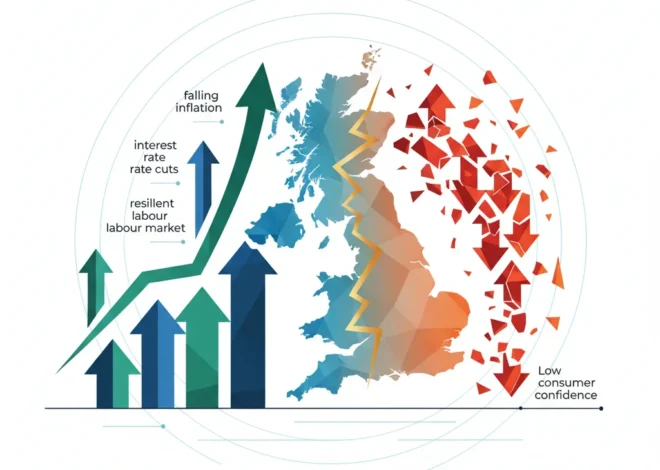
The UK’s Economic Paradox: Why Consumer Confidence Reveals a Nation Divided

The High-Stakes Showdown: Why Political Interference with the Federal Reserve Threatens Your Portfolio and the Global Economy