The Great AI Chip Standoff: Why China Just Put Nvidia’s H200 on Ice
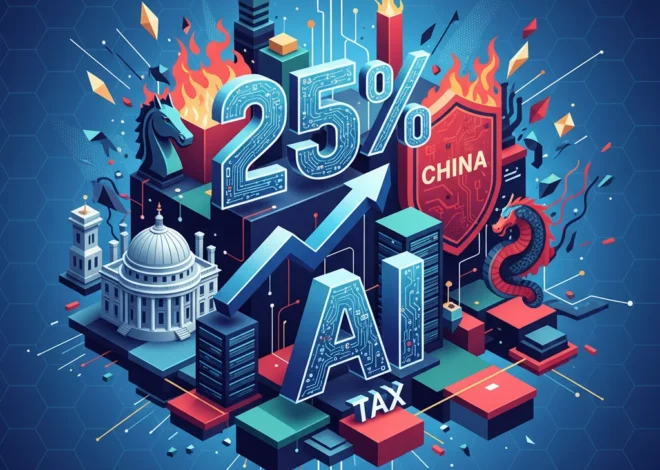
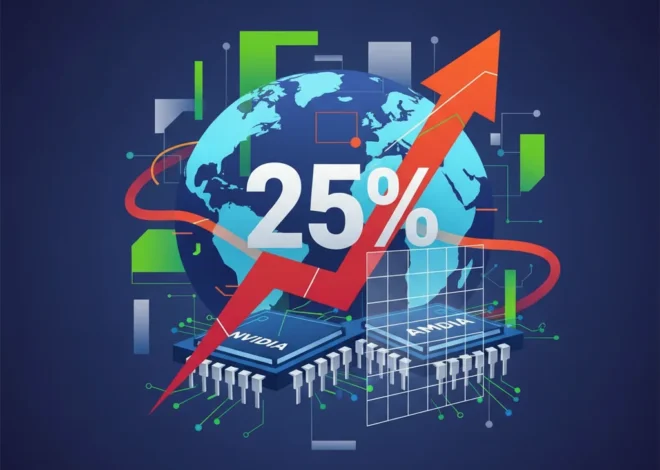
In the high-stakes chess game of global technology, a stunning new move has just been played. The world of artificial intelligence, a realm powered by silicon and ambition, is holding its breath. According to a bombshell report from the Financial Times, production of Nvidia’s H200 artificial intelligence chip—a processor specifically engineered to comply with stringent U.S. export controls for the Chinese market—has been halted. The reason? Not a decree from Washington, but a deafening silence from Beijing.
Suppliers have reportedly paused output due to uncertainty over whether the Chinese government will even allow these chips to be imported. This development marks a dramatic turning point in the ongoing U.S.-China tech rivalry. For months, the narrative has been about the U.S. restricting China’s access to advanced technology. Now, the script has flipped, with China potentially rejecting the very hardware designed to placate those restrictions. This isn’t just a supply chain hiccup; it’s a geopolitical power play with profound implications for the future of AI, cloud computing, and global innovation.
The Background: Walking a Geopolitical Tightrope
To understand the gravity of this situation, we need to rewind. The U.S. government, citing national security concerns, has implemented a series of increasingly tight export controls aimed at slowing China’s progress in advanced artificial intelligence, particularly for military applications. These rules effectively banned American companies like Nvidia from selling their most powerful AI accelerators, such as the A100 and the world-beating H100, to Chinese entities.
Nvidia, for whom China represents a massive market—historically accounting for 20-25% of its data center revenue—responded with a clever strategy. They created custom, lower-performance versions of their flagship chips, the A800 and H800, specifically designed to fall just below the performance thresholds set by the U.S. Department of Commerce. It was a delicate balancing act: creating a product powerful enough for Chinese customers but not so powerful as to violate U.S. law.
This worked for a while. But in October 2023, the Biden administration tightened the screws again, updating the rules to close loopholes and effectively banning the A800 and H800 as well. Undeterred, Nvidia went back to the drawing board to create a new trio of compliant chips: the H20, L20, and L2. The H200 (often referred to as H20 in early reports) was set to be the flagship of this new China-focused lineup. Now, its very existence is in limbo.
The Paywall Paradox: Why Elon Musk Is Locking Grok's AI Power Behind a Price Tag
Understanding the H200: A Compromise on Silicon
The Nvidia H200 is a fascinating piece of engineering, born from geopolitical constraints rather than pure performance goals. It’s based on the same powerful “Hopper” architecture as the flagship H100 but has been intentionally modified to comply with U.S. export rules. The key limitations imposed by the U.S. revolve around “performance density” and high-speed interconnects, which are crucial for training massive AI models.
To visualize the compromises made, let’s compare the H200 to its more powerful siblings and its predecessors.
| Specification | Nvidia A100 | Nvidia H100 (Full Power) | Nvidia H800 (Old China Chip) | Nvidia H200 (New China Chip) |
|---|---|---|---|---|
| Architecture | Ampere | Hopper | Hopper | Hopper |
| FP16/BF16 Tensor Core Performance | ~312 TFLOPS | ~989 TFLOPS | ~989 TFLOPS | ~296 TFLOPS |
| Memory (HBM) | 40GB / 80GB | 80GB | 80GB | 96GB |
| Memory Bandwidth | ~2.0 TB/s | ~3.35 TB/s | ~3.35 TB/s | ~4.0 TB/s |
| Interconnect (NVLink) | 600 GB/s | 900 GB/s | 400 GB/s | 900 GB/s |
| Compliance Status | Banned in China | Banned in China | Banned in China (by new rules) | Designed for Compliance |
As the table shows, the H200 presents a strange profile. While its raw compute performance (TFLOPS) is significantly lower than the full-power H100 and even slightly below the older A100, it boasts a massive 96GB of high-bandwidth memory. This suggests Nvidia’s engineers focused on maximizing the memory capacity and bandwidth—parameters less restricted by the rules—to compensate for the mandated reduction in raw processing power. This design choice would make it suitable for large language model (LLM) inference, which requires holding huge models in memory, but less efficient for the initial training process compared to its unrestricted counterparts.
First, it’s a message of national pride and self-reliance. Beijing is telling the world—and its own domestic market—that it will not be dependent on “compliance” hardware from the U.S. It’s a powerful endorsement of homegrown alternatives, even if they aren’t quite at Nvidia’s level yet.
Second, it could be a hardball negotiation tactic. By creating uncertainty, China might be trying to pressure Nvidia and the U.S. government, though this seems less likely given Washington’s firm stance.
Finally, and perhaps most importantly, it could be a cold, calculated assessment of performance. Chinese AI labs might have concluded that the H200’s compromises are too great. If its performance is too close to or even surpassed by domestic solutions from companies like Huawei, why would they invest billions in a foreign-made, politically fraught alternative? This move could be the strongest tailwind yet for China’s domestic semiconductor ambitions.
The Ripple Effect: What This Means for the Tech Ecosystem
The decision by parts makers like Wistron to halt production, as highlighted by the FT, is the first domino to fall. The downstream consequences will be felt across the entire technology landscape, from cloud providers to individual developers.
For Nvidia: A Multi-Billion Dollar Question Mark
Nvidia is in an incredibly tough spot. The company has masterfully navigated complex geopolitics to maintain its market dominance, but this new challenge comes from the customer, not the regulator. A sustained rejection of its China-specific chips could wipe out a significant portion of its projected revenue and force a major strategic rethink. It also risks ceding the world’s largest AI market to domestic competitors who are rapidly improving their own hardware.
For Chinese Tech Giants: The Scramble for Compute
Companies like Alibaba, Baidu, and Tencent are in a desperate race to build generative AI and machine learning capabilities to rival those in the West. They have been stockpiling Nvidia chips for over a year, but those stockpiles won’t last forever. This halt creates a massive compute vacuum. Their options are:
- Pivot to Domestic: Double down on investments in and partnerships with local champions like Huawei and its Ascend series of AI chips. This aligns with Beijing’s goals but may come with a performance penalty in the short term.
- Cloud Alternatives: Use cloud computing services from their own data centers located outside of China (e.g., in Singapore) to access unrestricted AI hardware, though this raises data sovereignty and latency issues.
- Rethink AI Architecture: Focus on software optimization, developing more efficient AI models and programming techniques that can run effectively on less powerful hardware. This could spur innovation in AI software and automation.
Paywalling Safety? The X Grok AI Controversy and the High Price of Innovation
For Startups and Developers: A Widening Chasm
For entrepreneurs and tech professionals, this development signals the hardening of a “silicon curtain.” A developer building a SaaS application in Shanghai may have access to a fundamentally different and less powerful hardware stack than their counterpart in Silicon Valley. This could lead to a divergence in AI innovation, with different models, platforms, and capabilities evolving in parallel. It also presents a major challenge for cybersecurity, as securing two distinct and increasingly isolated tech ecosystems becomes exponentially more complex.
The Road Ahead: Navigating a Fractured Tech World
The halt in H200 production is more than a news headline; it’s a symptom of a deeper fragmentation in the global technology order. The era of truly globalized hardware and software development, where the best tools were available to anyone with the budget, is rapidly coming to a close. We are entering a new phase of the tech war, one defined not just by export controls but by strategic import denials and a fierce race for technological self-sufficiency.
For professionals in the tech industry, this new reality demands adaptation. Startups will need to consider the geopolitical alignment of their cloud providers and hardware stacks. Developers may need to become experts in optimizing code for multiple, disparate hardware architectures. And for everyone involved in artificial intelligence, the fundamental resource of raw computing power can no longer be taken for granted. The chess board has been reset, and the next moves from Beijing, Washington, and Nvidia’s headquarters in Santa Clara will determine the shape of innovation for years to come.
China's AI Gold Rush: Why MiniMax's Blockbuster IPO is a Game-Changer
The great AI chip standoff is just beginning. The immediate question is whether this is a temporary pause or a permanent halt. The long-term question is whether the global AI ecosystem can thrive when it’s split in two.