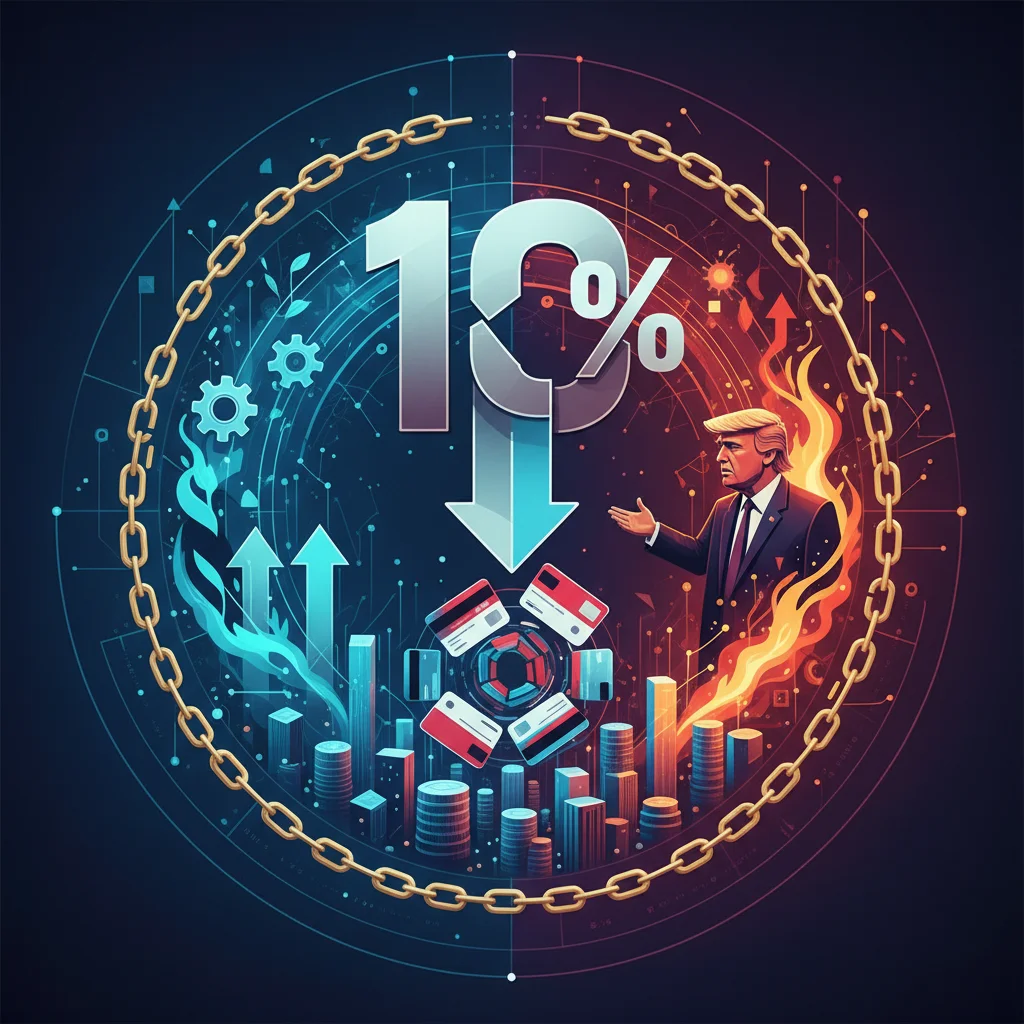
The 10% Cap Conundrum: Trump’s Credit Card Proposal and the Future of American Finance
The Billion-Dollar Question: Can a 10% Cap Solve America’s Credit Card Crisis?
In the high-stakes world of economic policy, few proposals land with the explosive force of a direct price control. Former President Donald Trump’s recent suggestion to cap credit card interest rates at 10% has done just that, sending shockwaves through the banking sector and igniting a fierce debate about the health of the American consumer and the stability of the financial system. The idea, which has found surprising allies across the political spectrum, targets a problem plaguing millions: spiraling credit card debt, now exceeding a staggering $1.13 trillion in the U.S.
While the proposal was met with predictable and swift backlash from bank executives, its implications stretch far beyond Wall Street boardrooms. For investors, finance professionals, and business leaders, this isn’t just a political headline; it’s a potential seismic shift in the landscape of consumer finance, risk management, and the fundamental business model of lending. Would such a cap be a lifeline for indebted Americans, or would it trigger a credit crunch with devastating unintended consequences for the very people it aims to help? This analysis delves into the intricate economic, market, and technological dimensions of this bold proposal.
Anatomy of a Crisis: Why Are Credit Card Rates So High?
To understand the appeal of a rate cap, one must first grasp the severity of the current situation. The average annual percentage rate (APR) on credit card accounts assessed interest recently soared to a record 22.8%, according to the Federal Reserve. This punitive rate means that for a consumer carrying a balance, their debt can compound at a dizzying pace, trapping them in a cycle that’s difficult to escape. This reality has significant ramifications for the broader economy, as money spent servicing high-interest debt is money not spent on goods and services, thus acting as a drag on economic growth.
These high rates aren’t arbitrary. They are a product of several factors:
- Federal Reserve Policy: The primary driver has been the Federal Reserve’s aggressive campaign of interest rate hikes to combat inflation. As the federal funds rate rises, the prime rate—which banks use as a benchmark—rises in lockstep, directly impacting variable-rate credit card APRs.
- Risk-Based Pricing: Credit cards are a form of unsecured debt. Unlike a mortgage or auto loan, there is no collateral for the bank to seize if the borrower defaults. To compensate for this higher risk, lenders charge higher interest rates, with the riskiest borrowers receiving the highest APRs.
- Profit Motive: The credit card business is a cornerstone of profitability for many major financial institutions. Net interest margin—the difference between the interest banks earn on assets and the interest they pay on liabilities—is a key metric, and credit card portfolios are significant contributors.
The confluence of these factors has created a perfect storm, leaving millions of consumers vulnerable and making the idea of a government-mandated cap politically potent.
Trump's 10% Credit Card Rate Cap: Economic Lifeline or Financial Chaos?
The Case for a Cap: A Lifeline for Consumers?
Proponents of the 10% cap argue that it is a necessary intervention to curb what they see as predatory lending practices and provide immediate relief to households. The core argument is one of consumer protection and economic fairness. By limiting the amount of interest that can be charged, the policy could potentially:
- Reduce the Debt Burden: A lower interest rate would mean more of a consumer’s payment goes toward the principal balance, allowing them to pay off debt faster and save thousands of dollars in interest charges over time.
- Boost Consumer Spending: With less money allocated to servicing debt, households would have more disposable income to spend on essential goods and services, potentially stimulating economic activity.
- Promote Financial Stability: By preventing debt from spiraling out of control, a cap could reduce delinquency and default rates, leading to greater financial stability at the household level.
The Rebuttal from the Banks: Unintended Consequences and Market Chaos
The financial services industry argues that a government-mandated price ceiling on interest would not eliminate risk—it would simply force banks to avoid it. The consequences of this de-risking could be severe and widespread, potentially harming the most vulnerable consumers.
Here’s a breakdown of the potential negative impacts, as articulated by banking executives and economists:
| Area of Impact | Potential Negative Consequence of a 10% Rate Cap |
|---|---|
| Credit Availability | Lenders would be unable to price for the risk associated with subprime or near-prime borrowers. This would likely lead to a massive contraction of credit, with millions of Americans losing access to credit cards altogether. |
| Increased Fees | To compensate for lost interest income, banks would almost certainly increase other charges. Expect higher annual fees, late payment penalties, over-limit fees, and the elimination of rewards programs. |
| Impact on Small Banks | While large, diversified banks might weather the storm, smaller community banks and credit unions that rely more heavily on their credit card portfolios could face existential threats to their business models. |
| Economic Slowdown | A reduction in available credit would act as a powerful brake on consumer spending, which accounts for roughly 70% of the U.S. economy. This could stifle economic growth or even tip the economy into a recession. |
Essentially, the argument is that you cannot legislate away risk. If banks are forced to lend at a rate that doesn’t adequately compensate them for potential defaults, they will simply stop lending to anyone deemed a moderate or high risk. This would create a “credit desert” for a significant portion of the population, potentially pushing them toward less regulated and more dangerous forms of credit, such as payday loans or pawnshops.
The Lego Principle: What "Smart" Toys Teach Us About Dumb Investments
Implications for the Broader Financial Ecosystem
The debate over a rate cap extends into every corner of the modern finance world, from the stock market to the burgeoning fintech sector.
For those involved in investing and trading, the proposal introduces a significant new regulatory risk for the financial sector. Stocks of major credit card issuers like Capital One, American Express, and Discover, as well as universal banks like JPMorgan Chase and Bank of America, would face immediate pressure. A cap on their most profitable products would lead to downward revisions of earnings estimates, likely triggering a sell-off in financial stocks and creating volatility in the broader market.
However, this disruption could also create opportunities. The field of financial technology could be a major beneficiary. If traditional banks pull back from serving lower-credit-score consumers, it creates a massive market gap. Fintech companies, with their advanced data analytics, AI-powered credit scoring models, and lower overhead costs, might be better positioned to serve this demographic, even under a capped-rate environment. We could see an acceleration of innovation in alternative lending, peer-to-peer platforms, and even decentralized finance (DeFi) solutions built on blockchain technology that aim to disintermediate traditional banks entirely.
This highlights a central theme in modern economics: regulation often acts as a catalyst for technological disruption. A restrictive environment for incumbents can become a fertile breeding ground for agile, tech-forward challengers.
Venezuela's 0 Billion Default: Deconstructing the Most Complex Debt Restructuring in History
Conclusion: A Complex Problem with No Easy Answer
President Trump’s proposal to cap credit card interest rates at 10% has successfully spotlighted a genuine crisis of consumer debt in America. It forces a necessary conversation about fairness, corporate responsibility, and the social contract between lenders and borrowers. However, the proposed solution, while simple and appealing on the surface, is fraught with economic peril.
The consensus among most economists is that a hard cap would likely lead to a severe credit contraction, hurting the very low-to-middle-income consumers it purports to help. The cure could be worse than the disease, restricting access to a vital financial tool and potentially hampering economic growth. The path forward likely lies not in blunt price controls, but in a more nuanced approach that encourages competition, promotes financial literacy, demands greater transparency from lenders, and embraces the innovative potential of financial technology to build a more inclusive and equitable credit system. For everyone from the everyday consumer to the seasoned investor, the evolution of this debate will be a critical indicator of the future direction of the American economy.

Related Posts

The ‘Farage Clause’: Brussels’ New Brexit Gambit and Its High-Stakes Impact on the UK Economy
The High-Stakes Showdown: Why Political Interference with the Federal Reserve Threatens Your Portfolio and the Global Economy