The Ferguson Effect: What Man Utd & UK Politics Reveal About Long-Term Investment Strategy
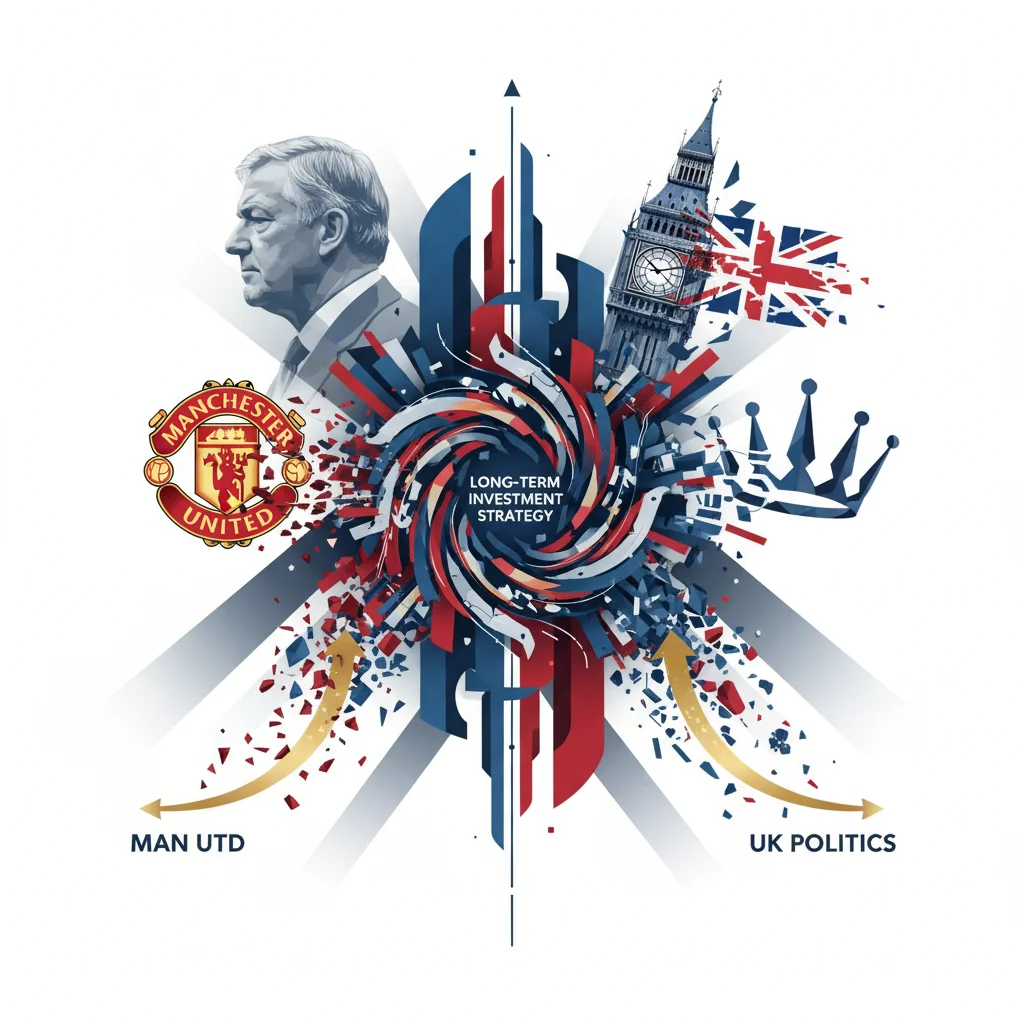
In the worlds of sport and politics, certain figures cast such a long shadow that their departure creates a void seemingly impossible to fill. For Manchester United, it was Sir Alex Ferguson. For the UK’s Conservative Party, it was arguably Margaret Thatcher, and for the Labour party, Tony Blair. A poignant letter in the Financial Times recently drew a sharp parallel between the subsequent struggles of the iconic football club and the country’s political leadership, identifying a common root cause: a failure of ownership.
This analogy is more than just a clever observation; it’s a powerful case study for investors, business leaders, and anyone interested in the mechanics of sustainable success. The decline of these once-dominant institutions offers a masterclass in the perils of short-termism, the critical importance of succession planning, and the devastating financial consequences of a leadership vacuum. By dissecting the parallel woes of Downing Street and Old Trafford, we can uncover timeless principles that directly impact the **stock market**, corporate governance, and the broader **economy**.
The Golden Eras: Building a Dynasty on Vision and Stability
To understand the decline, we must first appreciate the heights from which they fell. Sir Alex Ferguson’s 26-year tenure at Manchester United was not just successful; it was an era of unprecedented dominance. He cultivated a culture of relentless ambition, shrewdly rebuilt his team multiple times, and established a winning machine that adapted and evolved. His success was built on a long-term vision, unwavering authority, and a deep understanding of the institution’s DNA.
Similarly, the political tenures of Margaret Thatcher (1979-1990) and Tony Blair (1997-2007) were transformative, albeit ideologically opposed. Both leaders commanded significant parliamentary majorities and governed with a clear, long-term agenda. Thatcher reshaped the British **economy** through privatization and deregulation, while Blair pursued a “Third Way” of public service reform and economic modernization. Regardless of one’s political stance, their eras were defined by conviction, stability, and a coherent strategic direction that allowed for long-range planning in both public policy and private **investing**.
The Aftermath: A Revolving Door of Leaders and Strategies
The departure of a titan creates a power vacuum, and what followed in both arenas was a chaotic scramble to recapture past glories. The results have been strikingly similar: a revolving door of leaders, incoherent strategies, and a palpable sense of decline.
At Manchester United, the post-Ferguson era has been a costly and frustrating search for a worthy successor. Highly-credentialed managers have come and gone, each trying and failing to impose their philosophy on a club seemingly shackled by its own history.
This table illustrates the managerial instability at Manchester United since 2013:
| Manager | Tenure | Win Percentage | Major Trophies |
|---|---|---|---|
| David Moyes | 2013–2014 | 52.94% | 0 |
| Louis van Gaal | 2014–2016 | 52.43% | 1 |
| José Mourinho | 2016–2018 | 58.33% | 2 |
| Ole Gunnar Solskjær | 2018–2021 | 54.17% | 0 |
| Erik ten Hag | 2022–Present | 58.93% (as of late 2023) | 1 |
Data compiled from various public sources, reflecting a period of high turnover and inconsistent results.
In the political sphere, the UK has witnessed a similar acceleration of leadership changes, particularly since the 2016 Brexit referendum. This instability has made it difficult to implement long-term economic policy, creating uncertainty for markets and businesses. According to the Institute for Government, the UK has had five Prime Ministers in the same period it took to have one between 1997 and 2007. This political churn directly impacts economic confidence and the stability required for sound **finance** and long-term investment.
This period of political turbulence has been marked by swings in economic strategy, from austerity to high-spending promises and the short-lived “mini-budget” of 2022, which sent shockwaves through the UK’s **banking** and financial markets (source).
XRP's Post-SEC Surge: Navigating the Crossroads of Regulation and Market Reality
The Root Cause: When Ownership Fails the Institution
The core of the analogy lies not with the managers or Prime Ministers themselves, but with the “owners” who appoint them. For Manchester United, this is the Glazer family, whose 2005 leveraged buyout loaded the club with hundreds of millions in debt. Critics argue their ownership model has prioritized debt service and dividend payments over strategic investment in the club’s infrastructure and long-term squad planning. The result is a reactive, often chaotic recruitment strategy, where vast sums are spent on players without a coherent guiding philosophy—a classic case of spending rather than smart **investing**.
In UK politics, the “ownership” can be seen as the party membership and machinery that selects the leader. In recent years, this process has seemingly prioritized ideological purity or short-term electability over the long-term national interest. The focus shifts from governing the country to managing internal party factions, leading to compromised policies and a lack of strategic vision for the nation’s **economy**.
In both cases, the ownership is seen as detached, lacking a deep-rooted understanding of the institution’s needs, and failing to provide the stable, visionary framework necessary for a successor to thrive.
The Investor’s Playbook: Lessons in Value and Governance
For those navigating the complexities of the **stock market** and corporate strategy, this cautionary tale offers several invaluable lessons:
1. Scrutinize Governance Above All Else
A charismatic CEO is appealing, but savvy investors look deeper. Analyze the board of directors and the ownership structure. Are their interests aligned with long-term shareholder value? Or, like the Glazers, are they focused on short-term extraction? A company burdened by excessive debt from a leveraged buyout or controlled by a board without relevant industry experience is a significant risk, regardless of its quarterly earnings.
2. Interrogate the Succession Plan
The fall from grace after a legendary leader’s departure is a recurring theme in business. When evaluating a company, ask hard questions about its succession pipeline. Is the culture of innovation and excellence deeply embedded, or is it concentrated in one office? A robust company has a system for nurturing talent and ensuring a smooth transition of power and philosophy. The lack of one is a sign of systemic fragility.
The Investor's Crossword: Decoding the Puzzles of the Modern Economy
3. Differentiate Between High Spending and Smart Investment
Since 2013, Manchester United has reportedly spent over £1.5 billion on player transfers, with questionable returns. This mirrors governments or corporations that throw money at problems without a coherent strategy. For investors, it’s crucial to analyze not just the size of a company’s R&D or CapEx budget, but the return on that invested capital (ROIC). Are they investing in future-proof technologies like **fintech** and efficient **financial technology**, or are they merely spending to keep up appearances?
4. The Economic Moat of a Winning Culture
The most powerful asset Ferguson built was not a collection of star players, but a culture of winning. This intangible asset is a powerful economic moat. In business, a strong corporate culture fosters innovation, attracts top talent, and creates resilience. When conducting due diligence, look for signs of this culture in employee turnover rates, management commentary, and product innovation. It is the invisible engine that drives long-term performance in any sector, from **banking** to technology.
Conclusion: The Universal Principles of Sustainable Success
The parallel struggles of Manchester United and the UK government serve as a stark reminder that the principles of success are universal. Whether on the football pitch, in the halls of power, or on the **trading** floor, sustainable value is not built on nostalgia or frantic, short-term fixes. It is forged through a clear, long-term vision, empowered by a stable and intelligent ownership structure, and executed with strategic patience.
For investors and leaders, the lesson is clear: look beyond the star player or the charismatic leader. Examine the foundations. Is the governance sound? Is the culture robust? Is there a coherent plan for the future? The organizations that can answer “yes” to these questions are the ones that will thrive long after their own titans have left the stage.
Merck's Billion Gambit: Decoding the High-Stakes Pursuit of a Cancer-Fighting Pioneer