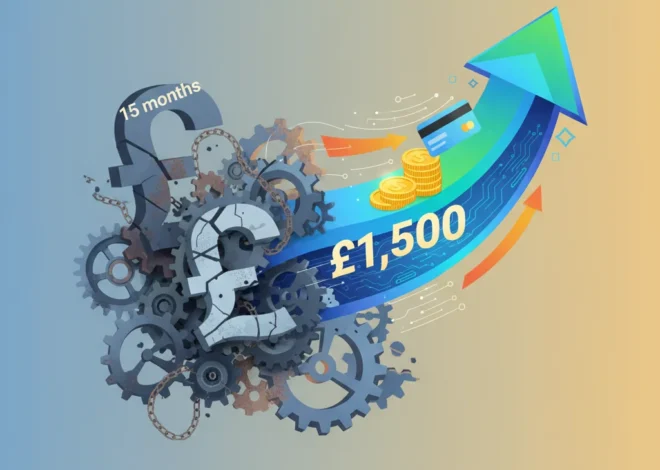
Beyond the Handout: Analyzing the UK’s New Cash Payout Scheme as an Economic Strategy
In the complex theater of modern economics, government policy often plays a leading role in shaping the narrative of stability and growth. A recent announcement from the UK government, detailing a plan to replace the Household Support Fund with direct cash payouts for those in financial crisis, is far more than a simple shift in social welfare. It’s a significant economic maneuver with far-reaching implications for the UK economy, the banking sector, and the future of financial technology.
This move, intended to provide a more direct and immediate lifeline to individuals facing sudden hardship, signals a pivotal change in the government’s approach to crisis intervention. While the immediate goal is humanitarian, the ripple effects will be felt across the stock market, in consumer spending patterns, and within the strategic planning of business leaders and investors. This article delves beyond the headlines to dissect the mechanics of this new policy, explore its potential macroeconomic consequences, and evaluate its place within the rapidly evolving landscape of finance and fintech.
From Discretionary Fund to Direct Stimulus: The Evolution of UK’s Financial Safety Net
To understand the significance of this new policy, one must first look at its predecessor. The Household Support Fund (HSF) was established as a temporary measure to help vulnerable households cope with the soaring cost of living. Administered by local councils, the HSF provided support that was often discretionary and could come in various forms, including food bank referrals, energy bill vouchers, or in-kind support for essential goods. According to a briefing from the Local Government Association, the fund has been a critical tool, but its temporary nature and varied application across different councils created inconsistencies and uncertainty.
The transition to a system of direct cash payouts represents a fundamental philosophical and operational shift. It moves away from a paternalistic model of providing specific goods and services towards one that empowers individuals with financial autonomy. This change is not merely administrative; it transforms a welfare instrument into a tool of direct, albeit targeted, fiscal stimulus.
The core principle is simple: provide money directly to those most likely to spend it immediately on essential goods and services. This approach, championed by many economists, aims to create a more efficient transfer of value, cutting through administrative layers and injecting liquidity precisely where it’s needed most in the grassroots economy.
XRP's Post-SEC Surge: Navigating the Crossroads of Regulation and Market Reality
The Macroeconomic Ripple Effect: A Deeper Dive into the Economics
A policy of this nature is never enacted in a vacuum. Its introduction sends signals that reverberate through every corner of the nation’s financial ecosystem, from consumer banking to the trading floors of the London Stock Market.
Consumer Spending, Inflation, and the Economy
Direct cash injections into the hands of low-income households have a high “velocity of money,” meaning the cash is spent quickly rather than saved. This can provide a tangible boost to consumer spending, supporting retail, grocery, and utility sectors. From an economics perspective, this acts as a micro-stimulus. However, this action walks a fine line. In an environment of persistent inflation, as the UK has experienced, any policy that significantly boosts demand without a corresponding increase in supply risks exacerbating price pressures. The Bank of England keeps a close watch on such fiscal measures, as they can complicate monetary policy aimed at controlling inflation (source). The success of the scheme will depend on its scale and how well it is targeted to avoid overheating consumer demand.
Impact on Banking and Credit Markets
For the banking sector, a robust safety net can be a double-edged sword. On one hand, providing emergency funds to individuals on the brink of financial collapse can reduce the rate of defaults on personal loans, credit cards, and mortgages. This improves the overall health of consumer credit portfolios and reduces the need for banks to provision for bad debts. On the other hand, it underscores the fragility at the lower end of the economic spectrum, a risk factor that banks and investors must price into their models. The stability of the banking system is intrinsically linked to the financial health of its customers.
The Stock Market and Investor Sentiment
Investors and those involved in trading will interpret this policy through a lens of risk and opportunity. A well-executed support system can be viewed as a stabilizing force, reducing the risk of a sharp economic downturn driven by a collapse in consumer demand. This could lend support to the stock market, particularly for companies reliant on UK consumer spending (e.g., retail, hospitality). Conversely, some may see it as a government admission of deep-seated economic stress, potentially spooking foreign investment. The key will be in the messaging and the perceived sustainability of the UK’s finances.
A Comparative Analysis: The Old Fund vs. The New Model
To fully appreciate the change, a direct comparison of the two systems is necessary. The following table breaks down the key differences between the outgoing Household Support Fund and the proposed direct cash payout scheme.
| Feature | Household Support Fund (Old Model) | Direct Cash Payout Scheme (New Model) |
|---|---|---|
| Distribution Method | Primarily via local councils; often in-kind support, vouchers, or specific bill payments. | Direct transfer of funds to individuals’ bank accounts. |
| Recipient Autonomy | Low. Support is earmarked for specific needs (e.g., energy, food). | High. Recipients have full discretion on how to use the funds for their most pressing needs. |
| Administrative Overhead | High. Requires significant local council resources for assessment and distribution. | Lower. Leverages existing banking and payment infrastructure for mass distribution. |
| Speed of Delivery | Variable and often slower due to application and assessment processes. | Potentially much faster, enabling near-real-time crisis relief. |
| Economic Impact | Targeted support for specific sectors (e.g., energy providers, supermarkets). | Broader, more direct stimulus to the general consumer economy. |
UK Labor Reforms: A Multi-Billion-Pound Reprieve for Business, But What's the Real Cost?
The Fintech Revolution: Modernizing Social Welfare
This policy shift doesn’t just have economic implications; it’s a significant nod towards the power of financial technology (fintech). The ability to efficiently and securely distribute cash to millions of people is a testament to the robustness of modern banking and payment systems. This opens the door for even greater innovation.
The core challenge of any government payout system is ensuring the money reaches the right people, quickly and with minimal fraud. This is where the fintech sector can play a transformative role. Advanced identity verification technologies, digital wallets, and real-time payment networks can streamline the entire process. As reported by the BBC, the new scheme aims to help people facing “sudden difficulties,” a scenario where speed is paramount.
Looking further ahead, one could even envision the role of more nascent technologies. While still largely theoretical for public policy, blockchain technology offers a potential framework for creating highly transparent and auditable distribution systems. A government-issued stablecoin or a Central Bank Digital Currency (CBDC) could, in the future, allow for programmable money to be sent directly to citizens’ digital wallets, ensuring instant settlement and unparalleled security. This move towards direct cash is a foundational step, but the integration of advanced financial technology is the logical next chapter in the evolution of the state’s role in the economy.
Actionable Insights for Investors and Business Leaders
Navigating this new policy landscape requires a strategic perspective.
- For Investors: Re-evaluate exposure to UK consumer-focused sectors. Companies in the consumer staples and discount retail spaces may see a more stable demand floor. Conversely, the policy highlights underlying economic fragility, which could increase volatility in the broader UK stock market. A balanced portfolio that accounts for both the supportive measures and the risks they address is prudent.
- For Business Leaders: Prepare for shifts in consumer behavior. The injection of liquidity at the lower-income level could temporarily boost sales of essential goods. However, the overall economic picture remains one of caution. Businesses should focus on operational efficiency and value-driven offerings to capture this segment of the market without overextending themselves.
- For Finance Professionals: The need for accessible and empathetic financial advice has never been greater. This policy will provide temporary relief, but it does not solve underlying issues of debt or financial literacy. There is a significant opportunity for the banking and financial advisory sectors to offer products and services that help individuals build long-term financial resilience.
The £70 Question: Deconstructing the High-Stakes Economics of Modern Sportswear
Conclusion: A New Chapter in Economic Intervention
The UK government’s decision to pivot from the Household Support Fund to a direct cash payout system is a landmark event in public finance. It is an acknowledgment that in a modern, digital economy, direct intervention can be the most efficient form of support. Yet, it is also a reflection of the persistent economic challenges facing a significant portion of the population.
This policy is a complex tapestry woven from threads of social welfare, macroeconomic strategy, and technological advancement. Its ultimate success will be measured not just by the immediate relief it provides, but by its long-term impact on economic stability, consumer confidence, and the government’s ability to navigate future crises. For professionals in finance, investing, and business, this is a critical development to watch, as it will undoubtedly influence the economic currents of the UK for the foreseeable future.

Related Posts

The High Price of Silence: Why Corporate America’s Climate Inaction is a Systemic Risk to the Global Economy

The VAR Paradox: Why We Forgive Human Error But Despise Flawed Algorithms in Finance