A Fragile Calm: Navigating Market Risk as US-Iran Tensions Subside
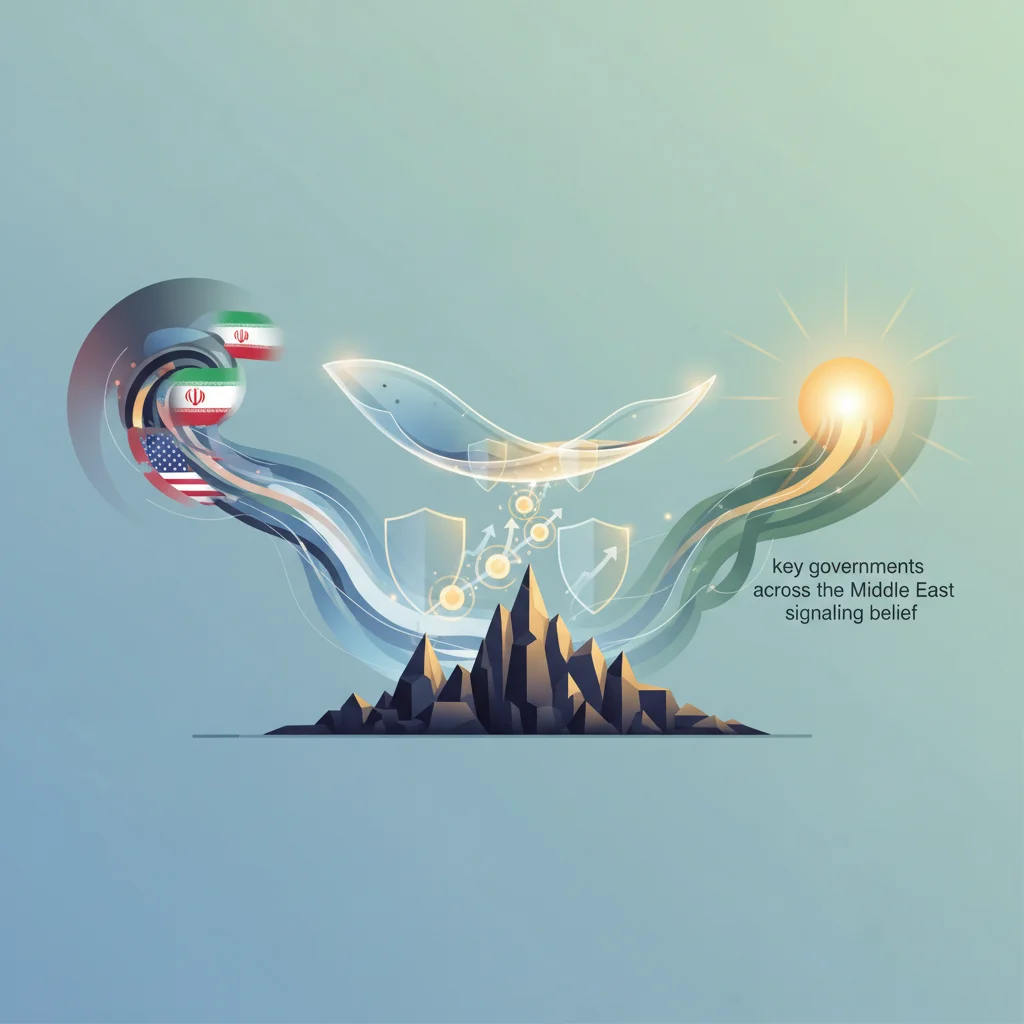
The global financial markets collectively breathed a sigh of relief this week. Following a period of heightened anxiety, key governments across the Middle East are signaling a belief that the immediate risk of a direct military confrontation between the United States and Iran has significantly de-escalated. For investors, business leaders, and anyone with a stake in the global economy, this news is a welcome reprieve. The specter of conflict in a region that serves as the world’s energy artery had sent shudders through the stock market, threatening to spike oil prices and unleash a fresh wave of inflation.
However, to mistake this de-escalation for a resolution would be a grave error in financial judgment. The underlying tensions remain firmly in place, simmering beneath a surface of diplomatic maneuvering and economic pressure. Washington’s strategy continues to involve a blend of military posturing—evidenced by aircraft carrier movements—and the imposition of new, targeted sanctions on Tehran (source). This complex geopolitical chess match creates a volatile and unpredictable environment. For those in finance and investing, understanding the nuances of this “fragile calm” is not just an academic exercise; it is essential for effective risk management and strategic capital allocation.
This analysis will delve beyond the headlines to explore the profound implications of the current US-Iran dynamic on the global economy, financial markets, and emerging technologies that shape modern trading and banking.
The Economic Battlefield: Sanctions, Oil, and Market Sentiment
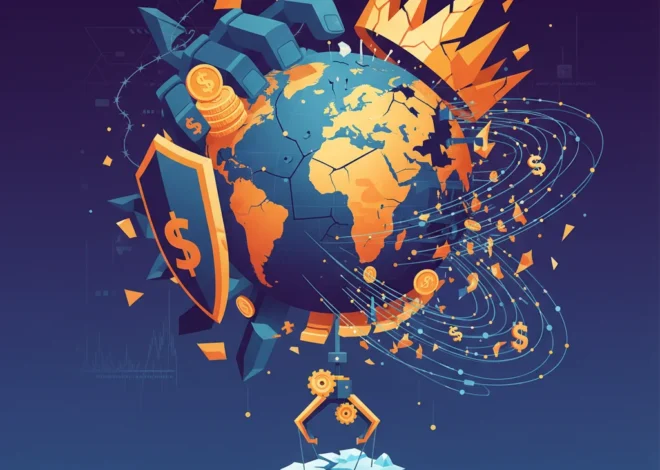
While military action often grabs the headlines, the primary theater of conflict between the US and Iran is economic. Sanctions are not merely diplomatic statements; they are potent weapons designed to isolate a nation from the global financial system. When Washington imposes new sanctions, it triggers a complex chain reaction that impacts everything from international banking to the price of consumer goods.
Here’s how it unfolds:
- Banking and Finance Restrictions: Sanctions typically prohibit international banks from processing transactions with targeted Iranian entities. This chokes off access to foreign currency, cripples trade finance, and complicates even humanitarian trade. For the global banking sector, this creates a significant compliance burden, requiring heavy investment in financial technology (fintech) solutions to screen transactions and avoid hefty penalties.
- Energy Market Volatility: Iran is a major oil producer. While sanctions have curtailed its official exports, its influence on the market remains. The threat of conflict in the Strait of Hormuz—a chokepoint through which a significant portion of the world’s seaborne oil passes—can send crude prices soaring. This directly impacts the stock market by increasing costs for transportation and manufacturing companies, fueling inflation, and reducing consumer discretionary spending. Any news from the region is a key input for energy traders and algorithmic trading platforms.
- Investor Psychology: Geopolitical risk is a major driver of market sentiment. Heightened tensions increase the CBOE Volatility Index (VIX), often called the “fear index,” prompting a flight to safety. Investors may sell off riskier assets like stocks and emerging market debt in favor of safe havens like US Treasury bonds, gold, or the Swiss franc. The recent perception of de-escalation has reversed some of this flow, but the underlying anxiety keeps investors on edge.
Understanding these mechanics is crucial. The economics of the situation dictate that even without a single shot fired, the financial and commercial repercussions can be widespread and severe, affecting investment portfolios and corporate balance sheets globally.
The £70 Question: Deconstructing the High-Stakes Economics of Modern Sportswear
Mapping the Volatility: A Timeline of Events and Market Reactions
To truly grasp the cause-and-effect relationship between geopolitical events and financial markets, it’s helpful to visualize how specific actions translate into market movements. The following table breaks down recent developments and their typical, immediate impact on the economy and trading.
| Geopolitical Event | Strategic Significance | Typical Financial Market Reaction |
|---|---|---|
| US imposes new, targeted sanctions on Iranian officials and industries. | Aims to increase economic pressure without direct military conflict, tightening the financial noose. | Moderate increase in oil prices (concern over supply); temporary dip in stock market indices; increased compliance costs for international banking. |
| US aircraft carrier group moves into the Persian Gulf. | A show of force and military deterrence. Increases the perceived risk of miscalculation or accidental escalation (source). | Sharp spike in Brent crude futures (+3-5%); VIX (“fear index”) jumps; investors move to safe-haven assets like gold and US bonds. |
| Back-channel diplomatic talks are reported between intermediaries. | Signals a mutual desire to avoid all-out war, opening a path for de-escalation. | Oil prices ease; stock market rallies on relief; risk appetite returns, benefiting growth stocks and emerging markets. |
| Middle East governments publicly state tensions have “de-escalated.” | Provides regional confirmation that the immediate threat has passed, calming investor nerves. | Market sentiment stabilizes; volatility subsides; focus shifts back to fundamental economic data like inflation and employment. |
Strategic Investing in an Era of Persistent Uncertainty
Given this complex backdrop, how should investors and finance professionals adjust their strategies? Simply hoping for the best is not a viable plan. A proactive and diversified approach is essential.
1. Re-evaluating Portfolio Diversification
This is the time to go beyond simple stock/bond diversification. Consider geographic diversification to reduce exposure to any single region. Furthermore, asset class diversification should include commodities like gold, which often act as a hedge against geopolitical instability and inflation. For sophisticated investors, options strategies or other derivatives can be used to hedge against downside risk in the stock market.
2. Sector-Specific Analysis
Geopolitical tensions create clear winners and losers across different sectors of the economy:
- Potential Winners: Defense and aerospace companies often see their stock prices rise. Energy stocks can benefit from higher oil prices, provided their physical assets are not at risk. Cybersecurity firms also gain prominence as the threat of state-sponsored cyberattacks grows.
- Potential Losers: Airlines are hit hard by rising fuel costs. The travel and tourism industry suffers from regional instability. Companies with significant supply chain exposure to the Middle East face logistical nightmares and increased costs.
UK Labor Reforms: A Multi-Billion-Pound Reprieve for Business, But What's the Real Cost?
3. The Role of Financial Technology (Fintech)
Modern technology offers powerful tools for navigating this environment. Algorithmic trading platforms can execute complex hedging strategies in milliseconds based on news sentiment analysis. Advanced risk management software allows corporations and banks to model the potential impact of various geopolitical scenarios on their operations. In the long term, technologies like blockchain offer the potential for more transparent and resilient supply chains, reducing the impact of disruptions in any single chokepoint. The ongoing digitization of finance is making markets more efficient but also more reactive to global events.
Conclusion: The New Normal for the Global Economy
The perceived de-escalation between the US and Iran is a positive development that has granted the global economy a moment to catch its breath. However, the core issues remain unresolved. The interplay of sanctions, military posturing, and delicate diplomacy will continue to be a defining feature of the financial landscape for the foreseeable future.
For investors, traders, and business leaders, the key is to internalize this uncertainty as a structural element of the market, not a transient crisis. Building resilient portfolios, investing in sophisticated risk management technology, and maintaining a deep understanding of the connection between geopolitics and economics are no longer optional. In this fragile calm, the smartest players in finance are not relaxing; they are preparing for the inevitable next wave of volatility.