Spring in Their Step: Why UK Property Market Optimism is a Bellwether for the Broader Economy
A palpable shift is underway in the UK’s property market. After a prolonged period of uncertainty marked by soaring interest rates and economic anxiety, a fresh wave of optimism is sweeping through the sector. According to a closely watched survey by the Royal Institution of Chartered Surveyors (Rics), estate agents’ confidence in home sales has surged to its highest level in over a year. This isn’t just good news for real estate agents and prospective homebuyers; it’s a critical bellwether for the entire UK economy, with profound implications for investing, banking, and consumer confidence at large.
The latest Rics residential market survey reveals a significant uptick in sentiment, a stark contrast to the cautious mood that has dominated the past 18 months. But what are the underlying forces driving this change? And more importantly, is this a sustainable recovery or a fleeting moment of positivity? In this deep dive, we’ll dissect the numbers, explore the macroeconomic drivers, and analyze the ripple effects across the financial landscape, from the stock market to the burgeoning world of financial technology.
Decoding the Data: A Closer Look at the Numbers
To understand the depth of this sentiment shift, it’s essential to look beyond the headlines and into the specific metrics of the Rics survey. This survey is highly regarded in finance and economics as it captures the on-the-ground reality from professionals at the coalface of the property market.
The headline figure shows that a net balance of +21% of property professionals now expect sales to increase over the next three months. This is a remarkable turnaround and the most positive reading since early 2023 (source). This optimism isn’t built on thin air; it’s supported by tangible changes in market activity:
- Buyer Enquiries: For the third consecutive month, new buyer enquiries have seen a net positive reading, indicating that potential purchasers are returning to the market.
- New Instructions: The flow of properties coming up for sale has also improved, with the metric for new instructions hitting its strongest level since September 2020. This suggests sellers are also gaining confidence.
- Price Stability: While house prices are still predicted to be flat in the near term, the pace of decline has moderated significantly. The survey’s gauge of house prices rose to -25 in February, up from -30 in January, marking the least negative reading since the summer of 2022.
Here is a summary of the key indicators from the recent survey, illustrating the positive momentum:
| Rics Survey Metric | Recent Trend (Feb 2024) | Implication |
|---|---|---|
| Near-Term Sales Expectations | Net balance of +21% (Highest in over a year) | Strong agent confidence in upcoming transaction volumes. |
| New Buyer Enquiries | Positive for the third consecutive month | Sustained return of buyer interest and demand. |
| New Instructions to Sell | Strongest reading since September 2020 | Increased supply and seller confidence are returning to the market. |
| National House Price Balance | -25 (Improved from -30) | The downward pressure on prices is easing significantly. |
These figures collectively paint a picture of a market that is not just stabilizing but is actively beginning to thaw after a deep freeze. AI's Trillion-Dollar Question: Is the Core of the Boom Just a File You Can Copy?
The Macroeconomic Tailwinds: Why the Sudden Shift?
This resurgence in confidence is not happening in a vacuum. It is the direct result of several powerful macroeconomic factors converging to create a more favourable environment for the property sector and the wider economy.
1. The Interest Rate Horizon
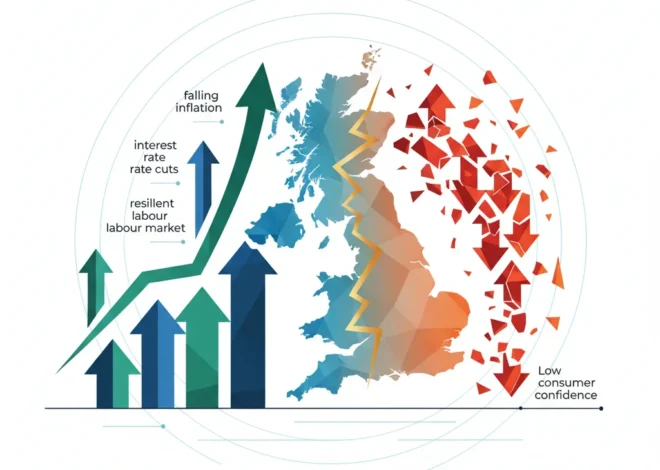
The single most significant driver is the growing consensus that UK interest rates have peaked and the next move from the Bank of England will be a cut. The aggressive rate-hiking cycle, designed to combat rampant inflation, was the primary cause of the market slowdown. Now, with inflation falling, financial markets are pricing in rate cuts later this year. This has already translated into more competitive mortgage rates from lenders, directly improving affordability and unlocking pent-up demand. This dynamic is a core principle of modern banking and monetary policy, where the central bank’s signals directly influence consumer and business behaviour.
2. Post-Budget Certainty
While the Chancellor’s Spring Budget didn’t contain blockbuster housing policies, its primary contribution was something arguably more valuable: certainty. By avoiding major shocks and laying out a clear, if predictable, fiscal path, the government removed a significant layer of uncertainty that had been weighing on large financial decisions. For both buyers and sellers, this political and fiscal stability provides a firmer ground upon which to plan, encouraging them to proceed with transactions that may have been on hold.
3. Improving Real Incomes
The third crucial element is the improvement in real household incomes. As inflation has cooled faster than wage growth has slowed, many households are beginning to feel a modest increase in their purchasing power for the first time in nearly two years. This fundamental principle of economics—where real disposable income dictates consumer spending—is finally turning positive, boosting confidence and the ability to save for a deposit or meet mortgage affordability criteria.
The Ripple Effect: How a Thawing Property Market Boosts the UK Economy
A healthy housing market is a powerful engine for economic growth, and its revival has far-reaching consequences beyond the realm of real estate. The positive sentiment acts as a catalyst for activity across numerous interconnected sectors.
Impact on Financial Services and the Stock Market
An increase in property transactions directly fuels the finance sector. More mortgages mean more business for banks and building societies. It also boosts demand for related services like insurance, conveyancing, and financial advice. This renewed activity is often reflected in the stock market, where the share prices of housebuilders, estate agency groups, building material suppliers, and major UK banks can be seen as a proxy for housing market health. Investors engaged in trading these stocks will be watching these leading indicators, like the Rics survey, very closely to anticipate market movements.
Boost for Retail and Construction
The “wealth effect” associated with a stable or rising property market is a well-documented phenomenon. When people feel more confident about the value of their primary asset, they are more inclined to spend. Furthermore, moving house is a major trigger for retail spending on big-ticket items like furniture, appliances, and DIY materials. This provides a much-needed boost to the retail sector. Simultaneously, renewed confidence encourages property developers to move forward with new projects, stimulating the construction industry and its vast supply chain.
The Technological Transformation: Fintech’s Role in the Modern Property Landscape
It’s impossible to discuss the modern property and finance ecosystem without acknowledging the transformative impact of financial technology, or fintech. While the fundamental drivers of the market remain economic, technology is reshaping how transactions occur and how individuals and institutions approach property investing.
Digital mortgage brokers now use sophisticated algorithms to match borrowers with the best products in minutes, dramatically speeding up a once-laborious process. PropTech (Property Technology) platforms are streamlining everything from property viewings to legal paperwork. Looking ahead, the much-discussed potential of blockchain technology could bring unprecedented security and transparency to property transactions. Imagine a world where property deeds are immutable digital assets on a blockchain, and complex multi-party transactions are executed flawlessly via smart contracts. While still in its early stages, this technological frontier could one day revolutionize the very concept of property ownership and trading.
Beyond the Golden Arches: Why McDonald's Labor Scandal is a Major Red Flag for Investors
Conclusion: A Cautious but Critical Turning Point
The surge in optimism among UK estate agents is more than just a niche statistic; it is a critical data point that suggests the UK property market has turned a corner. Driven by the anticipation of lower interest rates and a more stable political and economic environment, this newfound confidence is the first step toward a broader recovery. The implications are significant, promising to stimulate activity across the banking, retail, and construction sectors, and providing a much-needed tailwind for the UK economy as a whole.
For investors, business leaders, and anyone with a stake in the UK’s financial health, this is a moment to watch closely. While the path ahead may not be linear, the thawing of the property market is a clear and powerful signal that the economic winter is beginning to recede, making way for a potential spring of renewed growth and opportunity.