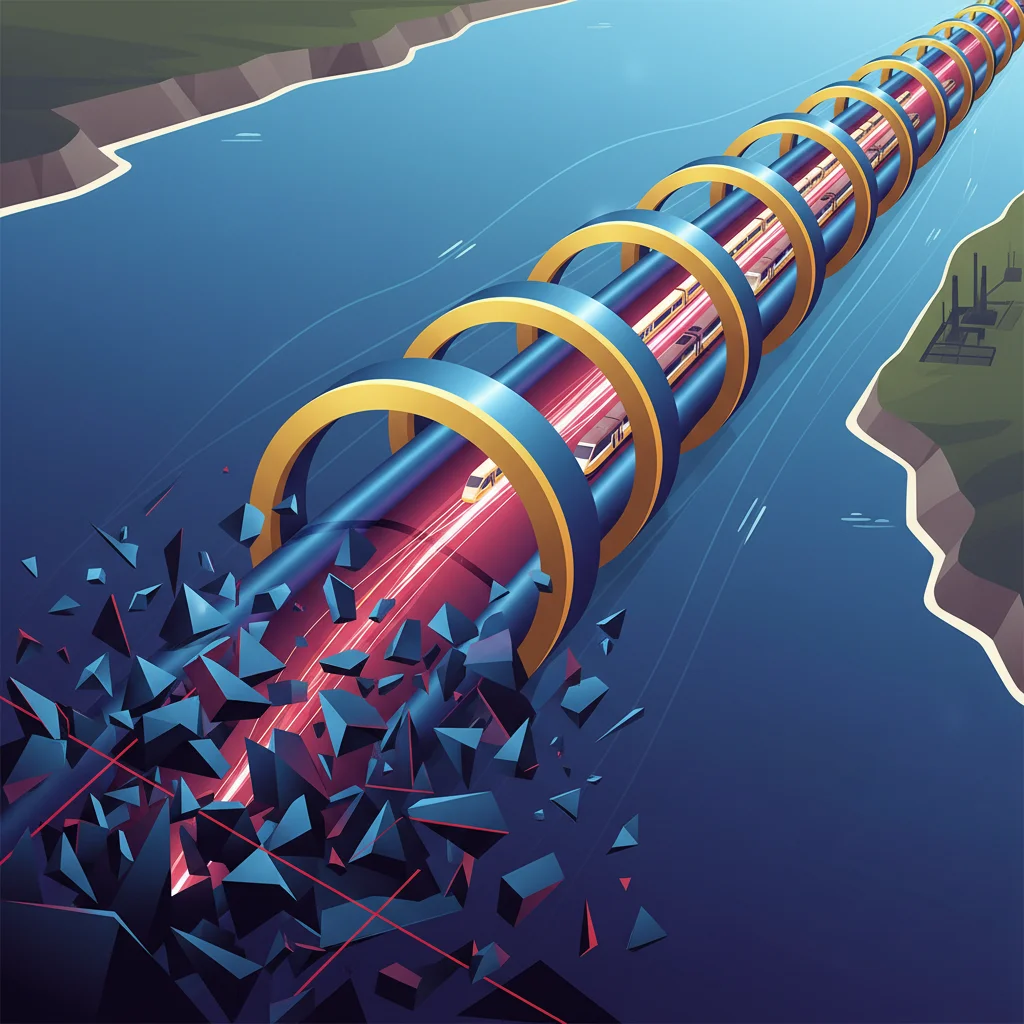
From Financial Abyss to Economic Artery: The Unlikely Blueprint of the Eurotunnel
In the annals of modern engineering, few projects capture the imagination quite like the Channel Tunnel. A 50-kilometer sub-sea link connecting two nations, it stands as a testament to human ambition and ingenuity. Yet, its most profound and enduring legacy may not be in civil engineering, but in the brutal, brilliant, and often chaotic world of high-stakes finance. A recent letter to the Financial Times by Tim Yeo, a former director of Groupe Eurotunnel, serves as a powerful reminder that this project is more than just a railway; it’s a masterclass in infrastructure investing, corporate survival, and the raw power of long-term vision.
The Eurotunnel’s journey from a speculative dream to a profitable reality was a rollercoaster of soaring ambition, near-catastrophic failure, and audacious financial restructuring. For investors, finance professionals, and business leaders, its story is not just a historical curiosity but a vital case study packed with lessons that are more relevant today than ever. As we stand at a crossroads, needing to fund a new generation of green infrastructure and technological advancement, the Eurotunnel’s turbulent past offers a clear, if challenging, blueprint for the future.
The Grand Bargain: Private Capital for Public Grandeur
The very conception of the Channel Tunnel’s financing was a radical departure from the 20th-century norm. In the 1980s, under the free-market ideologies of Margaret Thatcher and François Mitterrand, a critical decision was made: the tunnel would be built without a single penny of public money for construction. This was a monumental gamble. The project was to be financed entirely by the private sector, a consortium of banks and, crucially, hundreds of thousands of individual investors who bought shares in the initial public offering (IPO). The promise was grand: own a piece of a historic monopoly, a permanent link that would redefine the European economy for centuries.
This approach placed the entire construction risk squarely on the shoulders of the private market. The appeal was the long-term concession—a 55-year right (later extended) to operate the tunnel and reap its rewards. This long-dated asset was the theoretical bedrock of the investment. However, the chasm between theory and reality would soon prove to be vast and perilous. The initial phase was a triumph of capital raising, but it set the stage for one of the most dramatic financial dramas in modern corporate history, a true test for the global banking system and the resilience of the stock market.
Navigating the Financial Abyss: Cost Overruns and a Brush with Bankruptcy
The dream quickly soured. As tunneling began, the project was besieged by challenges that sent its budget spiraling out of control. The initial projected cost of £4.7 billion ballooned to an astonishing £9.5 billion by its completion (source). Complex geology, stringent safety requirements imposed by an intergovernmental commission, and logistical hurdles created a perfect storm of financial distress.
For the early investors, the experience was brutal. The share price collapsed as the company staggered under a mountain of debt. Eurotunnel became a cautionary tale, a symbol of a grand project on the brink of failure. The consortium of 220 banks that had underwritten the debt grew increasingly nervous, and the company spent years in agonizing negotiations, teetering on the edge of bankruptcy. The project was, as one commentator noted, a “black hole for cash,” a situation that tested the limits of corporate governance and financial engineering.
To illustrate the stark contrast between the initial vision and the final reality, consider the following project metrics:
| Metric | Initial Projection / Promise | Final Outcome |
|---|---|---|
| Construction Cost | £4.7 Billion | £9.5 Billion |
| Projected Passenger Numbers (First Year) | 15.9 Million | ~3 Million (in 1995) |
| Debt at Opening | ~£6 Billion | ~£8 Billion |
| Share Price (Initial vs. Low Point) | £3.50 (1987 IPO) | Below 40p (early 2000s) |
This data highlights a critical lesson in economics and project finance: the “optimism bias” inherent in mega-projects can have devastating consequences for initial investors. However, it was from this point of near-total collapse that the most valuable lessons emerged.
The Great Restructuring: A Phoenix Rises from Financial Ashes
The survival of Eurotunnel was not guaranteed. It was the result of one of the most complex and ambitious financial restructurings ever undertaken. The company’s salvation hinged on its single greatest asset: the concession. The right to operate a unique piece of critical infrastructure for decades meant that, despite the crushing debt, there was immense underlying value.
Led by a new management team, the company underwent a painful but necessary transformation. This involved:
- Debt-for-Equity Swaps: A significant portion of the crippling debt held by banks was converted into ownership (equity) in the company. This diluted existing shareholders but was essential to clean up the balance sheet and make the debt load sustainable.
- Extended Concession: The company successfully negotiated an extension of its concession with the British and French governments, pushing it to 2086. This move was crucial, as it extended the asset’s revenue-generating life, making it vastly more valuable and providing a longer horizon over which to pay down debt (source).
- Operational Focus: Freed from the immediate threat of insolvency, the company could focus on what it did best: running an efficient and reliable transport service. It streamlined operations, optimized its pricing for freight and passenger services (Le Shuttle), and steadily grew its revenue and market share.
This turnaround, finalized in a 2007 restructuring plan, was a masterclass in corporate finance. It demonstrated that even a project that had failed spectacularly as a short-term construction investment could be reborn as a successful long-term infrastructure asset. The original shareholders lost heavily, but the asset itself was preserved and eventually prospered, becoming the profitable entity now known as Getlink.
AI's Trillion-Dollar Question: Is the Core of the Boom Just a File You Can Copy?
Timeless Lessons for Modern Infrastructure and Investing
As Tim Yeo rightly points out in his letter source, the Eurotunnel’s story provides a powerful model. The key takeaways are not just about railways, but about how we should approach the financing of any large-scale, long-term project, be it a high-speed rail line, a nuclear power plant, or a network of carbon capture facilities.
1. The Discipline of Private Capital: While the initial phase was painful, the absence of a government blank check forced a level of financial discipline and innovation that a state-funded project might have avoided. The company had to find a market-based solution to survive, leading to a more efficient and commercially focused operator in the long run.
2. The Primacy of the Long-Term Concession: The government’s most valuable contribution was not cash, but the grant of a long, secure, and predictable operating license. This is the asset that underpins all infrastructure investing. It allows private capital to take risks on construction, knowing that a revenue-generating asset awaits them if they succeed.
3. Political Will is as Important as Financial Capital: The unwavering commitment of both the UK and French governments to the *idea* of the tunnel, even while refusing to fund it, was essential. They provided the stable regulatory and political framework within which a private sector solution could eventually be found.
For today’s investor, the lesson is one of perspective. Investing in a project during its high-risk construction phase is a world away from investing in the same asset once it is operational and generating stable cash flows. The Eurotunnel story shows both sides of this coin: the speculative, high-risk nature of venture-style project development and the stable, utility-like returns of mature infrastructure.
The Nuclear Option: Decoding the Multi-Trillion Dollar Question for the Global Economy
Conclusion: A Blueprint Forged in Crisis
The Channel Tunnel is a physical link of steel and concrete, but its true architecture is one of financial resilience. It proves that a project can be a colossal failure for its initial backers and simultaneously evolve into a resounding success as a long-term business and a vital piece of the economic machinery. It is a testament to the idea that with the right structure—private sector execution, government-backed concessions, and unwavering political will—we can build the great projects of the 21st century.
In an era of constrained public finances and an urgent need for transformative infrastructure, the Eurotunnel’s journey from the depths of the stock market to a pillar of the European economy is not just inspiring. It is a practical, albeit painful, blueprint for how to turn audacious vision into enduring value.