Rosie the Robot is Almost Here: Inside the Race to Build Your Humanoid Helper
The Sci-Fi Dream We Were Promised is Finally Taking Shape
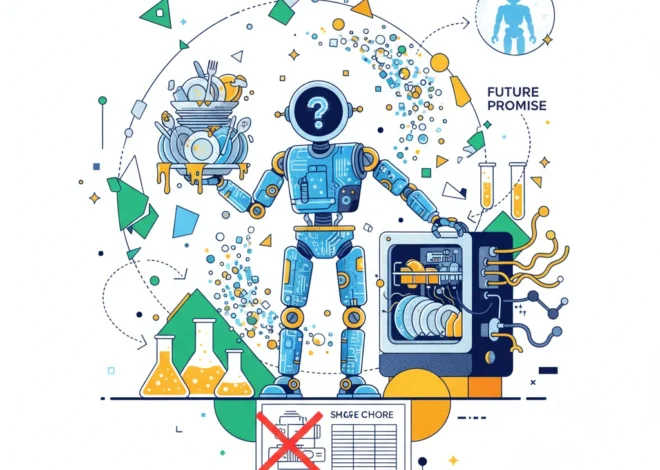
For decades, popular culture has painted a vivid picture of our future: a world where robotic assistants, like Rosie from The Jetsons or C-3PO from Star Wars, handle our daily chores with seamless efficiency. It was a promise of a life enhanced by intelligent, helpful machines. For a long time, that promise felt like it belonged firmly in the realm of science fiction. But as a recent BBC “Tech Life” special explored, the hum of advanced robotics is getting louder. The era of the general-purpose humanoid robot isn’t just on the horizon; it’s being built, tested, and funded in labs and startups right now.
We’re not talking about your Roomba or a factory arm that welds car doors. This is a new paradigm of automation. These are machines designed to navigate and interact with a world built for humans, by humans. They can walk, climb stairs, open doors, and manipulate objects with increasing dexterity. This leap forward is a story of converging technologies, a perfect storm of mechanical engineering, advanced sensors, and, most importantly, revolutionary breakthroughs in artificial intelligence and machine learning.
So, how close are we really to having a robot fold our laundry? What are the immense software challenges involved? And what does this wave of innovation mean for developers, entrepreneurs, and society at large? Let’s unpack the reality behind the robotics revolution.
The “Brain” Behind the Brawn: AI is the Game-Changer
The biggest difference between the clunky robots of the past and the agile machines of today isn’t just better motors or lighter materials—it’s the brain. The software and AI powering these humanoids are where the magic truly happens. For years, robots were limited by their programming; they could only perform pre-defined, repetitive tasks in highly controlled environments. Any deviation, like a misplaced object, would result in an error.
Today’s approach is fundamentally different, thanks to several key AI advancements:
- Machine Learning for Movement: Instead of being explicitly programmed for every possible movement, robots are now trained. Using techniques like reinforcement learning (trial and error) and imitation learning (watching human examples), they learn to walk, balance, and manipulate objects in dynamic, unpredictable environments.
- Computer Vision for Perception: Sophisticated cameras and sensors act as the robot’s eyes, but it’s the AI-powered computer vision models that allow them to interpret what they see. They can identify objects, map a room in 3D, and understand the context of a scene—distinguishing a coffee cup from a water bottle and knowing how to grip each one appropriately.
- Large Language Models (LLMs) for Understanding: This is perhaps the most transformative piece of the puzzle. The same technology behind ChatGPT is giving robots the ability to understand natural language. A command like, “Hey, can you grab the apple from the kitchen counter and bring it to me?” can now be parsed, understood, and translated into a sequence of actions. This bridges the gap between human intent and robotic execution. A recent demonstration from the startup Figure, in partnership with OpenAI, showcased a robot having a full, spoken conversation while performing tasks, a truly stunning display of this integration.
The entire system relies on a complex, interconnected software stack. This stack often runs partially on the robot itself (for real-time reactions) and partially in the cloud, where massive AI models can be processed and updated. This “hive mind” approach means that a lesson learned by one robot can be pushed as an update to an entire fleet, accelerating the learning process exponentially. It’s a model that looks a lot like SaaS (Software as a Service), but for physical machines.
The Billion AI Deal Caught in the Crossfire: Why China is Scrutinizing Meta’s Latest Acquisition
Meet the Contenders: A Look at the Key Players
The race to build the first commercially viable humanoid robot is heating up, with a mix of tech giants and ambitious startups vying for the lead. Each has a slightly different philosophy and approach to tackling this monumental challenge.
Here’s a brief comparison of some of the leading figures in the humanoid space:
| Company | Robot Name | Key Differentiator / Approach | Primary Target Market |
|---|---|---|---|
| Tesla | Optimus (Gen 2) | Leveraging AI expertise from its self-driving car program. Focus on in-house designed actuators and mass manufacturability. | Initially, its own manufacturing plants, followed by industrial and eventually home use. |
| Figure AI | Figure 01 | Strong focus on AI-driven learning and natural language interaction, backed by OpenAI and other tech giants like Microsoft and NVIDIA. | Logistics and manufacturing (e.g., partnership with BMW), with a long-term vision for home and space. |
| Apptronik | Apollo | Born out of the University of Texas robotics lab, designed for safe collaboration with humans in industrial settings. Focus on modularity and efficiency. | Warehousing and logistics, with a goal to alleviate labor shortages in physically demanding jobs. |
| Boston Dynamics | Atlas (New Electric Version) | Decades of pioneering research in dynamic locomotion. Known for its incredible agility and acrobatic feats. Recently pivoted to a commercial-focused electric design. | Initially R&D, now pivoting towards real-world applications starting with automotive manufacturing. |
Beyond the Code: The Unseen Hurdles to a Robotic Future
Building a functional humanoid robot isn’t just an AI or a hardware problem; it’s a systems integration challenge of the highest order, with significant hurdles that go far beyond the lab.
The Fortress of Cybersecurity
As these robots become more integrated into our lives and workplaces, cybersecurity becomes a paramount concern. Think about it: a robot in your home is a mobile, internet-connected device with cameras, microphones, and the physical ability to interact with its environment. A hacked laptop is a data breach; a hacked humanoid robot is a physical threat. Securing the entire pipeline—from the cloud servers processing its AI to the firmware running on the device—is non-negotiable. For developers and tech professionals, this represents a massive new frontier in security protocols and threat modeling.
From Lab to Life: How Google's AI Architect is Turning Sci-Fi into Your Next App
The Business Model Conundrum
Who will buy a $100,000+ robot? For businesses, the ROI can be calculated based on labor costs and efficiency gains. But for the average consumer, a direct purchase is out of reach. This is where innovative business models, likely inspired by the SaaS world, will come into play. We might see “Robotics-as-a-Service” (RaaS) subscriptions, where you pay a monthly fee for the robot, maintenance, and software updates. For entrepreneurs and startups, cracking this business model is just as important as solving the technical challenges.
The Human-Robot Interaction Problem
Finally, there’s the human element. How do we design robots that people feel comfortable and safe around? This involves complex programming for social cues, predictive movement to avoid startling people, and adhering to ethical guidelines. The field of Human-Robot Interaction (HRI) is dedicated to solving these issues, ensuring that the integration of these machines into society is smooth and positive. An estimated 21,720 humanoid robot units will be shipped by 2028, making this a pressing concern for the near future.
Humanoid Robots: Why China's Latest Leap Forward Should Have Silicon Valley on High Alert
The Dawn of a New Era of Automation
We are standing at a pivotal moment. The convergence of decades of robotics research with the explosive growth of artificial intelligence has unlocked a future we’ve only dreamed of. The path from today’s prototypes to a robot in every home is still long and fraught with challenges in engineering, cybersecurity, and ethics.
However, the momentum is undeniable. This isn’t a question of *if* but *when* and *how*. For developers, it’s a call to build the secure and intelligent software that will power these machines. For entrepreneurs, it’s an opportunity to create the businesses and services that will define this new ecosystem. And for all of us, it’s a chance to thoughtfully shape a future where human and machine collaboration reaches its full potential, transforming our work, our homes, and our lives forever.