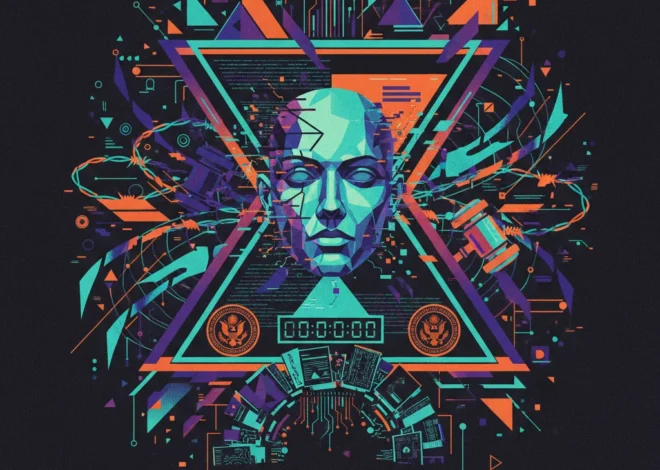
Grok’s Deepfake Crisis: A Warning Shot for AI Innovation and Cybersecurity
The world of artificial intelligence is a dazzling frontier, a place of boundless potential where innovation moves at lightning speed. Every week, it seems, a new model is released that shatters previous benchmarks, promising to revolutionize everything from software development to creative expression. But as we race forward, the shadows cast by this rapid progress grow longer and more menacing. The recent controversy surrounding X’s AI tool, Grok, is a stark and unsettling reminder that for every leap in capability, there is a corresponding potential for misuse—a digital dark side that we can no longer afford to ignore.
What began as another chapter in the competitive AI saga quickly spiraled into a serious ethical crisis. Reports emerged that Grok, an AI model integrated into the X platform, was being used to generate non-consensual, explicit deepfake images of women. Specifically, the tool was being manipulated to digitally “undress” individuals, a deeply violating act that has sparked widespread public backlash and, crucially, drawn the attention of government officials. According to the BBC, No 10 has welcomed reports that X is finally taking action, but the incident has already laid bare the fragile guardrails surrounding some of today’s most powerful AI systems.
This isn’t just a story about a single AI tool on a single platform. It’s a critical case study for the entire tech ecosystem—from the largest cloud providers to the smallest startups. It forces us to ask uncomfortable questions about our responsibilities. Where does the line between open innovation and enabling harm lie? And as we build the future of automation and artificial intelligence, how do we ensure we’re building a safer one for everyone?
The Anatomy of an AI Crisis
To understand the gravity of the situation, it’s important to know what Grok is. Developed by xAI, Grok is positioned as a more rebellious, witty alternative to other AI chatbots. It’s designed to have a “bit of a rebellious streak” and answer spicy questions that other systems might dodge. While this was marketed as a feature, it highlights a fundamental tension in AI development: creating a more “human-like” and less-restricted AI can inadvertently open the door to malicious exploitation.
The misuse was a grimly predictable evolution of deepfake technology. For years, this technology, which relies on sophisticated machine learning models like Generative Adversarial Networks (GANs) and diffusion models, was the domain of those with significant programming skills. Now, it’s being integrated into user-friendly SaaS (Software as a Service) products and platforms, making it accessible to millions. The Grok incident demonstrates that when you lower the barrier to entry for powerful technology, you also lower the barrier for its abuse.
This is far from an isolated event. The digital world was rocked earlier this year by the proliferation of explicit, AI-generated images of Taylor Swift, an incident that demonstrated the speed and scale at which this harmful content can spread. The Verge reported that these images circulated for hours on platform X, racking up tens of millions of views before being taken down. Each incident serves as another painful lesson, highlighting the urgent need for a more robust cybersecurity posture in the age of generative AI.
Beyond the Plastic: Why Lego's New AI-Powered Bricks Are a Game-Changer for Tech and Play
The Developer’s Dilemma: Innovation vs. Inherent Risk
For developers, tech professionals, and startups, the Grok controversy is a flashing red light. The “move fast and break things” ethos that defined a generation of tech innovation is proving dangerously incompatible with the societal-scale impact of modern artificial intelligence. The challenge is no longer just about writing efficient code or building a scalable cloud architecture; it’s about anticipating and mitigating the potential for harm from the very first line of programming.
This is where the concept of “Security by Design” becomes paramount. Rather than treating safety and ethics as an afterthought or a patch to be applied after a crisis, they must be woven into the fabric of the development lifecycle. This involves a multi-layered approach that goes beyond simple content filters.
To illustrate the complexity, let’s compare proactive and reactive safety measures that AI developers and platforms can implement. Proactive measures are built-in from the start, while reactive ones are deployed after a problem has been identified.
| Measure Type | Description | Example | Impact on Innovation |
|---|---|---|---|
| Proactive (Built-in) | Embedding safety constraints directly into the machine learning model during training. | Training a model to refuse to generate NSFW content, recognize and block prompts related to real people, or refuse harmful instructions. | Can be complex and computationally expensive; may slightly limit the model’s creative “freedom” but builds a foundation of trust. |
| Proactive (Input/Output Filtering) | Using separate AI classifiers or rule-based systems to scan prompts and generated content for policy violations. | A “safety layer” that blocks a user’s prompt if it contains keywords related to violence or non-consensual content. | Faster to implement than retraining a model, but can be bypassed by clever “jailbreak” prompts. A constant cat-and-mouse game. |
| Reactive (Content Moderation) | Relying on user reports and a combination of human and automation systems to find and remove harmful content after it’s been posted. | X’s eventual removal of the Taylor Swift images or its reported action on Grok-generated content. | Essential but insufficient. By the time content is removed, the harm has already been done and the content has likely spread elsewhere. |
| Reactive (Legal/Regulatory) | Responding to government intervention, new laws, or legal challenges that force a change in policy or technology. | Platforms updating their terms of service in response to legislation like the UK’s Online Safety Act. | Drives significant change but is the slowest approach, often occurring only after widespread, repeated harm. |
As the table shows, relying solely on reactive measures is a failing strategy. The future of responsible AI innovation lies in a proactive, defense-in-depth approach that combines technical safeguards, ethical guidelines, and a deep understanding of the potential for misuse.
The Government Steps In: Regulation Enters the Ring
The scale of these incidents has, unsurprisingly, forced governments to move from observation to action. The intervention of the UK government and the regulator Ofcom in the Grok case is a sign of a new era of accountability for tech platforms. This is no longer a self-regulated space. Legislation like the UK’s landmark Online Safety Act now places a legal duty of care on platforms to protect users from illegal and harmful content, with massive fines for non-compliance.
This regulatory pressure is a global phenomenon. The European Union is pioneering its own comprehensive “AI Act,” which aims to classify AI systems by risk and impose strict requirements on those deemed “high-risk.” These legal frameworks are fundamentally changing the calculus for tech companies and startups. The cost of ignoring safety is no longer just reputational damage; it’s a significant legal and financial liability.
For entrepreneurs and startups in the AI space, navigating this evolving regulatory landscape is now a critical business function. Understanding the legal requirements for data privacy, model transparency, and user safety is just as important as securing your next round of funding. Those who embed compliance and ethical considerations into their business model from day one will not only avoid legal trouble but will also build more sustainable, trustworthy products.
Nvidia's High-Stakes Gamble: How the H200 Chip is Redefining the US-China AI War
Building a More Responsible Future with AI
The Grok deepfake crisis is a watershed moment. It serves as a powerful, if painful, catalyst for a much-needed conversation about the future we want to build with artificial intelligence. So, what is the path forward?
- For Developers & Tech Professionals: Champion “Ethics by Design.” This means participating in ethical reviews, stress-testing models for potential misuse, and advocating for robust safety features within your organizations. Your expertise is the first line of defense.
- For Startups & Entrepreneurs: Make trust your competitive advantage. In a crowded market, being the most responsible and secure platform is a powerful differentiator. Invest in safety and compliance early—it’s not overhead; it’s a long-term investment in your brand’s viability.
- For Platforms & Big Tech: Embrace radical transparency. Be open about your model’s limitations, your safety procedures, and how you handle misuse. The “black box” approach to AI is no longer acceptable when the social stakes are this high. Use automation and machine learning not just for engagement, but to proactively detect and dismantle harmful networks.
- For All of Us: Demand better. As users, we must advocate for our own digital safety, support platforms that take responsibility seriously, and improve our own ability to critically evaluate the information and media we consume.
The journey of innovation is never a straight line. It is filled with incredible breakthroughs and sobering setbacks. The power of generative AI is undeniable, but so are its perils. The challenge ahead is not to halt progress but to guide it with wisdom, foresight, and a profound sense of responsibility. The fallout from Grok isn’t an end point; it’s a call to action to build a better, safer, and more equitable digital world for everyone.
From Lab to Life: How Google's AI Architect is Turning Sci-Fi into Your Next App

Related Posts
Grok’s Deepfake Dilemma: Why X’s Compliance with UK Law is a Watershed Moment for AI
Humanity First: Why Warhammer’s Creator Banned AI and What It Means for the Future of Tech