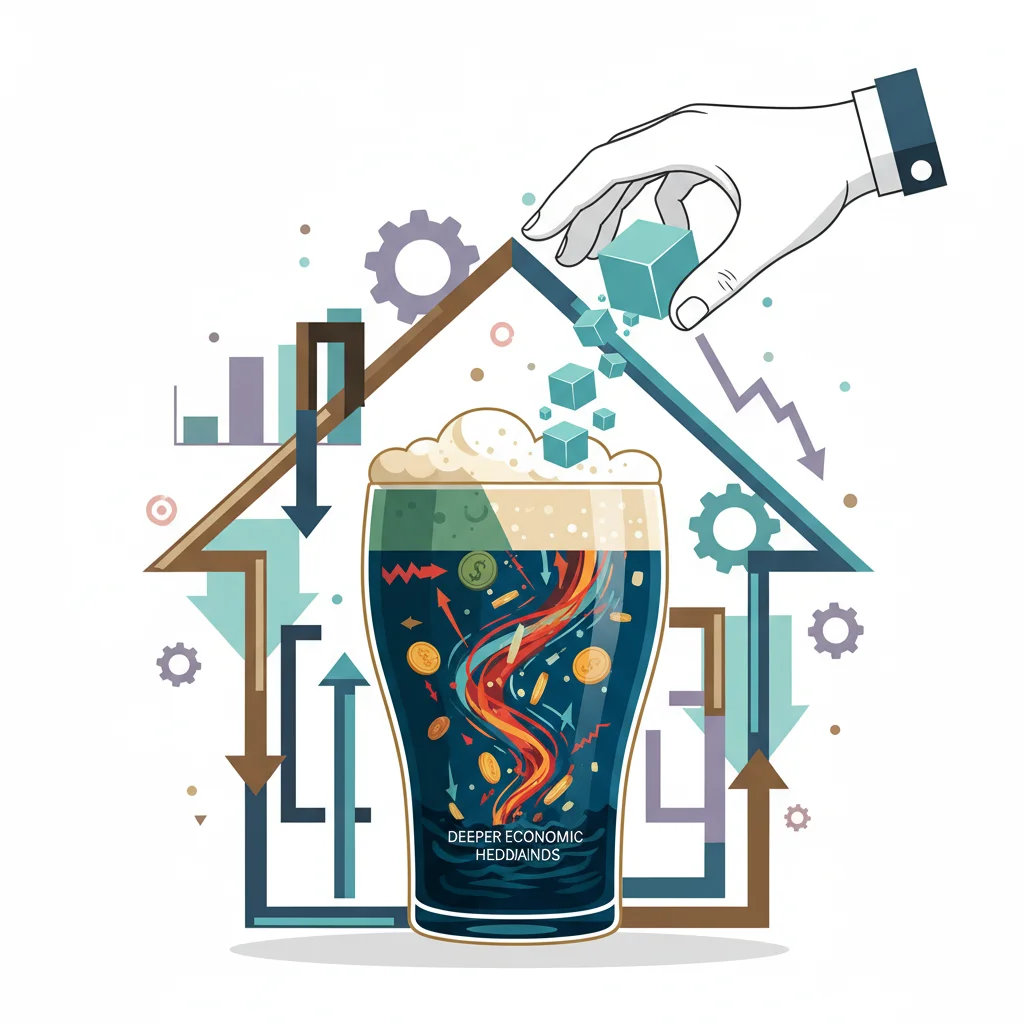
A Pint of Policy: Why the Chancellor’s Pub Lifeline Signals Deeper Economic Headwinds
The British pub is more than just a business; it’s a cornerstone of community, a cultural institution, and a barometer for the nation’s economic mood. So, when the Chancellor of the Exchequer singles out this specific sector for concern, it’s a statement that resonates far beyond the swinging doors of the local tavern. Recently, Chancellor Jeremy Hunt hinted at potential relief for pubs struggling under the weight of rising business rates, while simultaneously suggesting that other parts of the beleaguered hospitality industry may not receive the same support. This nuanced policy signal is not merely about the price of a pint; it’s a critical indicator for investors, business leaders, and anyone with a stake in the UK economy.
This development unfolds against a backdrop of immense pressure. The hospitality sector, a vital engine of employment and social cohesion, has been navigating a perfect storm of post-pandemic recovery, soaring inflation, an energy crisis, and shifting consumer behaviour. The Chancellor’s specific focus on pubs, therefore, raises a crucial question: is this a targeted, strategic intervention to save a uniquely valuable British institution, or is it a sign of limited fiscal firepower, forcing the government to make difficult choices that will create winners and losers within a single industry? This article delves into the intricate web of economics, policy, and investment strategy to unpack what this decision means for the future of UK hospitality and the wider financial landscape.
Understanding the Burden: What Are Business Rates?
Before dissecting the Chancellor’s comments, it’s essential to understand the mechanism at the heart of the issue: business rates. In essence, business rates are a tax on property used for commercial purposes. They are a significant, and often punishing, fixed cost for businesses, calculated based on the “rateable value” of a property—its estimated open market rental value. This value is then multiplied by a figure set by the government to determine the final bill.
For an industry like hospitality, which relies on prime physical locations with high rental values, business rates represent a substantial overhead that must be paid regardless of daily takings. According to the UK government’s own guidance, these rates are a critical source of funding for local services. However, for businesses, they are a relentless financial pressure point. The recent revaluation, the first since 2017, has led to sharp increases for many, reflecting changes in the property market. It is this impending hike that has prompted the Chancellor’s “particular concern” for pubs, as noted in a report from the BBC.
The current 75% relief for retail, hospitality, and leisure businesses is set to expire, and while an extension might be on the cards for pubs, the Chancellor has been clear that such broad support cannot continue indefinitely. This creates a cliff-edge scenario that could prove fatal for thousands of establishments that are already operating on razor-thin margins.
The Vulture's Gamble: Inside the High-Stakes Hunt for Venezuela's Trillion-Dollar Debt
A Sector on the Brink: More Than Just Rates
While business rates are the immediate focus, they are just one ingredient in a toxic cocktail of challenges facing the hospitality sector. To view the Chancellor’s potential intervention in isolation would be to miss the bigger picture. Industry bodies have been sounding the alarm for months about a convergence of crises.
A report from the trade body UKHospitality highlights the scale of the problem, citing that energy bills for the sector have risen by an astonishing 238% (source). This is compounded by double-digit food and drink inflation, persistent labour shortages driving up wage costs, and a cost-of-living crisis that is squeezing consumer discretionary spending. Businesses are caught between absorbing these rising costs, which erodes profitability, or passing them on to customers, which risks driving them away.
To illustrate the operational pressures, consider the typical cost distribution for different hospitality venues. The following table provides a simplified comparison, highlighting why fixed costs like business rates are so impactful.
| Cost Category | Typical Pub | Fine Dining Restaurant | Small Hotel |
|---|---|---|---|
| Cost of Goods Sold (Food & Drink) | 30-35% | 28-35% | 15-20% |
| Staffing & Labour | 25-30% | 30-40% | 25-35% |
| Rent & Business Rates | 10-15% | 8-12% | 15-25% |
| Utilities (Energy & Water) | 5-8% | 4-6% | 5-10% |
| Marketing & Overheads | 5-10% | 5-10% | 10-15% |
| Pre-Tax Profit Margin (Target) | ~5-10% | ~5-10% | ~10-20% |
As the table shows, with profit margins often in the single digits, an unexpected spike in a fixed cost like business rates can single-handedly wipe out profitability. This context explains why the Chancellor’s selective support is such a critical issue for the entire industry.
Trump's Venezuelan Oil Gambit: A Multi-Billion Dollar Opportunity or a Geopolitical Quagmire?
The Investor’s Calculus: Navigating a Fractured Market
For those involved in investing, finance, and the stock market, the Chancellor’s statements are a crucial piece of data for assessing risk and opportunity. The implication of targeted support for pubs could recalibrate investment theses across the entire consumer discretionary space.
Firstly, it could create a clear divergence in the stock market performance of listed hospitality companies. Pub chains like Wetherspoons, Marston’s, or Mitchells & Butlers could see a positive re-rating from analysts if they are perceived to be beneficiaries of continued government support. Conversely, restaurant groups, hotel operators, and other leisure businesses might face a sell-off as investors price in the higher risk associated with the full impact of business rates. This policy-driven volatility is something active traders will be watching closely.
Secondly, this affects the private equity and venture capital landscape. Investment in new restaurant concepts or leisure start-ups might cool as the operational cost base becomes more uncertain. Conversely, “pub-tech”—start-ups offering digital solutions for pubs—could become a hot area. This brings the world of financial technology into play. Innovative fintech platforms that help pubs manage inventory, streamline ordering, optimize staffing, and offer flexible banking solutions will be more critical than ever. Investors will be looking for companies that can help these protected businesses maximize their advantage.
Can Technology Provide a Universal Lifeline?
While government policy may be selective, technology is a democratizing force that can offer a lifeline to the entire sector. The pressures facing hospitality are accelerating the adoption of advanced digital tools, moving far beyond simple payment processing. This is where the intersection of hospitality and financial technology becomes a powerful engine for survival and growth.
- Advanced Analytics and AI: Fintech solutions now offer predictive analytics for cash flow management, helping businesses anticipate shortfalls and secure financing proactively. AI-driven dynamic pricing can help restaurants and hotels optimize revenue based on demand, a common practice in the airline industry that is now becoming accessible to smaller operators.
- Embedded Finance and Banking: Modern point-of-sale systems are no longer just for taking payments. They are integrated platforms offering instant access to business loans, automated bookkeeping, and streamlined payroll, effectively acting as a financial command center. This level of sophisticated banking integration was once the preserve of large corporations.
- Blockchain and Supply Chain Efficiency: While still nascent, blockchain technology offers the potential for radical transparency in the supply chain. For a restaurant, this could mean tracking produce from farm to table, reducing waste, verifying provenance, and managing inventory with unprecedented accuracy. This cuts costs and appeals to an increasingly conscious consumer base.
These technological advancements are not a panacea, but they provide tools for resilience. For businesses left out of the government’s potential safety net, investing in technology is not a luxury; it’s a core component of their survival strategy.
The Cuban Gambit: Is Venezuela the Key to Unlocking a New Economic Era?
Conclusion: A Policy Pouring a Half-Measure
The Chancellor’s concern for Britain’s pubs is understandable and, for publicans, a welcome sign. However, the underlying signal—that broad support for the entire hospitality sector is ending—is a sobering reality check. It underscores a shift in fiscal policy from widespread pandemic-era support to a more targeted, and arguably more political, approach to economic stewardship.
For business leaders in the wider hospitality sector, the message is clear: the training wheels are off. Survival will depend on operational excellence, relentless cost control, and the strategic adoption of technology. For investors, the landscape has become more complex, requiring a granular analysis of which sub-sectors are positioned to weather the storm. The government’s decision is more than just a headline about pubs; it’s a pivotal moment that will shape the future of one of the UK’s most important industries, forcing it to innovate or risk fading away.

Related Posts

Powering the Future: Unpacking the UK’s Record Offshore Wind Deal and What It Means for Your Portfolio

Nvidia’s Geopolitical Gambit: Decoding the US Approval of H200 AI Chip Sales to China