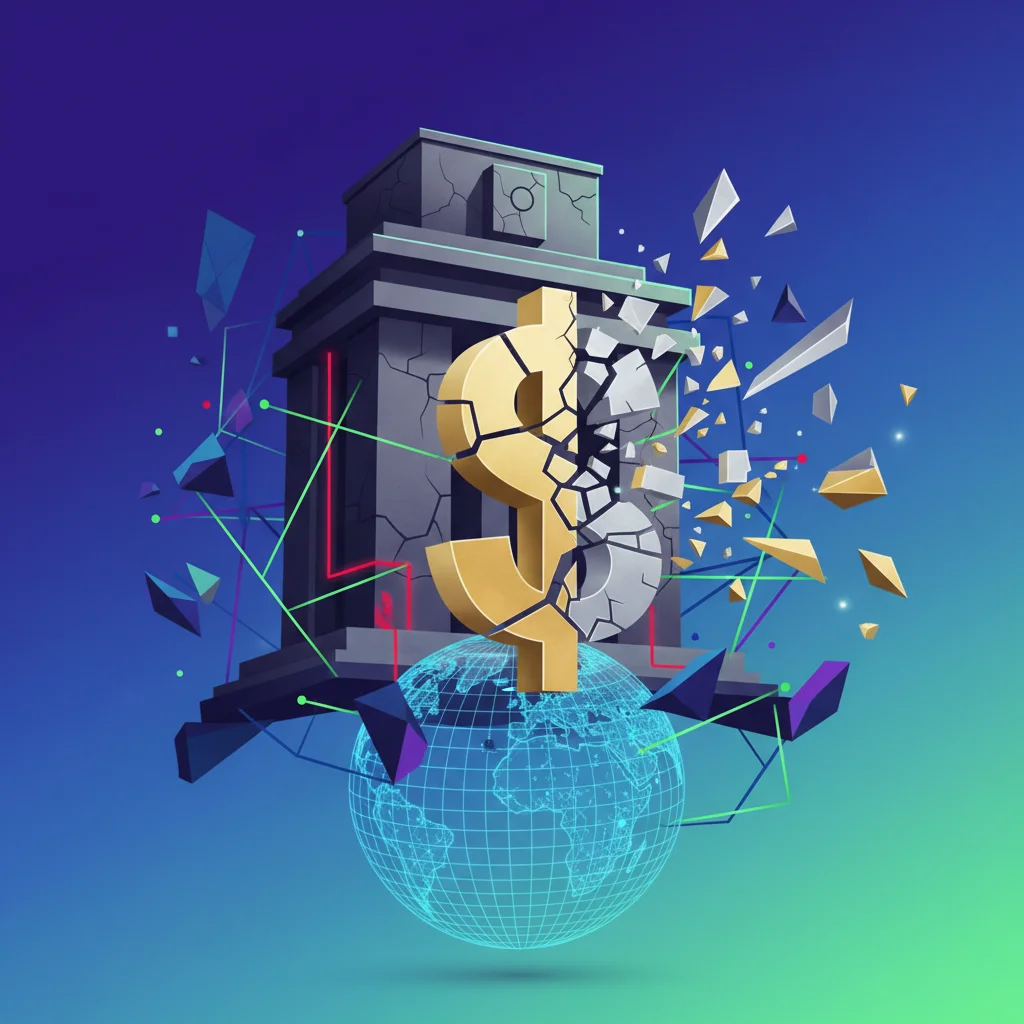
The Silent War on the Dollar: Why Legal Attacks on the Fed Threaten Global Financial Stability
The Unseen Battlefield for the Future of Finance
In the fast-paced world of finance and investing, our attention is typically captured by stock market tickers, quarterly earnings reports, and the latest fintech innovations. We track the economy through inflation data and employment figures. But one of the most significant threats to global financial stability isn’t unfolding on a trading floor or in a corporate boardroom. It’s happening in the quiet, methodical world of the legal system, and its target is the very institution that underpins the U.S. dollar: the Federal Reserve.
A new form of political combat, often termed “lawfare,” is being deployed against the leadership of the U.S. central bank. This strategy uses legal proceedings not necessarily to win a case, but to harass, delegitimize, and politically wound an institution. As detailed in a recent analysis by the Financial Times, Federal Reserve Chair Jay Powell is currently the subject of such a campaign. While the specific legal claims may seem minor on the surface, the implications are monumental. This is not just a political spat; it’s a calculated erosion of the independence and credibility that makes the U.S. dollar the world’s reserve currency. For investors, business leaders, and anyone involved in the global economy, ignoring this development is a perilous mistake.
Understanding “Lawfare” and its New Target: The Federal Reserve
Lawfare is the strategic use of legal systems to achieve a political or military objective. Instead of deploying troops, one deploys lawyers and lawsuits. The goal is to tie up an opponent in legal battles, drain their resources, and, most importantly, damage their public reputation. Until now, this tactic was more commonly associated with international disputes or contentious corporate battles. Its application to the head of the world’s most powerful central bank marks a dangerous new chapter in the politicization of economic institutions.
The current case revolves around a lawsuit filed against Chair Powell concerning his time on the board of a small community bank well before his tenure as Fed Chair. The plaintiffs, represented by a law firm known for its political activism, are using this old connection to challenge his authority. According to the Financial Times, the lawsuit is viewed by many legal and financial experts as a pretext. The true objective appears to be to create a cloud of suspicion around Powell and, by extension, the Federal Reserve itself. It’s an attempt to paint the institution as just another political entity, stripping it of its vital apolitical authority.
This matters because the entire modern financial system is built on a foundation of trust in independent central banking. When that trust is attacked, the foundation itself begins to crack.
Venezuela's Iron Fist: Analyzing the Economic Fallout of a New Political Crackdown
The Sanctity of Independence: Why a Politicized Fed is a Global Risk
To grasp the gravity of the situation, it’s crucial to understand why central bank independence is not just an academic concept but a cornerstone of a stable economy. Before the Fed was granted its modern independence, monetary policy was often subject to the whims of politicians seeking short-term gains, such as juicing the economy before an election. This frequently led to disastrous cycles of boom and bust, runaway inflation, and economic instability.
An independent central bank is designed to be a check on this political shortsightedness. Its mandate is to focus on long-term economic health—namely, maintaining price stability and maximizing employment—without fear of political reprisal. This independence gives investors and the public confidence that the currency will hold its value and that economic decisions are being made based on data, not political expediency. This confidence is the bedrock of the U.S. dollar’s status.
When this independence is challenged, the consequences can be severe. It signals to the world that the U.S. might be willing to sacrifice long-term stability for short-term political wins. This perception alone can trigger a flight from the dollar, leading to higher borrowing costs, increased market volatility, and a weaker standing on the global stage. As one observer noted in the FT article, “The US dollar’s status rests on the rule of law and the quality of its institutions,” and this attack strikes at the heart of both (source).
The Pillars of Dollar Dominance and the Cracks Forming Within
The U.S. dollar’s role as the world’s primary reserve currency provides the United States with immense power and economic benefits. This status is not accidental; it is built on several key pillars. However, the current political and legal climate is placing unprecedented stress on these foundations.
Here is a breakdown of the pillars supporting the dollar and the emerging threats to each:
| Pillar of Dollar Dominance | Current Threat |
|---|---|
| Deep, Liquid Financial Markets | Increased volatility and regulatory uncertainty could diminish the appeal of U.S. markets over time. |
| The Rule of Law & Predictable Governance | “Lawfare” and the weaponization of legal systems create unpredictability and erode trust in institutional fairness. |
| Independent Monetary Policy (The Fed) | Direct political and legal attacks on the Fed’s leadership and mandate threaten its credibility and decision-making autonomy. |
| Geopolitical Stability & Military Strength | A rise in global multipolarity and challenges from other major powers (e.g., China, Russia) are creating alternative spheres of influence. |
| Lack of a Viable Alternative | While no single currency can replace the dollar today, a combination of the Euro, Yuan, and emerging financial technology (blockchain, CBDCs) could create a multi-polar currency world. |
The attacks on the Federal Reserve directly assault the pillar of independent monetary policy. But more insidiously, they also damage the pillar of “The Rule of Law.” If the world perceives U.S. institutions as instruments of political warfare rather than impartial arbiters, the core appeal of holding U.S. assets begins to fade. As the FT article rightly points out, this is a “serious threat to the position of the US currency” (source).
The Shifting Tides of Crypto: Decoding Market Dynamics as Institutional Capital Flows In
The Ripple Effect: From Global Economics to Your Portfolio
A weakening of the U.S. dollar’s global standing is not an abstract economic problem. It has tangible consequences for the economy, the stock market, and individual investors.
- Higher Borrowing Costs: The U.S. government funds its debt by issuing bonds. Global demand for these bonds, fueled by the dollar’s reserve status, keeps interest rates low. If that demand wanes, the U.S. would have to offer higher interest rates, increasing the national debt and raising borrowing costs for businesses and consumers alike.
- Increased Market Volatility: The dollar is the benchmark for global trading. A crisis of confidence in the dollar would send shockwaves through every asset class, from equities to commodities. This would create a much more volatile and unpredictable environment for investing.
- Inflationary Pressure: A weaker dollar makes imports more expensive, which can fuel domestic inflation and erode the purchasing power of every American.
- The Rise of Alternatives: As trust in the traditional system falters, the appeal of alternative financial ecosystems grows. This could accelerate the adoption of financial technology like blockchain and central bank digital currencies (CBDCs) from other nations. While fintech offers incredible opportunities, a chaotic transition away from a dollar-centric system would be disruptive.
This is where the worlds of traditional finance and emerging financial technology intersect. A politically compromised dollar could be the catalyst that pushes the world to more seriously consider decentralized or alternative currency systems, fundamentally reshaping the landscape of global banking and economics.
Beyond the Briefing Room: Decoding the High-Stakes Economic Chess Game in Venezuela
Conclusion: The Fight for the Future of Finance
The legal assault on Jay Powell and the Federal Reserve is far more than a footnote in the political news cycle. It is a direct attack on the institutional integrity that has supported American economic leadership and global financial stability for generations. By attempting to drag the central bank into the political mire, these actions threaten to undo decades of established economic norms that have benefited the entire world.
For those engaged in finance, investing, and business, the key takeaway is that the most significant risks are not always reflected in daily market movements. The foundational, institutional pillars that support the market are under stress. The real battle for the future of the dollar, and by extension the global economy, may not be won or lost on a trading screen, but in the courtrooms and political arenas where the credibility of our most vital economic institutions is being decided. Paying attention is no longer optional—it’s essential.