The Pivot that Reshaped Global Finance: How Obama’s Asia Strategy Was a Wake-Up Call for the World
The Subtle Shift That Triggered a Tectonic Plate Movement in Global Economics
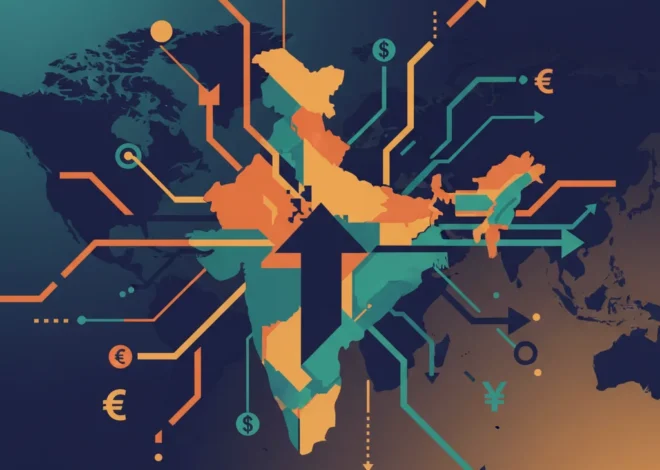
In the grand theater of geopolitics, some announcements are thunderous, shaking the foundations of global order overnight. Others are more subtle, their true impact only understood in the aftershocks that ripple across decades. In 2011, the Obama administration unveiled its “Pivot to Asia,” a strategic reorientation that, on the surface, was a recalibration of foreign policy. Yet, as Martin Westlake noted in a letter to the Financial Times, this was far more than a diplomatic maneuver; it was a profound “wake-up call” for the world. This pivot was a seismic event that permanently altered the landscape of international finance, investing, and the global economy, setting in motion trends that business leaders and investors are still navigating today.
The policy, officially termed the “rebalance to Asia,” was a declaration that America’s future was inextricably linked to the burgeoning economies and dynamic markets of the Asia-Pacific. It signaled a deliberate shift in diplomatic, economic, and military resources away from the post-9/11 focus on the Middle East and towards the region that would define 21st-century growth. For investors, finance professionals, and European allies alike, the message was clear: the world’s center of gravity was moving, and clinging to the old transatlantic-centric model was a recipe for obsolescence.
Deconstructing the Pivot: More Than Just a Slogan
To understand the pivot’s impact on the stock market and global trading, we must first understand its architecture. It was a multi-pronged strategy designed to deepen American engagement in Asia on every level.
- The Economic Cornerstone: The Trans-Pacific Partnership (TPP): This was the pivot’s economic heart. The TPP was an ambitious free-trade agreement involving 12 Pacific Rim nations (notably excluding China) that would have covered roughly 40% of the global economy. Its goal was to write the rules of 21st-century commerce, focusing on high standards for labor, environmental protection, and intellectual property, thereby creating a powerful economic bloc centered around the United States.
- Military Realignment: The strategy involved repositioning U.S. naval assets, with a stated goal of having 60% of the fleet based in the Pacific by 2020. This was a clear signal of America’s commitment to ensuring freedom of navigation and acting as a security guarantor for its regional allies like Japan, South Korea, and Australia.
- Diplomatic Engagement: The pivot included a surge in high-level diplomatic visits, a strengthening of alliances, and active participation in regional forums like the East Asia Summit. It was a concerted effort to show that the U.S. was not just a military power in the region, but a long-term partner.
This strategic realignment was driven by an undeniable reality: the meteoric rise of China. The pivot was, in essence, America’s answer to a changing world order—an attempt to shape the future of Asia rather than simply react to it. For the world of finance, this was a clear directive on where future growth, and therefore opportunity, would lie.
The AI Productivity Paradox: Why Wall Street's Hype May Not Lift Main Street's Fortunes
The European “Wake-Up Call”: A Continent Forced to Recalculate
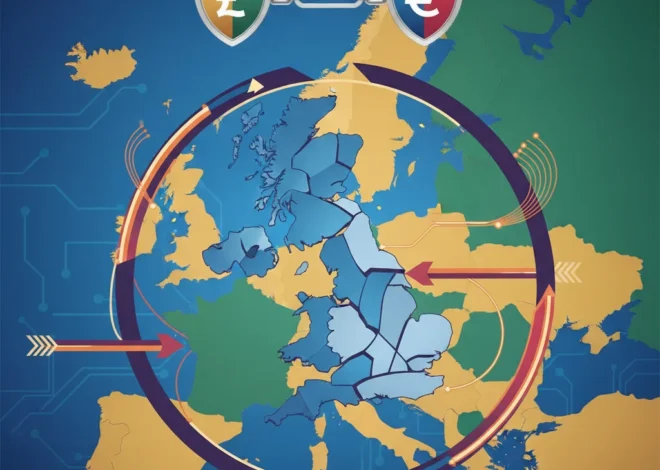
While Asia was the focus, the pivot’s most immediate psychological impact was felt across the Atlantic. For decades, Europe had been the central focus of U.S. foreign policy. The transatlantic alliance, forged in the Cold War, was the bedrock of global security and economics. The pivot, however, signaled that U.S. attention and resources were finite and increasingly being directed elsewhere. This was the “wake-up call” that Westlake’s letter title alludes to.
This realization sparked a new era of strategic thinking in Brussels and other European capitals. The concept of “strategic autonomy”—the idea that Europe needed to develop the capacity to act independently on the world stage—gained significant traction. This had profound implications for European banking, defense industries, and technology sectors. If Europe could no longer implicitly rely on the U.S. to underwrite its security and economic interests to the same degree, it had to build its own capabilities.
The pivot subtly encouraged a more integrated European approach to finance and technology. Initiatives aimed at strengthening the Eurozone’s financial architecture and fostering a unified digital market can be seen as indirect responses to this shifting global dynamic. The U.S. was looking East, and Europe knew it had to look inward to strengthen its own position.
Long-Term Ripples in the Global Financial Ocean
The pivot’s true legacy is seen not in the policies that were enacted, but in the long-term capital flows and investment trends it unleashed. It acted as a powerful signal to the market, reshaping investment strategies for years to come.
To illustrate the shifting focus, consider the trajectory of U.S. Foreign Direct Investment (FDI). While Europe remains a primary partner, the growth rate of investment and trade with the Asia-Pacific region accelerated significantly in the years following the pivot’s announcement.
| Economic Indicator | Engagement with Europe | Engagement with Asia-Pacific (ex-China) |
|---|---|---|
| FDI Growth Rate | Stable, mature growth | Accelerated growth, particularly in tech and manufacturing hubs |
| Trade Volume Growth | Moderate increase | Significant increase, driven by emerging economies |
| Venture Capital Interest | Consistent, focused on established tech centers | Explosive growth in fintech, e-commerce, and digital services |
| Supply Chain Focus | Established and stable | Became the primary focus for diversification and new investment |
The Rise of Asian Financial Technology (Fintech)
The pivot spotlighted the dynamism of Asian economies, attracting a flood of venture capital that supercharged the region’s tech scene. This era saw the explosive growth of financial technology—or fintech—in hubs like Singapore, Indonesia, and Vietnam. As global investors followed the strategic focus of the U.S., they discovered a young, mobile-first population eager to adopt digital payment systems, online lending platforms, and innovative banking solutions. This investment surge helped create the vibrant Asian fintech ecosystem we see today, a space where blockchain technology and digital currencies are not just theoretical concepts but are being actively deployed and scaled.
Supply Chain Realignment and the Stock Market
For publicly traded companies, the pivot was a memo from the future. It highlighted the risks of over-concentration in China and implicitly encouraged diversification. Companies that heeded this early signal and began building out supply chains in other parts of Asia—like Vietnam, Malaysia, and India—were better positioned to weather the subsequent U.S.-China trade wars and the supply chain shocks of the COVID-19 pandemic. This strategic foresight was often rewarded by the stock market, as investors prized resilience and diversified geopolitical risk.
Trump's Venezuelan Gambit: A High-Stakes Plan to Underwrite Big Oil's Return
From Pivot to Full-Spectrum Competition: The Legacy Today
The language may have changed, but the strategic thrust of the pivot to Asia is more relevant now than ever. The Trump administration’s trade war and the Biden administration’s “Indo-Pacific Strategy” are direct descendants of the pivot’s core logic. Initiatives like the Quad (a security dialogue between the U.S., Japan, Australia, and India) and the AUKUS security pact are institutionalized versions of the pivot’s military and diplomatic goals.
For today’s investor, understanding this lineage is critical. The economics of our time are inseparable from this geopolitical competition. Key sectors are now part of the strategic battlefield:
- Semiconductors: The CHIPS Act in the U.S. is a direct response to the need for secure, resilient supply chains for critical technology, a concern brought to the forefront by the pivot’s focus on Asia.
- Blockchain and Digital Currencies: The development of China’s digital yuan is seen as a challenge to the U.S. dollar’s dominance, turning the future of finance into a domain of strategic competition.
- Green Technology: The race to dominate the supply chains for batteries, solar panels, and electric vehicles is another front in this economic contest, with massive implications for trading and investment.
This new reality demands a more sophisticated approach to portfolio management. Investors must now act as amateur geopoliticians, analyzing foreign policy shifts, trade agreements, and security pacts to understand their impact on the market. The days of separating economics from statecraft are over.
Conclusion: The Wake-Up Call That Continues to Echo
The “Pivot to Asia” was far more than a foreign policy adjustment. It was a recognition of a fundamental shift in global power and a catalyst that accelerated that very shift. It was the moment the 21st-century global economy began to take its modern shape, defined by the dynamism of Asia and the intensifying competition between the U.S. and China.
For Europe, it was a necessary, if uncomfortable, push towards greater self-reliance. For investors and business leaders, it was an invaluable piece of forward guidance, highlighting the regions and sectors that would drive future growth and the geopolitical risks that would define the new era of investing. The wake-up call that sounded over a decade ago is still echoing in boardrooms and on trading floors today. Heeding its message remains the cornerstone of any successful global financial strategy.
The Trillion-Dollar Commute: Why the "Return to Office" Is a High-Stakes Economic Gamble