A Glimpse into 2026: Decoding the Future of Gadgets, Assistive AI, and Gaming
The relentless pace of technological evolution often feels like a blur. What was science fiction yesterday is today’s beta test and tomorrow’s essential tool. But if we pause and look just a few years ahead, to 2026, what does the landscape really look like? Drawing inspiration from the forward-looking discussions on the BBC’s “Tech Life” program, we can piece together a compelling vision. It’s a future defined not just by shiny new hardware, but by the intelligent software, sophisticated artificial intelligence, and seamless cloud integration that powers it all. This isn’t just about consumer convenience; it’s about profound shifts in accessibility, entertainment, and human-computer interaction.
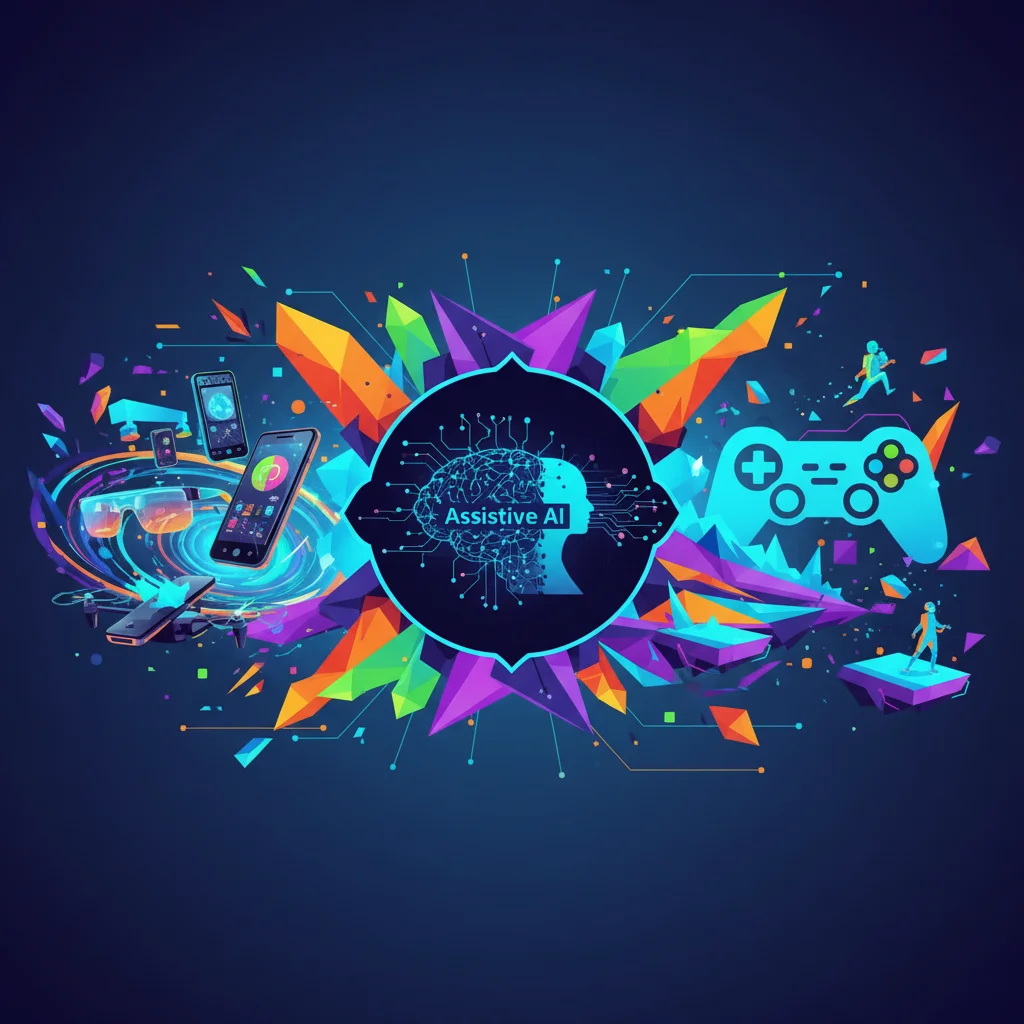
In this deep dive, we’ll explore three pivotal arenas of innovation: the next generation of personal gadgets, the compassionate revolution in assistive technology, and the paradigm-shifting advancements in the gaming world. For developers, entrepreneurs, and tech professionals, these aren’t separate trends—they are interconnected frontiers, rich with opportunity and challenge.
Section 1: The Next Wave of Consumer Gadgets: Intelligence Goes Ambient
By 2026, the concept of a “gadget” will have fundamentally evolved. We’re moving past devices that require our constant, direct attention and into an era of ambient computing, where technology seamlessly integrates into our environment. The driving force behind this shift is the potent combination of on-device AI and pervasive cloud connectivity. The most significant innovation won’t be a new screen size or a faster processor in raw gigahertz; it will be the predictive and proactive capabilities of the software running on that hardware.
We’re talking about devices that learn your routines, anticipate your needs, and automate complex tasks without explicit commands. Imagine a smart home hub that doesn’t just respond to “turn on the lights,” but adjusts the lighting temperature and brightness throughout the day based on your biometric data from a wearable, the time of day, and your calendar appointments. This level of hyper-personalization requires sophisticated machine learning models running efficiently on low-power chips, a major focus for hardware and software engineers alike.
This trend presents a massive opportunity for startups specializing in personalized AI algorithms, edge computing optimization, and, crucially, cybersecurity. As our devices collect more intimate data, ensuring its privacy and security becomes paramount. The market for consumer IoT devices is projected to grow exponentially, with some analysts suggesting a value of over $1.3 trillion by 2026 (source). The winners will be those who build trust through robust security architecture.
Here’s a look at what we can expect from the flagship gadgets of 2026:
| Gadget Category | Key 2026 Innovation | Underlying Technology |
|---|---|---|
| AR Glasses | Context-Aware AI Overlays | On-device neural processing units, spatial computing, 5G/6G connectivity |
| Smart Wearables | Predictive Health & Mood Tracking | Advanced biometric sensors, machine learning for anomaly detection, cloud-based data analysis |
| Home Hubs | Proactive Environment Automation | Multi-modal AI (voice, gesture, presence), federated learning, robust cybersecurity protocols |
| Personal Robots | Adaptive Task Assistance | Advanced robotics OS, natural language processing, computer vision for navigation |
For developers, the challenge is shifting from building apps to building “experiences” that span multiple devices and platforms. This requires a deep understanding of API integration, cloud infrastructure, and ethical AI programming.
Caught in the Crossfire: How a 0M Russian Bond Freeze Puts Telegram's 'Digital Nation' to the Test
Section 2: The Compassionate Revolution: AI in Assistive Technology
Perhaps the most impactful application of artificial intelligence will be in the realm of assistive technology. This is where innovation transcends convenience and becomes a force for empowerment and inclusion. By 2026, AI-powered assistive tech will be more accessible, affordable, and integrated into daily life, breaking down barriers for millions of people with disabilities. According to discussions on “Tech Life,” investment in this sector is seeing a significant surge, with a focus on creating scalable SaaS solutions that can be customized for individual needs.
We are witnessing the rise of tools that were once unimaginable. Real-time text-to-speech apps that can capture and transcribe multiple conversations in a noisy room for the hearing impaired. AI-powered glasses that describe the visual world to someone who is blind, identifying objects, reading text, and even recognizing faces. These advancements rely on cutting-edge machine learning models for computer vision and natural language processing, often running on the user’s smartphone and leveraging the cloud for more intensive computations.
The role of startups in this space is critical. They are often more agile than large corporations, able to work closely with user communities to develop solutions that address real-world needs. From smart prosthetics that learn a user’s gait to AI-driven educational software for students with learning disabilities, the opportunities for purpose-driven tech are immense. However, the ethical considerations are just as significant. The cybersecurity of these devices is a matter of personal safety, and the potential for bias in AI algorithms must be rigorously addressed during the programming and training phases.
Here’s a breakdown of emerging AI-powered assistive technologies and their impact:
| Disability Area | AI-Powered Solution (2026) | Core Technology |
|---|---|---|
| Visual Impairment | Real-time environment description & navigation aids | Computer Vision, Object Recognition, NLP |
| Hearing Impairment | Advanced speech-to-text with speaker identification | AI-driven audio processing, Diarization algorithms |
| Mobility Challenges | Smart prosthetics and exoskeletons with predictive movement | Reinforcement Learning, Sensor Fusion, Robotics |
| Cognitive & Speech | Personalized communication aids and cognitive assistants | Generative AI (for speech synthesis), Task Automation |
The development of these technologies is a testament to the power of collaborative innovation, often involving open-source software and partnerships between academic research, healthcare providers, and the tech industry.
Humanoid Robots: Why China's Latest Leap Forward Should Have Silicon Valley on High Alert
Section 3: Leveling Up Reality: Gaming’s New Frontier in 2026
The gaming industry has always been a bellwether for technological advancement, and the road to 2026 is no exception. The next generation of games will offer a leap in immersion and dynamism that is almost hard to comprehend, driven primarily by breakthroughs in AI and the maturation of cloud gaming.
The most profound change will come from Generative AI. For decades, non-player characters (NPCs) in games have been limited to pre-written scripts. By 2026, we’ll see mainstream titles featuring NPCs powered by large language models. Imagine having a truly open-ended conversation with a character, where their dialogue, motivations, and actions are generated dynamically based on your interactions. This creates a level of emergent gameplay and narrative depth previously impossible. This requires immense computational power and sophisticated programming, often leveraging a hybrid approach of on-device processing and cloud-based AI inference.
Furthermore, the cloud is changing not just how games are played, but how they are made and sold. Cloud gaming platforms are evolving into true SaaS models, allowing players to stream AAA titles to any device without needing expensive hardware. This lowers the barrier to entry for players and opens up new markets. For developers, cloud-based development environments and automation pipelines are streamlining the creation of massive, persistent online worlds. The global gaming market is expected to surpass $300 billion by 2026, a figure that underscores the immense economic and cultural force of this industry (source).
Let’s speculate on some of the most anticipated (hypothetical) releases of 2026 and the tech that will define them:
| Anticipated Game Title | Genre | Key Technological Innovation |
|---|---|---|
| Starfall: Echoes of the Void | Sci-Fi RPG | Procedurally generated planets with unique AI ecosystems |
| Chronos Imperium | Grand Strategy | Machine Learning-driven AI opponents that adapt to player strategy |
| Neon City: Unplugged | Cyberpunk Adventure | Generative AI-powered NPCs with persistent memories and relationships |
| Project Olympus | Cloud-Native MMO | Massive, seamless world powered entirely by cloud infrastructure |
These advancements are pushing the boundaries of what’s possible in interactive entertainment, creating new challenges in game design, narrative programming, and server architecture.
The Grok Dilemma: When AI Innovation Clashes with Human Dignity
The Common Thread: A Future Forged by Intelligent Software
As we look towards 2026, the message is clear: the future is less about the physical device in your hand and more about the intelligent software and services that connect them. The ambient intelligence in our gadgets, the compassionate automation of assistive tech, and the dynamic reality of our games all spring from the same well of innovation: artificial intelligence, machine learning, and the limitless potential of the cloud.
For the developers building this future, the entrepreneurs identifying the next great opportunity, and the professionals navigating this landscape, the path forward requires interdisciplinary thinking. The breakthroughs in one field will inevitably fuel the advancements in another. The challenge—and the opportunity—is to build a future that is not only smarter and more entertaining but also more accessible, secure, and humane.