Google’s AI is Now Your Personal Shopper: The New Era of Search and Ads Has Begun
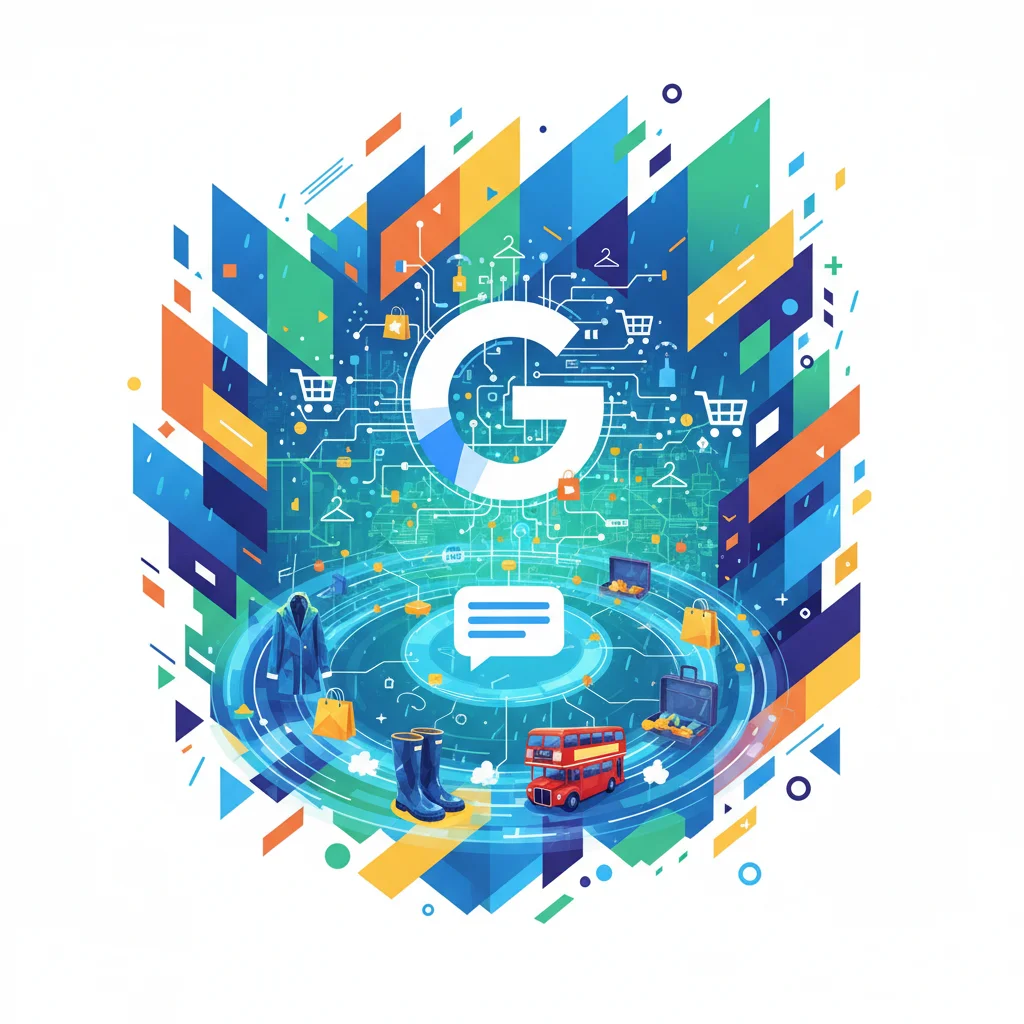
Picture this: you’re planning a trip and you ask your favorite AI assistant, “What’s a stylish yet practical jacket for a rainy spring week in London?” Instead of a list of blue links to blogs and stores, you get a thoughtful, paragraph-style answer. It describes the ideal jacket—lightweight, waterproof, maybe a classic trench coat style—and right there, embedded in the advice, are a few perfectly matched, shoppable options from different brands, complete with images and prices. You’ve just experienced the future of search, and it’s powered by advertising.
This isn’t a scene from a sci-fi movie. It’s the reality Google is actively building. In a landmark move that signals a seismic shift in the digital landscape, the tech giant has begun integrating highly personalized shopping ads directly into its AI-powered search results. As reported by the Financial Times, this initiative is the first major step in answering the multi-trillion-dollar question that has loomed over the tech world for the past year: How do you make money from generative artificial intelligence?
For decades, Google’s empire was built on a simple, elegant transaction: you search, you see relevant (but separate) ads, and advertisers pay for clicks. Now, as search evolves from a keyword-based query to a conversational dialogue, the ads are evolving with it. This isn’t just a new feature; it’s the beginning of a complete reimagining of search, e-commerce, and the very nature of online advertising.
The End of the Ten Blue Links: What is the Search Generative Experience (SGE)?
For most of the internet’s history, a Google search result page has been comfortingly familiar. You type in a query, and you get a list of ten blue links. That era is officially ending. Google’s “Search Generative Experience,” or SGE, is the company’s answer to the rise of conversational AI like ChatGPT. It aims to transform search from a passive directory into an active, intelligent partner.
Instead of just pointing you to other websites, SGE uses a large language model (LLM) to synthesize information from across the web and provide a direct, comprehensive answer at the top of the page. The introduction of ads into this experience is the logical, and commercially necessary, next step. Here’s how it works:
- Conversational Context: The ads are not triggered by simple keywords but by the nuanced intent of a conversational query. The AI understands you’re not just looking for a “jacket,” but a specific type of jacket for a specific context (London, spring, rain).
- Integrated, Not Bolted-On: These ads will appear within the AI-generated text, labeled as “sponsored,” but designed to feel like a natural part of the recommendation. This blurs the line between organic advice and paid placement in a way we haven’t seen before.
- Hyper-Personalization: Leveraging Google’s vast repository of user data, these ads will be tailored not just to the query, but to your past behavior, preferences, and style. The machine learning algorithms at play are designed to create an ad so relevant it feels more like a helpful suggestion than a commercial interruption.
This move is currently being tested with a small group of users in the US, but its implications are global. It’s Google’s high-stakes bet that it can evolve its core business model for the age of AI without alienating the billions of users who rely on its services.
Silence as a Service: How AI and Startups Are Winning the War on Noise
A Multi-Billion Dollar Imperative: Why Google is Doing This Now
Running state-of-the-art AI models is astronomically expensive. The computational power, the energy consumption, and the continuous innovation required to stay ahead demand a robust monetization strategy. Google’s parent company, Alphabet, can’t afford for its primary search product to become a cost center. This is about survival and future-proofing its dominance.
The financial stakes are staggering. In its most recent quarter, Google’s search advertising division generated a colossal $65.5 billion in revenue, a 13% increase year-over-year. This firehose of cash funds everything from YouTube to Waymo. Any threat to this revenue stream is an existential one, and the rise of ad-free or subscription-based AI search tools from competitors like Perplexity and Microsoft’s integration of OpenAI’s models into Bing represents a clear and present danger.
To visualize the magnitude of this shift, let’s compare the traditional search model with the new SGE ad-integrated model.
| Feature | Traditional Google Search | Google’s AI-Powered Search (SGE) |
|---|---|---|
| User Query | Keyword-based (e.g., “waterproof jacket london”) | Conversational, intent-based (e.g., “What jacket should I wear for a rainy week in London?”) |
| Ad Format | Text-based ads, Shopping carousels | Integrated, sponsored product suggestions within a narrative AI response |
| Ad Placement | Clearly separated at the top/side of results | Embedded directly within the AI-generated content (labeled “sponsored”) |
| Personalization | Based on cookies, search history, and basic demographics | Deeply personalized based on conversational context, user history, and inferred intent |
| Monetization Model | Pay-Per-Click (PPC) | Likely a hybrid of PPC and more advanced attribution models based on influence |
This table illustrates a fundamental change in the digital advertising paradigm. We are moving from a system of bidding on keywords to a future where brands bid for influence within an AI’s trusted recommendation. This requires a new level of sophistication in both advertising software and strategy.
The Ripple Effect: What This Means for Startups, Developers, and Entrepreneurs
Google’s strategic shift isn’t happening in a vacuum. It will send powerful ripples across the entire tech ecosystem, creating both challenges and immense opportunities, particularly for startups and developers.
For e-commerce businesses and marketers, the game is changing. Search Engine Optimization (SEO) will need to evolve into “Answer Engine Optimization.” The focus will shift from ranking for keywords to ensuring your products and content are seen as authoritative and valuable by Google’s AI. This could spawn a new generation of SaaS tools dedicated to optimizing product feeds and content for LLMs.
For developers, especially those skilled in programming and machine learning, this opens new frontiers. The demand for engineers who can build sophisticated automation tools to manage and analyze these new conversational ad campaigns will skyrocket. Furthermore, as users’ personal data becomes even more central to the advertising equation, the field of cybersecurity will face new challenges in ensuring this sensitive conversational data is protected.
Entrepreneurs should be watching closely. Where are the gaps? Perhaps there’s a need for a service that audits the “fairness” of AI recommendations to ensure smaller brands aren’t perpetually crowded out. Or maybe a cloud-based platform that helps businesses transform their standard product catalogs into rich, conversational data that an AI can easily understand and recommend. The foundational layer of digital marketing is being rewritten, and those who can build the tools for the next chapter stand to win big.
The EV Throne Has a New King: How BYD Dethroned Tesla and What It Means for Tech
The New Digital Conversation: Broader Implications and a Look Ahead
Beyond the immediate business implications, Google’s decision reflects a deeper change in our relationship with technology. We are moving from instructing our devices to conversing with them. This shift has profound consequences.
On one hand, a truly intelligent, personalized AI assistant that can help you plan, research, and shop more efficiently is an incredible value proposition. It has the potential to reduce friction in our digital lives and deliver a more intuitive online experience. According to one analyst cited by the FT, this could be “the biggest change in advertising in a decade.”(source)
On the other hand, it raises important questions. Will this hyper-personalized world create even stronger “filter bubbles,” where we are only shown products and ideas the algorithm thinks we’ll like? How will Google ensure transparency and prevent the AI’s advice from being unduly influenced by the highest bidder? The “sponsored” label is a good start, but maintaining user trust will be an ongoing battle.
Code Isn't Enough: The High-Stakes Battle for America's Drone Future
Ultimately, Google is placing a massive bet that convenience and relevance will trump our collective aversion to advertising. They are betting that if an ad is good enough, it ceases to feel like an ad and instead feels like a solution. The company is leveraging decades of research in artificial intelligence and user behavior to build a new kind of commercial internet, one that is woven into the fabric of a conversation.
This is more than just a new ad format. It’s the commercialization of dialogue itself. As Google rolls this out, we are all participants in a global experiment that will define the future of how we find information, discover products, and interact with the digital world. The silent, text-based search bar is learning to talk, and its first words are sponsored. The question now is, what will we say back?