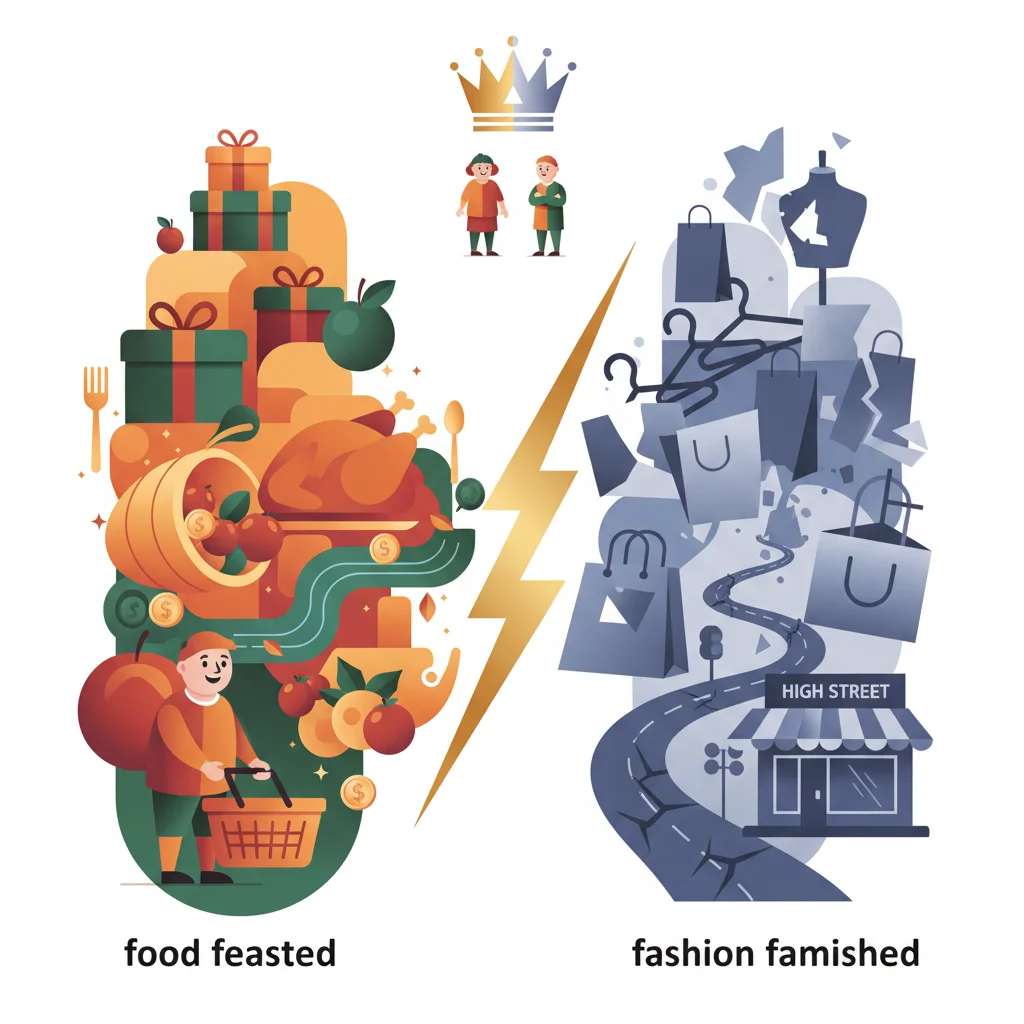
The Great Retail Divide: Why Food Feasted and Fashion Famished in the UK’s Christmas Showdown
The Golden Quarter’s Verdict: A Tale of Two Consumers
The final three months of the year, affectionately known in the retail world as the “golden quarter,” are a high-stakes period where fortunes are made or broken. For UK retailers, this past Christmas season was less a golden windfall and more a revealing litmus test for the health of the consumer economy. The results are in, and they paint a picture of a deeply cautious and pragmatic shopper. While supermarket tills rang with festive cheer, fashion racks were left out in the cold. This stark divergence isn’t just a story about groceries versus garments; it’s a profound commentary on the current state of the UK economy, consumer psychology, and the widening gap between retailers who have adapted and those who have been left behind.
The narrative that emerged was one of prioritized spending. Faced with persistent inflation and higher borrowing costs, households across the UK made calculated decisions. The verdict was clear: festive feasts and at-home celebrations took precedence over new outfits and discretionary gifts. According to reports, food sales saw a significant uplift, with premium grocery lines performing exceptionally well as consumers chose to indulge in affordable luxuries at home rather than dining out (source). This trend highlights a key shift in consumer behaviour—a flight to value, but not necessarily a flight from quality. It’s a defensive posture, but one where small, tangible pleasures are still sought, provided they are within a carefully managed budget.
Feast or Famine: A Sector-by-Sector Breakdown
The performance gap between essential and non-essential retail was not a subtle nuance; it was a chasm. On one side, grocery giants like Marks and Spencer, Tesco, and Sainsbury’s posted robust sales figures. M&S, in particular, continued its impressive turnaround, reporting a stellar performance in its food division, which saw like-for-like sales jump by nearly 10 per cent in the crucial 13 weeks leading up to the end of December. This success wasn’t merely a byproduct of food price inflation; it was a testament to a well-executed strategy focused on quality, innovation, and capturing the “premium home dining” market.
On the other side of the divide, the fashion and apparel sector faced a much tougher environment. While some resilient players like Next managed to navigate the choppy waters, many others struggled. The story here is one of volume versus value. Consumers, tightening their belts, were less willing to spend on new clothes, shoes, and accessories. This reluctance exposes a critical vulnerability for retailers who rely on discretionary spending and highlights the immense pressure on their margins. Even heavy discounting failed to fully stimulate demand, suggesting a deeper-seated caution among shoppers that goes beyond simple price sensitivity.
London's New Gridlock: Inside the High-Stakes Robotaxi Race Between US and China
To better visualize this performance gap, let’s compare the key retail sectors during the 2023 golden quarter:
| Retail Sector | Performance Summary | Key Drivers & Consumer Behaviour |
|---|---|---|
| Grocery & Food Retail | Strong growth, particularly in premium and own-brand lines. | Food price inflation, prioritizing at-home celebrations, trading down from restaurants to high-quality supermarket meals. |
| Fashion & Apparel | Subdued, with heavy reliance on discounting. Performance varied significantly between brands. | Cautious spending on non-essentials, reduced purchasing volume, focus on value and necessity over impulse buys. |
| General Merchandise & Home | Mixed to negative. Big-ticket items like furniture and electronics saw weak demand. | Delaying major purchases due to economic uncertainty and higher interest rates impacting credit-based spending. |
| Online Retail | Moderate growth, but highly competitive. Winners were those with slick logistics and strong value propositions. | Convenience remains key, but consumers are highly price-sensitive and comparison-shop extensively. |
The Blueprint for Success: Lessons from the Winners
It would be a mistake to conclude that the entire non-food sector is in peril. The success of stalwarts like Next provides a crucial counter-narrative and a blueprint for survival and growth. Next once again upgraded its profit forecast, a testament to its operational prowess (source). So, what sets the winners apart in this challenging environment?
The common threads are clear:
- Omnichannel Excellence: A seamless integration between a robust online platform and an efficient physical store network is no longer a “nice-to-have” but a core requirement.
- Supply Chain Mastery: The ability to manage stock effectively, avoid over-ordering, and react quickly to changing demand is critical for preserving margins.
- Clear Brand Proposition: In a crowded market, a strong and trusted brand identity that resonates with a specific customer demographic is invaluable. M&S has successfully revitalized its brand, while Next has maintained its reputation for quality and reliability.
- Investment in Technology: From back-end logistics to the customer-facing checkout, technology is the engine of modern retail. This includes leveraging data analytics to understand purchasing patterns and deploying modern fintech solutions to offer flexible payment options and loyalty programs.
These factors demonstrate that success is not merely a function of the economic climate but a direct result of strategic investment and long-term vision. Retailers that have failed to adapt their business models are now finding they have nowhere to hide.
Beyond the Ballot Box: Expert Political Forecasts and Their Impact on Your 2024 Investment Strategy
Wider Implications for the Economy and Stock Market
The Christmas trading results are a vital data point for anyone analyzing the UK economy. They suggest that while headline inflation may be easing, its effects are still deeply embedded in household budgets. The Bank of England will be watching these consumer trends closely as it deliberates on future interest rate policy. The weakness in discretionary spending indicates that the full impact of monetary tightening is still filtering through the system, potentially tempering expectations for a rapid economic rebound.
For those involved in investing and trading on the stock market, the divergence is stark. The share prices of successful food retailers have reflected their operational resilience, while many in the general merchandise and fashion sectors have underperformed. This creates a challenging environment for investors, requiring a granular, stock-specific approach rather than broad sector bets. The key will be to identify companies with strong balance sheets, adaptable business models, and a loyal customer base capable of weathering continued economic uncertainty.
The evolution of banking and consumer credit also plays a role. The rise of Buy Now, Pay Later (BNPL) services, a key innovation in financial technology, has helped prop up some non-essential spending, but it also points to underlying consumer strain. As regulation in this space tightens, its impact on retail sales will be another factor to watch.
Solving the Market: Why Successful Investing is Like Conquering the FT Crossword
Conclusion: The Path Forward in a Cautious New World
The 2023 golden quarter was not a disaster, but it was a sobering reality check. It exposed a consumer who is fundamentally changed—more deliberate, more value-conscious, and less prone to frivolous spending. The clear win for food retail over fashion is the headline, but the real story lies in the operational divergence between businesses. The retailers who thrived were those who understood this new consumer and had already invested in the technology, logistics, and brand strategy to meet their demands. As we move forward, the lessons from this period will be crucial. Adaptability, operational efficiency, and a relentless focus on the customer value proposition are no longer just buzzwords; they are the essential ingredients for survival in the new era of UK retail.

Related Posts

Beyond the Racks: A Financial Autopsy of Saks’s Impending Bankruptcy

Beyond the Balance Sheet: What Photography of “Home” Teaches Us About the Global Economy and Investing