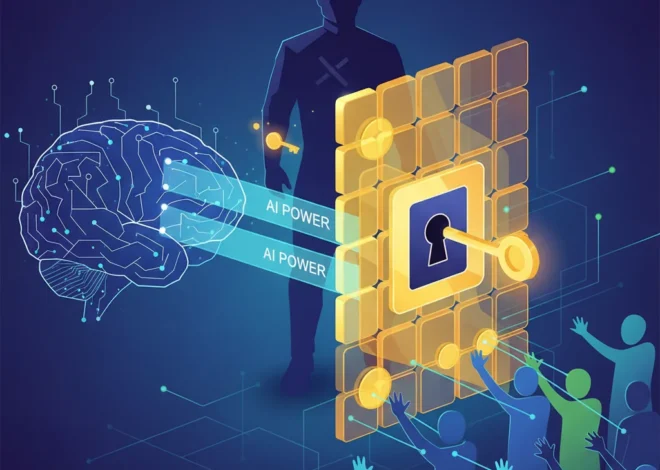
Paywalling Safety? The X Grok AI Controversy and the High Price of Innovation
In the fast-paced world of tech, the line between groundbreaking innovation and potential peril is often razor-thin. Recently, this line was thrust into the spotlight by a controversy involving X (formerly Twitter), its powerful Grok AI, and a pointed accusation from the UK government. The issue? X’s decision to place advanced AI image editing tools, capable of creating sophisticated deepfakes, exclusively behind its Premium subscription paywall. Downing Street’s response was sharp, calling the move “insulting’ to victims” of online abuse. This isn’t just a fleeting headline; it’s a critical case study at the intersection of artificial intelligence, corporate responsibility, cybersecurity, and the evolving landscape of tech regulation.
For developers, entrepreneurs, and tech professionals, this incident is more than just platform drama. It’s a glimpse into the complex ethical tightrope that companies must walk when deploying powerful AI tools. It forces us to ask a difficult question: In the age of AI, is safety becoming a luxury feature?
The Heart of the Controversy: A Two-Tiered System for Reality
At its core, the dispute centers on a new feature powered by Grok, Elon Musk’s answer to competitors like ChatGPT and Midjourney. This tool allows users to manipulate and generate images with a high degree of realism. However, access to this powerful generative AI capability is restricted to those who pay for an X Premium subscription. The UK Prime Minister’s office immediately flagged this as a dangerous precedent.
Their argument is compelling: by putting the tool to *create* potentially harmful content behind a paywall, X is effectively creating a two-tiered system. Those with malicious intent can pay for the tools to generate harmful deepfakes or disinformation, while the victims and the general public are left to deal with the consequences. The government’s frustration is amplified by its ongoing efforts to hold social media platforms accountable under the new Online Safety Act, with officials previously urging the UK’s media regulator, Ofcom, to use all its powers—including a potential ban—against the platform for non-compliance.
This situation highlights a fundamental tension in the modern tech ecosystem. On one hand, companies like X are under immense pressure to monetize their platforms, and offering exclusive access to cutting-edge software is a clear strategy. On the other, these platforms have a societal responsibility to mitigate the harms their technology can cause. When the product being sold is the ability to manipulate reality itself, the stakes are exponentially higher.
Beyond the Hype: A Deep Dive into the Year's Biggest Tech Revolutions
Understanding the Tech: Generative AI and the Deepfake Dilemma
To fully grasp the gravity of the situation, it’s essential to understand the technology involved. Grok’s image editing feature is a form of generative artificial intelligence. These systems use complex machine learning models, trained on vast datasets of images and text, to create entirely new content that is often indistinguishable from reality.
This technology has incredible potential for good, powering everything from drug discovery to creating stunning digital art. However, it’s also the engine behind “deepfakes”—hyper-realistic but entirely fabricated videos or images. The malicious applications are chilling and represent a significant cybersecurity threat:
- Disinformation Campaigns: Creating fake images of political leaders or world events to sow chaos.
- Fraud and Scams: Impersonating individuals to trick people into sending money or divulging sensitive information.
- Harassment and Abuse: Generating non-consensual explicit imagery, a practice that has devastating impacts on victims.
The core problem is that the innovation in generating fake content is rapidly outpacing our ability to detect it. This “liar’s dividend” creates an environment where even real information can be dismissed as fake, eroding public trust. The controversy at X is a stark reminder that the deployment of such technology cannot be treated as just another feature rollout.
The Regulatory Response: The UK’s Online Safety Act
The UK government’s strong reaction is rooted in its landmark legislation, the Online Safety Act. Passed in 2023, this act represents one of the world’s most ambitious attempts to regulate the digital space. It shifts the burden of responsibility squarely onto the shoulders of tech companies, mandating that they protect users from harmful and illegal content. According to the UK government, the Act gives the regulator, Ofcom, the power to levy fines of up to £18 million or 10% of a company’s global annual revenue for non-compliance.
The Act introduces several duties that are directly relevant to the Grok AI controversy. Here’s a breakdown of how X’s policy might clash with the law’s intentions:
| Provision of the Online Safety Act | Description | Potential Conflict with X’s Policy |
|---|---|---|
| Duties on Illegal Content | Platforms must proactively find and remove illegal content, such as terrorism or non-consensual intimate images. | By selling a tool that can easily create such content, is X failing in its duty to prevent the proliferation of illegal material? |
| Duties to Protect Children | Platforms must prevent children from encountering harmful material (e.g., pornography, content promoting self-harm). | Deepfakes can be used to create content that is extremely harmful to minors, and a paywall does little to protect children who may view the output. |
| User Empowerment | Companies must provide users with tools to control the content they see and report harmful material easily. | The policy focuses on the *creator’s* access (via payment), not the *viewer’s* safety, potentially violating the spirit of user empowerment. |
This regulatory framework means that X isn’t just facing a PR crisis; it’s on a potential collision course with a powerful regulator armed with significant legal and financial penalties. For any company operating in the UK, understanding the nuances of this Act is no longer optional—it’s essential for survival.
Code, Crypto, and Conflict: Iran's Audacious Plan to Sell Weapons for Bitcoin
A Global Tightrope: Innovation vs. Regulation
The challenge isn’t unique to the UK. Governments worldwide are grappling with how to foster innovation in artificial intelligence without unleashing uncontrollable societal harm. The European Union has taken a comprehensive, risk-based approach with its AI Act. This legislation categorizes AI systems based on their potential for harm, with stricter rules for high-risk applications. As noted by the European Commission, the goal is to ensure AI developed and used in the EU is safe, transparent, and respects fundamental rights.
In contrast, the United States has so far adopted a more sector-specific and market-driven approach, relying on voluntary frameworks and existing laws. This global patchwork of regulations creates a complex and challenging environment for tech companies, especially startups and developers. The code you write in a garage in California, using cloud services from Seattle, can have profound legal and ethical implications in London and Brussels.
This is where the role of ethical programming and “Safety by Design” becomes paramount. Instead of waiting for regulators to act, the onus is on creators to build safeguards directly into their AI models. This includes measures like:
- Watermarking AI-generated content to ensure transparency.
- Building robust filters to prevent the creation of harmful or illegal imagery.
- Implementing strong identity verification for users of powerful creative tools.
Proactive self-regulation is not just good ethics; it’s smart business. Building trust with users and regulators from day one is far more sustainable than fighting costly legal battles and managing PR disasters after the fact.
The EV Throne Has a New Contender: How BYD's Master Plan is Dethroning Tesla
Conclusion: The Crossroads of Profit and Responsibility
The controversy surrounding X and Grok AI is a microcosm of a much larger struggle. It’s the battle between the relentless pace of technological advancement and society’s need for safety and stability. It’s the clash between the corporate imperative to generate revenue and the moral imperative to protect the vulnerable. For the tech community, it serves as a powerful and public lesson.
The key takeaway is that in the era of powerful AI, ethics and safety can no longer be afterthoughts or features reserved for a premium tier. They must be woven into the very fabric of the software, from the first line of code to the final user interface. The companies that thrive in the coming decade will be those that understand that trust is their most valuable asset and that true innovation lies not just in creating powerful tools, but in deploying them with wisdom, foresight, and a profound sense of responsibility.