A New Economic Era: Unpacking the EU-Mercosur Trade Deal 25 Years in the Making
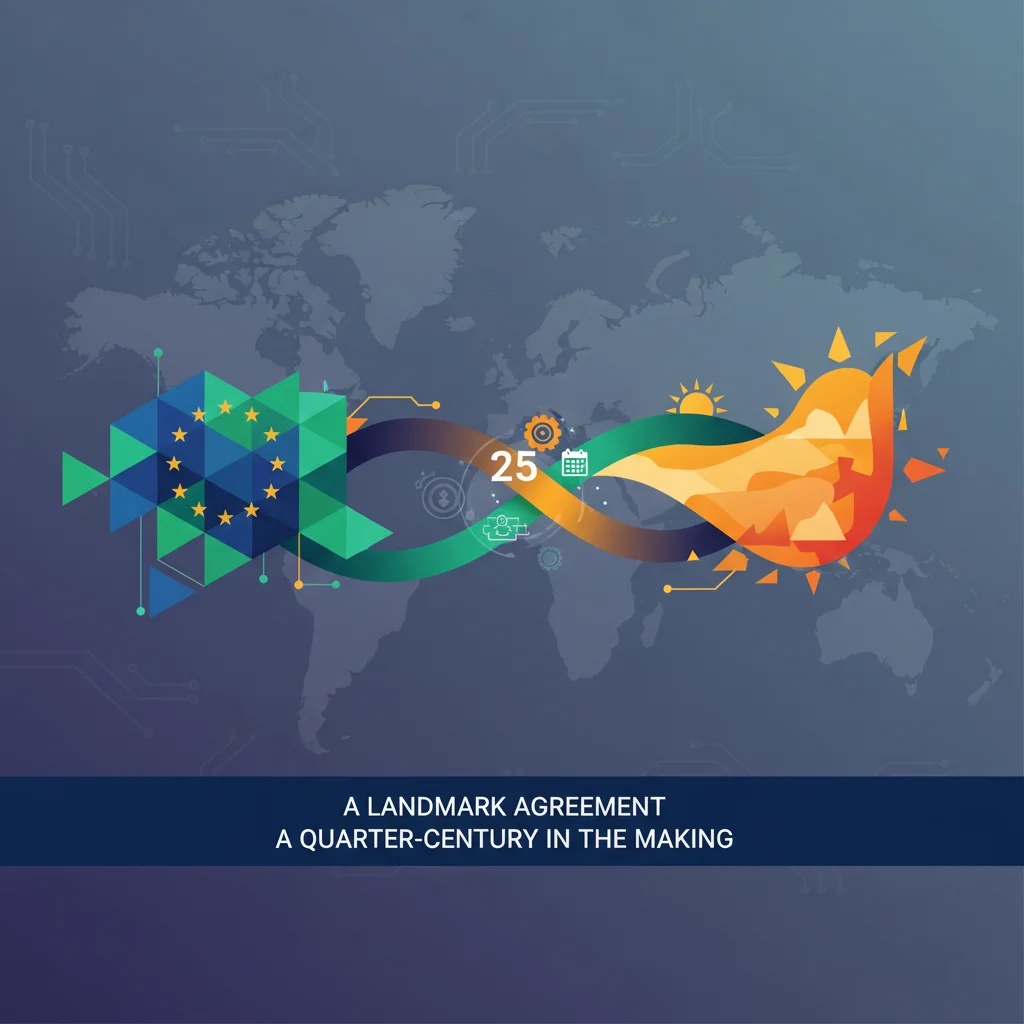
A Landmark Agreement a Quarter-Century in the Making
In the world of international relations and global finance, patience is more than a virtue; it’s a prerequisite. After more than two decades of complex negotiations, fraught with political shifts, economic crises, and deep-seated disagreements, the European Union has finally reached a landmark trade agreement with the Mercosur bloc of South American nations (Brazil, Argentina, Uruguay, and Paraguay). This monumental deal, 25 years in the making, promises to forge one of the world’s largest free-trade zones, creating a market of nearly 800 million people. For investors, business leaders, and anyone with a stake in the global economy, this isn’t just a headline—it’s a seismic shift with profound implications for trade, investment, and geopolitical strategy for years to come.
The agreement aims to slash tariffs, streamline regulations, and open markets, creating a powerful economic bridge between Europe and South America. While the final text still requires ratification by all member states—a significant hurdle in itself—the political agreement marks a pivotal moment. It signals a renewed commitment to multilateralism in an era increasingly defined by protectionism and trade disputes. This article will dissect the intricate layers of this historic deal, exploring the vast opportunities it presents for the stock market and investing, the significant challenges that lie ahead, and its broader impact on the global economic chessboard.
Understanding the Players: A Tale of Two Economic Giants
To grasp the scale of this agreement, it’s essential to understand the economic weight of the two blocs. Together, the EU and Mercosur represent a significant portion of the global GDP and trade. This deal isn’t just about connecting two regions; it’s about integrating two powerhouse economies with complementary strengths and needs.
Here is a comparative snapshot of the two economic blocs:
| Metric | European Union (EU) | Mercosur |
|---|---|---|
| Population (Approx.) | ~450 Million | ~295 Million |
| Combined GDP (Nominal, Approx.) | ~$17 Trillion | ~$2.5 Trillion |
| Key Exports | Machinery, Vehicles, Pharmaceuticals, Chemicals, Luxury Goods | Agricultural Products (Soy, Beef, Coffee), Raw Materials, Iron Ore, Crude Petroleum |
| Economic Profile | Highly developed, service-oriented, advanced manufacturing | Emerging markets, commodity-driven, growing industrial base |
This complementarity is the core driver of the deal. The EU gains preferential access for its high-value industrial goods and services into a large, growing consumer market. In return, Mercosur gains improved access for its agricultural exports, a cornerstone of its economy. According to the European Commission, the deal could save European companies over €4 billion in tariffs annually (source), making it the EU’s most lucrative trade agreement to date.
Bitcoin's 2026 Roadmap: The Two Price Levels That Will Define the Next Bull Cycle
The Investor’s Playbook: Unlocking New Avenues for Growth
For finance professionals and investors, the EU-Mercosur deal is a multifaceted event that creates both direct and indirect opportunities across various sectors. The reduction of trade barriers is expected to have a significant impact on corporate earnings, supply chain efficiency, and foreign direct investment (FDI), influencing trading strategies and long-term portfolio allocations.
Direct Sectoral Impacts on the Stock Market
Certain industries are poised to benefit directly from tariff elimination and increased market access:
- European Automotive & Machinery: German, French, and Italian manufacturers of cars, car parts, and industrial machinery will see tariffs as high as 35% eliminated, giving them a massive competitive advantage in South America. This could translate to higher sales volumes and improved margins for companies like Volkswagen, Stellantis, and Siemens.
- Mercosur Agribusiness: Companies in Brazil and Argentina focused on beef, poultry, sugar, and ethanol production will gain greater access to the lucrative European market. This could boost revenues for major agricultural players, though they will have to meet the EU’s stringent sanitary and phytosanitary (SPS) standards.
- EU Pharmaceuticals and Chemicals: These high-value sectors will benefit from reduced tariffs and greater intellectual property protection, opening a new frontier for growth in a region with a rising middle class and increasing healthcare demands.
The Rise of Financial Technology (Fintech) and Banking
A surge in transatlantic trade necessitates a robust financial infrastructure to support it. This is where financial technology and modern banking come into play. Increased trade volumes will drive demand for innovative solutions in:
- Cross-Border Payments: Fintech companies specializing in efficient, low-cost international transactions will be critical in facilitating the flow of capital between the two blocs.
- Trade Finance: There will be a growing need for digital platforms that offer letters of credit, supply chain financing, and invoice management, reducing friction for small and medium-sized enterprises (SMEs).
- Blockchain for Supply Chain Transparency: A key EU demand is for sustainable and traceable sourcing, particularly for agricultural products. Blockchain technology offers a powerful tool to create immutable records of a product’s journey from farm to table, verifying its origin and ensuring it is, for example, deforestation-free. This convergence of trade and technology is a major growth area for investing.
Navigating the Headwinds: Controversy and a Path to Ratification
A deal of this magnitude is never without its critics. The 25-year negotiation period is a testament to the deep-seated conflicts of interest that had to be overcome. As the original BBC report notes, some farmers in Europe have voiced strong opposition, fearing they will be unable to compete with a potential flood of cheaper South American agricultural imports produced under different environmental and labor standards.
The primary points of contention include:
| Area of Concern | Description of the Issue |
|---|---|
| Environmental Standards | Concerns over deforestation in the Amazon, linked to cattle ranching and soy cultivation, have been a major sticking point for several EU member states, including France and Austria. The deal includes a chapter on sustainable development, but critics question its enforceability. |
| Agricultural Competition | European farmers, particularly in the beef, sugar, and poultry sectors, argue that they face a higher regulatory burden (e.g., stricter animal welfare and environmental rules) and cannot compete on a level playing field with Mercosur producers. |
| Labor Rights & Standards | Differences in labor laws and enforcement between the two blocs have raised concerns among unions and civil society groups about a potential “race to the bottom.” |
The European Commission has stated it has included safeguards, such as tariff-rate quotas for sensitive products, to protect European farmers. Furthermore, the agreement’s sustainability chapter is said to be the most ambitious ever included in an EU trade deal, with commitments to the Paris Agreement on climate change. A report from the London School of Economics highlights that for the deal to succeed, these environmental provisions must be robust and effectively enforced (source). The success of the deal hinges on proving that trade liberalization and environmental protection can go hand-in-hand.
FTSE 100 Shatters 10,000: A New Era for UK Markets or a Precarious Peak?
The Geopolitical Dimension: More Than Just Economics
This trade deal cannot be viewed in a vacuum. It is a calculated strategic move by the EU on the global geopolitical chessboard. In an era marked by intense US-China rivalry and a global shift towards regional power blocs, this agreement serves several key purposes for the EU:
- Diversification: It reduces the EU’s economic dependence on both the United States and China by strengthening ties with another major global region. This is crucial for building resilient supply chains for critical raw materials and agricultural goods.
- Promotion of Values: The EU sees trade deals as a vehicle for exporting its regulatory standards and values, particularly on environmental protection, labor rights, and food safety. By embedding these principles in the agreement, it seeks to influence global norms.
- Strengthening Multilateralism: By successfully concluding such a complex, long-running negotiation, the EU sends a powerful message that rule-based international trade and cooperation are still viable alternatives to unilateralism and protectionism.
For the Mercosur countries, the deal offers a chance to integrate more deeply into the global economy, attract much-needed investment, diversify their export markets beyond commodities and China, and boost technological development through closer ties with European industries. The study of economics shows that such integration often leads to long-term productivity gains and higher living standards.
Beyond the Balance Sheet: The Economic Case for a Hot Meal
Conclusion: A New Chapter with a Cautious Outlook
The EU-Mercosur trade agreement represents a monumental achievement in international diplomacy and economic policy. It has the potential to unlock billions in economic value, reshape global supply chains, and create a powerful new axis in the world economy. For those in finance and investing, it opens a new landscape of opportunities, from direct plays in booming sectors to indirect investments in the enabling technologies of trade.
However, the path forward is laden with challenges. The ratification process will be a political minefield, and the effective implementation of the deal’s ambitious sustainability and labor provisions will be the true test of its success. This agreement is not an end point but the beginning of a new, more integrated, and far more complex chapter in the relationship between Europe and South America. For businesses and investors, the message is clear: the opportunities are immense, but they belong to those who can navigate the intricate interplay of economics, politics, and regulation that will define this new era of transatlantic trade.

Related Posts
The Great Retail Divide: Why Food Feasted and Fashion Famished in the UK’s Christmas Showdown

Beyond the Balance Sheet: What Photography of “Home” Teaches Us About the Global Economy and Investing