The Stablecoin Revolution Isn’t About Crypto—It’s About Smarter Software
Sending money across borders today feels like a relic from a bygone era. It’s a clunky, expensive, and painfully slow process. You click “send,” and your money embarks on a multi-day journey through a labyrinth of intermediary banks, each taking a slice of the pie. For years, the tech world has promised a hero to slay this dragon: stablecoins.
The pitch is seductive. Digital tokens, like USDC or USDT, pegged to the US dollar, zipping across the globe on a blockchain in minutes, not days, for pennies, not pounds. Fintech startups have championed this as the future, a technological leap forward that will democratize global finance. But what if the technology—the blockchain itself—is the least interesting part of this revolution?
A compelling analysis from the Financial Times suggests we’re focusing on the wrong thing. The real disruption won’t come from the novelty of a distributed ledger. Instead, it will be driven by the less glamorous but far more critical work of building new business models, navigating complex regulations, and developing the sophisticated software required to bridge our legacy financial world with the digital future.
The Global Payment System: A Rube Goldberg Machine of Money
To understand why stablecoins seem so revolutionary, you first need to appreciate how arcane the current system is. When you send an international wire, it doesn’t travel in a straight line. It’s passed along a chain of “correspondent banks” using a messaging system called SWIFT, which has been the backbone of international finance since the 1970s.
Each bank in the chain performs its own compliance checks—verifying identities (Know Your Customer, or KYC) and screening for illegal activity (Anti-Money Laundering, or AML). This manual-heavy process creates bottlenecks and racks up fees. It’s a system built for a world of paper ledgers, not digital immediacy.
The result? A simple transfer can take 3-5 business days and cost anywhere from $25 to $50. This friction is more than an inconvenience; it’s a significant barrier for small businesses, freelancers, and families sending remittances home.
The Toxic Legacy in Our Code: What Tech Can Learn from a Hidden Disaster
The Blockchain Promise: A Superhighway with a Massive Bottleneck
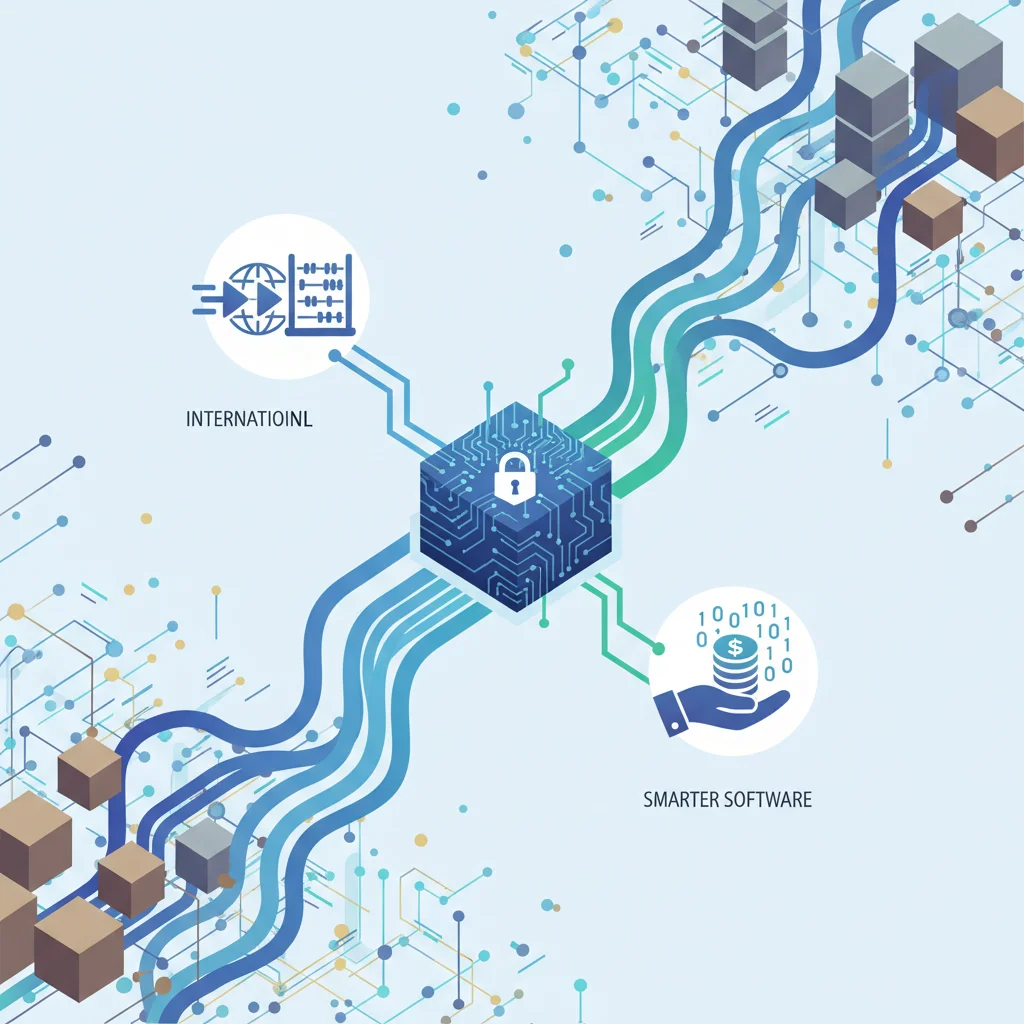
Stablecoins propose a radically simpler path. A sender in New York can convert dollars to USDC, send it directly to a recipient in Manila via a blockchain like Ethereum or Solana, and the recipient can convert it back to Philippine pesos. The transfer itself takes minutes. Problem solved, right?
Not quite. The blockchain is like a new, hyper-efficient superhighway. But the most significant traffic jams in finance happen at the on-ramps and off-ramps—the points where digital assets are converted to and from traditional “fiat” currency.
These ramps are still operated by regulated financial institutions that must abide by the same stringent KYC and AML laws. This is the “last mile” problem of crypto. You can move a billion dollars in USDC across the world in 30 seconds, but getting that first dollar into USDC and the final dollar out into a bank account is where the old-world friction remains. As the FT article points out, the core challenge isn’t the payment rail; it’s the compliant, regulated endpoints (source).
The Real Battleground: Business Models, Not Blockchains
The companies making real headway aren’t just crypto purists; they’re pragmatists building bridges. Giants like Visa and Mastercard aren’t trying to replace the banking system. Instead, they’re exploring how to use stablecoins to settle transactions *between* the financial institutions they already serve. This is a hybrid model—using blockchain’s efficiency for back-end settlement while leveraging their existing networks for consumer-facing transactions.
This highlights the central thesis: the future of payments is about integration, not replacement. The winning formula combines the speed of digital assets with the trust and regulatory clearance of the established financial system.
Let’s compare these models to see where the friction points really are.
| Feature | Traditional SWIFT Transfer | Realistic Stablecoin Transfer |
|---|---|---|
| Core Technology | SWIFT Messaging, Correspondent Banking | Blockchain + Traditional Banking APIs |
| Transfer Speed | 2-5 Business Days | Minutes (for blockchain part) + Hours/Days (for on/off-ramps) |
| Primary Bottleneck | Multiple intermediary bank hops and compliance checks | On-ramp (Fiat-to-Crypto) and Off-ramp (Crypto-to-Fiat) |
| Key Regulatory Hurdle | AML/KYC checks at each banking step | Intense AML/KYC scrutiny at regulated exchanges/ramps |
| Cost Driver | Correspondent bank fees, currency conversion spreads | Exchange fees, network gas fees, off-ramp bank fees |
| Key to Improvement | Centralized system upgrades (e.g., SWIFT gpi) | Streamlining on/off-ramp compliance and user experience |
As the table shows, stablecoins don’t magically erase the hurdles; they just move them. The new frontier for competition is in making those on/off-ramps as fast, cheap, and compliant as possible.
From Paralysis to Possibility: How AI is Rebuilding the Bridge Between Mind and Body
How Modern Tech is Solving the Real Problem
This is where today’s tech stack—beyond the blockchain—becomes the star of the show. The challenges of compliance, security, and integration are classic software engineering problems that require sophisticated solutions.
- Artificial Intelligence (AI) and Machine Learning (ML): The biggest cost in the old system is manual compliance. Today’s fintechs are building powerful AI models to automate this. Machine learning algorithms can analyze transaction patterns in real-time to detect potential money laundering, flagging only the truly suspicious activity for human review. This drastically reduces overhead and speeds up processing. This isn’t just an improvement; it’s a complete reimagining of how financial cybersecurity and compliance are managed.
- Cloud and SaaS: Building a global, compliant payment network from scratch is incredibly capital-intensive. The cloud allows startups to scale their infrastructure on demand without massive upfront investment. Furthermore, we’re seeing the rise of “Compliance-as-a-Service” SaaS platforms that offer sophisticated AML/KYC tools via a simple API. This allows developers to embed institutional-grade compliance directly into their applications, a level of automation that was unthinkable a decade ago.
- Advanced Programming and APIs: The future of finance is interconnected. The success of any new payment system hinges on its ability to communicate with legacy bank cores, digital wallets, and merchant systems. This requires robust, secure, and well-documented APIs. The art of programming in this space is less about cryptographic algorithms and more about building resilient and scalable middleware that can speak a dozen different financial languages.
The Opportunity for Builders and Entrepreneurs
So, what does this mean for you, the developer, the entrepreneur, the tech professional? It means the biggest opportunities in fintech may not be in inventing the next blockchain protocol.
The real gold rush is in building the picks and shovels for this new financial world:
- Build better on-ramps: Create slicker, faster, and more secure user experiences for converting fiat to digital currency.
- Solve for compliance: Develop AI-powered RegTech solutions that make compliance cheap and automated for everyone.
- Create developer tools: Build the APIs, SDKs, and SaaS platforms that make it easy for any app to plug into this new global payment network.
The stablecoin story is a perfect case study in technological evolution. The initial breakthrough (the blockchain) grabs the headlines, but the long-term, sustainable value is created by the ecosystem of software and business processes that grows around it. The future of global payments is being built today, not just with cryptography, but with intelligent automation, cloud-native software, and a deep understanding of the messy, regulated reality of money.
The AI Tax: Why Your Next Gadget Could Cost 20% More
The technology is ready. The challenge now is a human one: to build the trusted, compliant, and user-friendly bridges that will finally let value flow as freely as information does on the internet.