From Brinkmanship to Boardroom: Decoding the Trump-Petro Détente and Its Impact on Global Markets
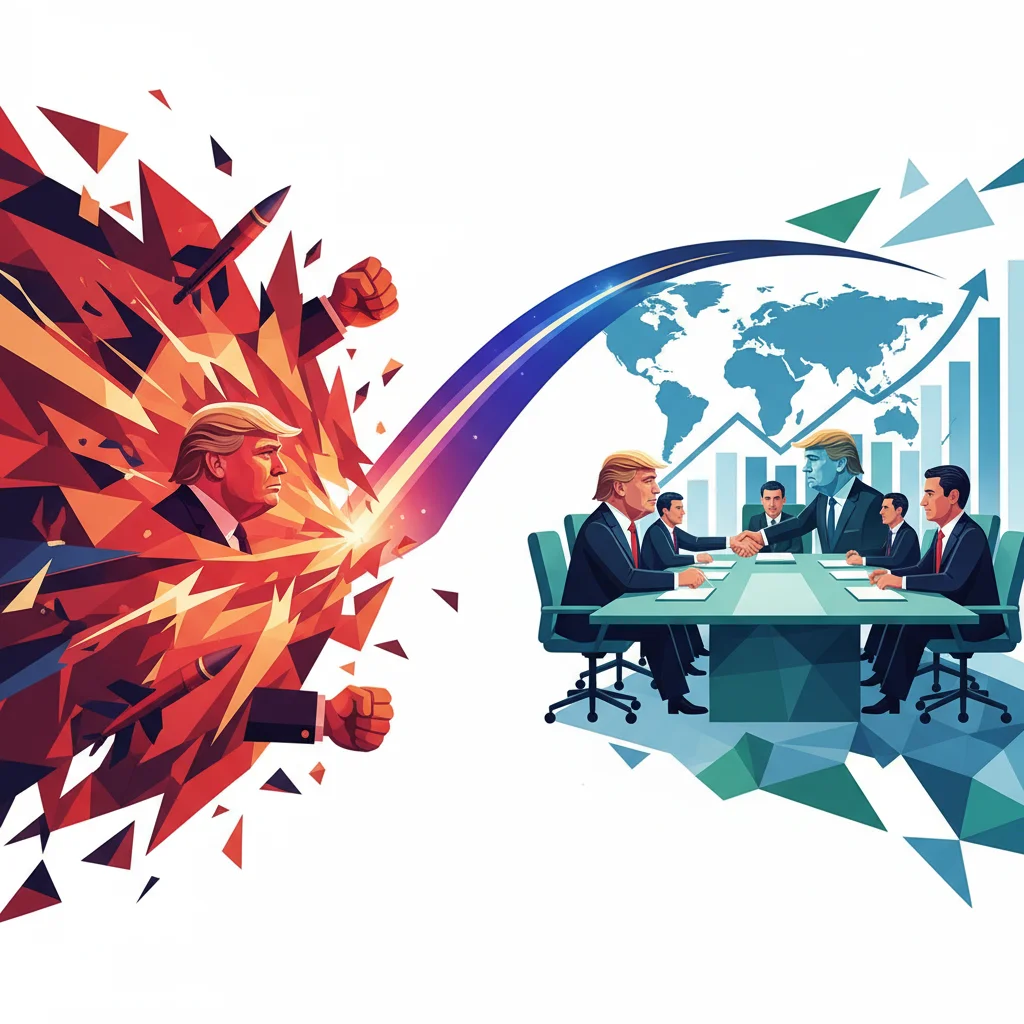
In the high-stakes theater of international relations, plot twists can unravel with breathtaking speed, leaving investors and market analysts scrambling to recalibrate their strategies. Few events encapsulate this volatility better than the recent, stunning reversal in US-Colombia relations. One week, the world watches as the White House issues stark warnings, hinting at military intervention in the South American nation. The next, headlines announce an impending meeting between US President Donald Trump and his Colombian counterpart, Gustavo Petro, in what is being hailed as a “dramatic détente” (source).
This whiplash from saber-rattling to summitry is more than just a political curiosity; it’s a critical case study for anyone involved in global finance, investing, and economics. It underscores a fundamental truth of the modern market: geopolitical risk is not a footnote in an analyst’s report but a primary driver of asset prices, currency fluctuations, and long-term economic stability. For business leaders, finance professionals, and retail investors alike, understanding the ‘why’ behind such a pivot is essential to navigating an increasingly unpredictable global landscape.
The Anatomy of a Geopolitical Reversal
To grasp the significance of this meeting, one must first appreciate the ideological chasm separating the two leaders. President Trump, a populist-nationalist, has often projected a foreign policy doctrine prioritizing American interests through transactional, and at times confrontational, diplomacy. On the other side, President Petro is Colombia’s first leftist president, a former guerrilla member who campaigned on a platform of radical economic and social reform, including weaning the nation off its dependence on fossil fuels and restructuring its relationship with the United States.
The preceding threats of military action, while shocking, were not entirely out of character with the Trump administration’s approach to Latin American nations perceived as problematic, particularly concerning drug trafficking and regional stability. Colombia has long been a key US ally in the “war on drugs,” receiving billions in aid. Any perceived deviation from this partnership, especially under a leftist government, was bound to create friction. According to the Washington Office on Latin America, while US aid to Colombia has trended downwards, it remains substantial, highlighting the deep-rooted, yet complex, strategic partnership.
So, what prompted the sudden shift? Several factors are likely at play:
- Economic Pragmatism: President Petro, despite his ideological convictions, faces the harsh realities of governing. Colombia’s economy, while resilient, is navigating headwinds from global inflation and fluctuating commodity prices. Antagonizing its largest trading partner is a risky strategy that could destabilize the Colombian peso and deter foreign investment.
- Strategic Recalculation: For the Trump administration, a stable Colombia is preferable to a failed state, regardless of its leadership’s political leanings. A diplomatic approach, even with a leftist leader, may be seen as a more effective tool for achieving US objectives—such as curbing cocaine production and managing migration—than military threats that could backfire spectacularly.
- The China Factor: As China continues to expand its economic influence in Latin America, Washington is increasingly wary of alienating regional partners. Pushing Colombia away could inadvertently open the door for deeper Sino-Colombian ties, a long-term strategic loss for the United States.
Clash of the Titans: Why the Saudi-UAE Rivalry is Redefining Middle East Finance and Investing
Colombia’s Economic Crossroads: A High-Stakes Game for Investors
For the investment community, the political drama is a backdrop to a more pressing question: What does this mean for Colombia’s economy and its position as an emerging market? Colombia is the fourth-largest economy in Latin America, with a dynamic private sector and significant natural resources. However, political uncertainty has cast a long shadow over its financial markets.
The meeting between Trump and Petro could act as a powerful market signal. A successful détente could soothe investor nerves, strengthen the peso, and lower the country’s risk premium. Conversely, a failed summit could send shockwaves through the Colombian stock market and bond markets, triggering capital flight. Below is a snapshot of key economic indicators that investors are closely monitoring.
| Economic Indicator | Recent Data / Forecast | Implication for Investors |
|---|---|---|
| GDP Growth | Projected at 1.7% for 2024 (World Bank) | Moderate growth; highly sensitive to political stability and oil prices. |
| Inflation Rate | Trending downwards but remains above central bank target | Impacts consumer spending and central banking policy on interest rates. |
| Foreign Direct Investment (FDI) | Showed resilience but sensitive to regulatory changes | A key gauge of international confidence in Petro’s administration. |
| Key Exports | Oil, Coal, Coffee, Gold | High exposure to global commodity cycles and energy transition policies. |
This détente also has implications for Colombia’s burgeoning financial technology sector. A stable political environment is crucial for fostering innovation in fintech and attracting venture capital. Improved US relations could open doors for Colombian financial technology startups to access American markets and expertise, accelerating growth in areas like digital payments, neo-banking, and even regulated blockchain applications for supply chain management.
Navigating Investment Volatility in a Multipolar World
The US-Colombia situation is a microcosm of a broader trend impacting global investing. The post-Cold War era of relative geopolitical calm is over. Investors must now factor in sudden policy shifts, trade wars, and regional conflicts as standard variables in their risk models. So, how can one build a resilient portfolio in such an environment?
Firstly, geopolitical intelligence is no longer a niche specialty but a core competency for successful trading and asset management. Understanding the domestic political pressures on leaders like Trump and Petro provides crucial context for their international actions. Secondly, diversification remains the most potent tool. This means not only diversifying across asset classes but also across geographies, being careful not to over-concentrate in regions susceptible to the whims of a single superpower.
Furthermore, technology offers new tools for managing this risk. Advanced data analytics can help model the potential impact of political events on the stock market, while the rise of decentralized finance (DeFi) and blockchain-based assets, though still nascent and highly volatile, represents an attempt by some to create financial systems less susceptible to the control of nation-states. While not a mainstream solution, it’s a trend in economics worth monitoring.
The Ripple Effect: Regional Stability and the Future of Finance
The outcome of the Trump-Petro meeting will reverberate far beyond Bogotá and Washington. It will send a powerful message to other leftist leaders in Latin America, such as those in Brazil, Chile, and Mexico. A cooperative outcome could set a precedent for pragmatic engagement, potentially stabilizing regional politics. A contentious one could deepen ideological divides, creating further uncertainty for an already complex regional economy.
The regional banking sector is particularly vulnerable. Increased political risk can lead to tighter credit conditions and reduced cross-border investment, stifling economic growth. This is where regional and international financial institutions play a critical role. The Inter-American Development Bank and the World Bank will be watching closely, as political stability is a prerequisite for the long-term infrastructure and development projects they fund. According to a report by the Atlantic Council, the primary risk to Colombia’s economy under Petro is not radical reform but rather policy paralysis and the erosion of investor confidence—a risk this détente could directly address.
Conclusion: A New Paradigm for Politics and Portfolios
The planned meeting between Donald Trump and Gustavo Petro is a masterclass in modern geopolitics, where unpredictability is the only constant. The rapid pivot from military threats to diplomatic dialogue highlights the complex interplay of ideology, economic necessity, and strategic calculation that shapes our world.
For those in the world of finance, this event is a stark reminder that a globalized economy is inextricably linked to the ebbs and flows of international politics. Success is no longer just about analyzing balance sheets and market trends; it’s about understanding the motivations of world leaders and anticipating the market’s reaction to their next move. Whether this détente marks a new chapter of pragmatic cooperation or is merely a temporary pause in a volatile relationship, one thing is certain: the world is watching, and portfolios will feel the impact.