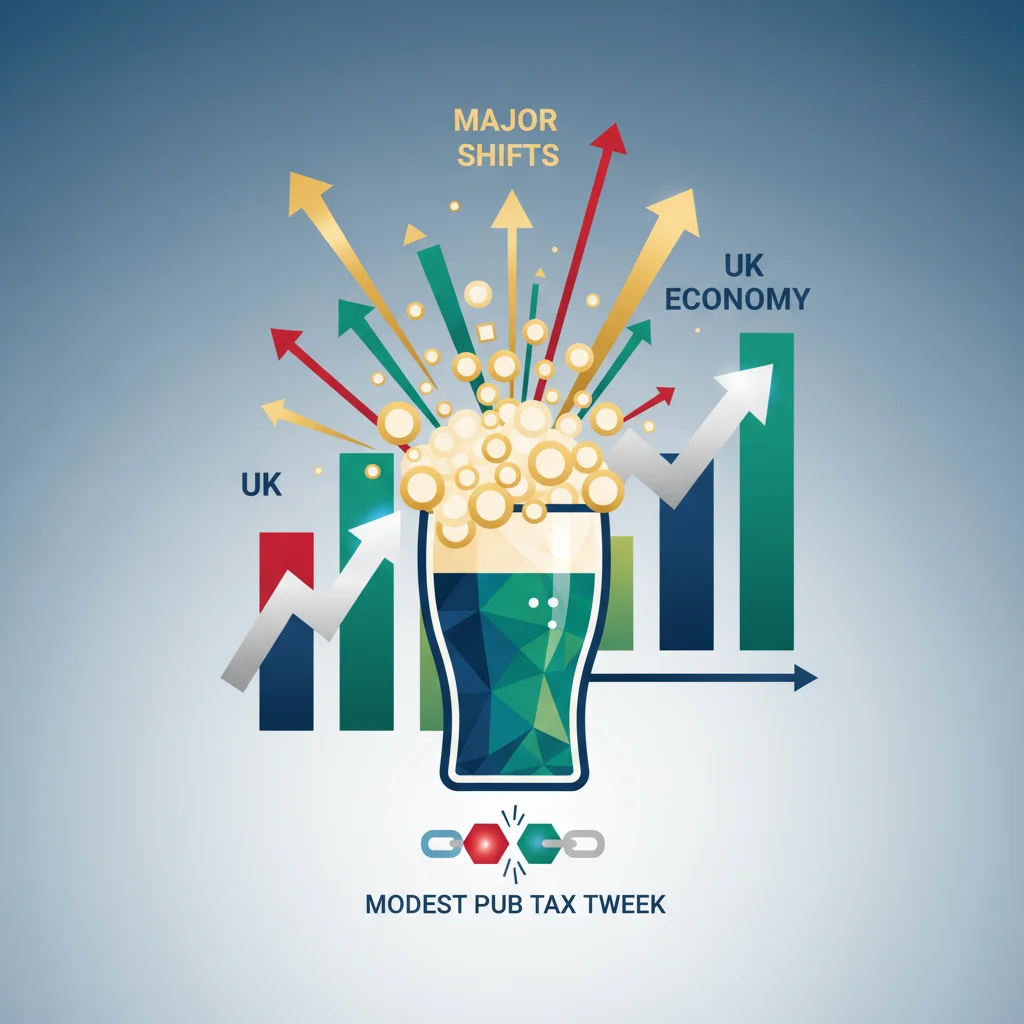
Fiscal Froth: Why a Modest Pub Tax Tweak Signals Major Shifts in the UK Economy
In what might seem like a minor footnote in the grand ledger of national finance, the UK government has signaled its intention to re-evaluate a planned rise in business rates for pubs. This decision comes after intense lobbying from a hospitality industry pushed to its limits. While a sigh of relief can be heard from publicans across the country, for investors, finance professionals, and business leaders, this development is more than just good news for the local watering hole. It’s a critical barometer of government fiscal policy, a case study in the struggles of brick-and-mortar businesses, and a signpost for the future direction of the UK economy.
This single policy adjustment, seemingly confined to one sector, sends ripples across the entire financial landscape. It touches upon everything from commercial real estate valuations and the health of the banking sector’s SME loan books to the strategic decisions made by institutional investors in the stock market. To truly understand its significance, we must look beyond the pint glass and examine the intricate economic machinery at play.
Decoding the Business Rate Dilemma
Before diving into the wider implications, it’s essential to understand the mechanism at the heart of this issue: business rates. Often described as the commercial equivalent of council tax, business rates are a tax on non-domestic properties. Their calculation is based on the property’s “rateable value,” an estimate of its open market rental value. This system, however, has long been a source of contention.
Critics argue that it disproportionately burdens businesses with significant physical footprints, such as retail and hospitality, while online-only giants with minimal high-street presence pay comparatively little. This creates an uneven playing field that has been exacerbated by shifting consumer habits. For a pub, the tax is not just on the building but on its potential value, a value that has been squeezed by a torrent of economic headwinds.
The planned changes, which the government is now reconsidering, were set to recalculate these values, leading to what many in the industry feared would be a crippling tax hike. According to the British Beer and Pub Association (BBPA), pubs were facing an average business rates bill increase of £12,500, a devastating blow for businesses already operating on razor-thin margins. This potential increase wasn’t just a number on a spreadsheet; for many, it represented a potential death knell.
The Sanctions Paradox: How Russian Elites are Paying Double for a Taste of Western Luxury
A Perfect Storm for the Hospitality Sector
The outcry from the hospitality industry didn’t happen in a vacuum. Pubs and restaurants are currently navigating a “perfect storm” of economic pressures that threaten their very existence. Understanding this context is crucial for anyone involved in finance or investing in consumer-facing sectors.
Below is a breakdown of the cumulative pressures facing a typical UK pub, illustrating why the proposed business rate hike was viewed as the final straw:
| Economic Pressure | Impact on Operations |
|---|---|
| Soaring Energy Costs | Massive increases in electricity and gas bills, essential for refrigeration, cooking, and heating, have decimated profit margins. Some pubs have seen energy costs triple. |
| Supply Chain Inflation | The cost of goods, from cooking oil and grain for beer to fresh produce, has risen dramatically, forcing businesses to either absorb costs or raise prices for squeezed consumers. |
| Labour Shortages & Wage Growth | Post-Brexit and post-pandemic labour market shifts have made it difficult to recruit and retain staff, leading to increased wage competition and higher operational overheads. |
| Consumer Spending Squeeze | With the cost of living crisis, disposable income has fallen. A pint at the pub is a discretionary expense, making the sector highly sensitive to downturns in consumer confidence. |
This confluence of factors has created an incredibly fragile ecosystem. Data from the industry has painted a grim picture, with hundreds of pubs closing their doors for good in the past year alone. The government’s decision to water down the rate rise is, therefore, a direct intervention to prevent a wholesale collapse of a vital part of the UK’s social and economic fabric.
The Government’s Tightrope: Fiscal Responsibility vs. Economic Growth
This policy pivot highlights the delicate balancing act governments worldwide are performing. On one hand, there is immense pressure to raise tax revenues to service national debt and fund public services—a core tenet of responsible fiscal management. On the other hand, imposing overly burdensome taxes on struggling sectors can stifle growth, trigger business failures, and ultimately lead to lower tax receipts and higher unemployment. It’s a classic economics conundrum.
By softening the blow of business rates, the government is tacitly acknowledging that the Laffer Curve principle—whereby beyond a certain point, higher tax rates can lead to lower total tax revenue—is a real and present danger for the hospitality sector. Allowing thousands of pubs to go under would not only be politically damaging but would also erase their future contributions in VAT, corporation tax, and employment taxes from the national accounts. This decision is a calculated bet that providing short-term relief will yield a better long-term economic outcome.
The Walls Are Closing In: How a New Global Crypto Tax Crackdown Will Change Everything for Investors
Ripple Effects: What This Means for the Broader Financial World
The decision on pub business rates is not an isolated event. It’s a data point that should be fed into any comprehensive analysis of the UK’s financial and investment landscape.
- Stock Market and Investing: For investors, this is a clear signal. Listed pub and restaurant groups (e.g., J D Wetherspoon, Mitchells & Butlers, Marston’s) will see immediate, tangible benefits to their bottom line. The move could provide a much-needed boost to their share prices and improve their attractiveness as an investment. Beyond the specific companies, it signals a government that is sensitive to the pressures on the consumer discretionary sector, which could influence broader market sentiment.
- Commercial Real Estate: The health of the pub sector is intrinsically linked to commercial real estate. A wave of pub closures would lead to a glut of vacant properties, depressing rental yields and property values. This would have a direct impact on Real Estate Investment Trusts (REITs) with significant hospitality holdings. This policy support helps to stabilize a key segment of the commercial property market.
- Banking and Lending: Banks with significant loan exposure to the SME and hospitality sectors will be watching closely. Widespread business failures would lead to a spike in loan defaults, impacting the stability of their lending portfolios. By providing this relief, the government is indirectly shoring up the balance sheets of commercial banks and maintaining the flow of credit, a vital component of the wider economy.
The Role of Financial Technology in a Volatile Climate
This entire episode underscores the critical importance of agility and financial literacy for modern businesses. Here, the role of financial technology (fintech) becomes paramount. The days of relying on a dusty ledger and an annual chat with an accountant are long gone. Survival in today’s economy requires sophisticated tools.
Modern fintech platforms are empowering publicans and other small business owners to:
- Model Scenarios: Cloud-based accounting software allows businesses to instantly model the impact of a potential tax hike, helping them to make informed decisions and lobby effectively with hard data.
- Manage Cash Flow: Real-time cash flow forecasting tools are essential for navigating periods of high inflation and unpredictable revenue, allowing businesses to anticipate shortfalls and manage resources proactively.
- Access Flexible Funding: The rise of alternative lending platforms, a key innovation in financial technology, provides businesses with quicker, more flexible access to capital compared to traditional banking channels, which can be a lifeline during a crunch.
The strategic adoption of these tools is no longer a luxury but a fundamental requirement for resilience. As the tax and regulatory landscape continues to shift, businesses that leverage technology to stay ahead of the curve will be the ones that thrive.
The Phoenix of Finland: How Nokia Rose from the Ashes to Power the AI Revolution
Conclusion: A Small Change with Big Implications
The UK government’s decision to water down the business rate rise for pubs is far more than a simple tax adjustment. It is a microcosm of the immense challenges facing Western economies: the struggle to support traditional industries in a digital age, the balancing act between fiscal consolidation and economic stimulus, and the profound impact of policy decisions on the entire investment ecosystem.
For those engaged in finance, investing, and business leadership, the message is clear. Pay attention to the details. A seemingly minor policy shift in one sector can provide invaluable insight into macroeconomic trends, government priorities, and future market movements. This pub tax tweak is a reminder that in the complex world of economics and the stock market, sometimes the most significant stories are found not in the grand pronouncements from central banks, but in the quiet relief of a local business given a fighting chance to survive.