The AI Productivity Paradox: Why Your ChatGPT Habit is Reshaping the Economy (Even if GDP Can’t See It)
Ever spent an hour wrestling with a tricky email to a client, only to have an AI assistant draft a perfect version in 30 seconds? Or maybe you’ve used ChatGPT to plan a week’s worth of family meals, saving you the daily “what’s for dinner?” headache. You feel more productive, more efficient, and more in control. Yet, when you look at national economic data, the much-hyped AI boom seems curiously quiet.
This isn’t just a feeling; it’s a full-blown economic mystery that has experts scratching their heads. We’re living through a revolution in artificial intelligence, with powerful tools at our fingertips, but traditional metrics like Gross Domestic Product (GDP) aren’t reflecting a massive surge. So, what gives? Are we all just imagining these gains?
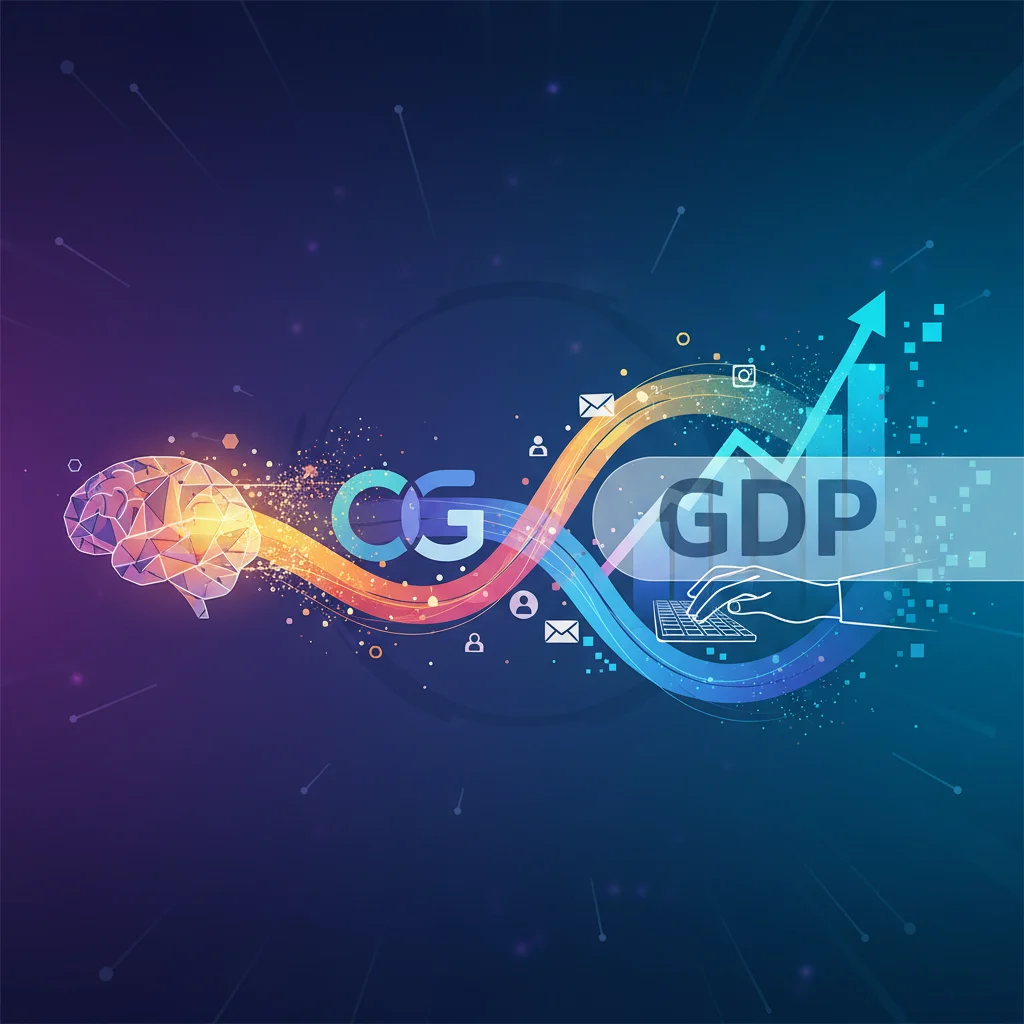
According to OpenAI’s chief economist, we’re not imagining it. We’re just looking in the wrong place. A recent report highlights a fascinating argument: the most significant AI-driven productivity gains aren’t happening in the office cubicle or on the factory floor—at least not yet. They’re happening in our living rooms, kitchens, and home offices. This is the dawn of “hidden productivity,” and it’s quietly reshaping our lives and, eventually, our economy.
The Productivity Paradox 2.0: Seeing the Forest for the Trees
The idea that a revolutionary technology doesn’t immediately show up in economic statistics is not new. In 1987, economist Robert Solow famously quipped, “You can see the computer age everywhere but in the productivity statistics.” This became known as the Solow Paradox. It took years of investment, process re-engineering, and widespread adoption before the digital revolution finally registered as a massive economic boom.
We’re now facing a similar situation with AI. Shane Tews, OpenAI’s chief economist, argues that tools like ChatGPT are delivering immense personal benefits that simply don’t get counted. “People are getting personal and professional benefits from these tools that don’t traditionally show up in the statistics,” Tews notes in a discussion with the Financial Times. When you use AI to help your child with their homework, plan a complex vacation itinerary, or learn a new programming language, you’re saving time and cognitive energy. That’s real value, but it doesn’t involve a monetary transaction and therefore remains invisible to GDP accountants.
This “hidden productivity” is the unmeasured value we gain in our non-work lives. It’s the friction removed from daily tasks, the creative barriers lowered, and the mental load lightened. For developers, it’s the hours saved debugging code. For startups, it’s the ability to generate professional marketing copy without a big budget. This cumulative effect is profound, even if it’s not immediately obvious on a national balance sheet.
The Toxic Legacy in Our Code: What Tech Can Learn from a Hidden Disaster
From Mundane Chores to Creative Pursuits: The New Domestic Revolution
Let’s get specific. Where is this hidden productivity actually happening? It’s in the countless small, often thankless, tasks that consume our personal time. Think about the mental energy that goes into:
- Organizing a child’s birthday party
- Researching and booking a family holiday
- Drafting a sensitive email to a family member
- Creating a workout plan and a corresponding grocery list
- Summarizing a dense school textbook chapter for a struggling student
Historically, these tasks required hours of research, planning, and mental effort. Today, a well-crafted prompt can produce a comprehensive plan in minutes. This isn’t just about saving time; it’s about freeing up cognitive bandwidth for more meaningful activities—spending time with family, learning a new skill, or simply resting. This is a form of automation for the mind, a SaaS platform for managing life’s complexities.
The Coming Wave: When Digital Brains Get Physical Bodies
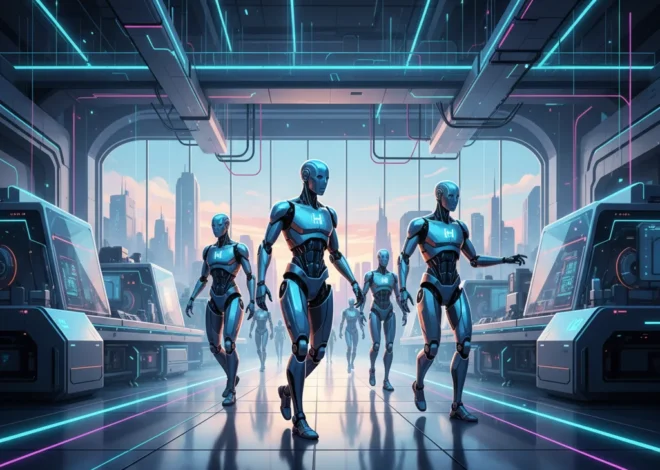
So far, we’ve focused on the cognitive and organizational benefits of large language models. But the real game-changer will be when this advanced machine learning intelligence is integrated with robotics to tackle physical household chores. We’re not just talking about a slightly smarter Roomba. We’re talking about a fundamental shift in domestic labor.
To understand the leap we’re about to witness, let’s compare the state of household automation today with what’s on the horizon.
| Domestic Task | Current Automation (Rule-Based) | Future AI-Powered Automation (Context-Aware) |
|---|---|---|
| Cleaning | Robot vacuums that follow set patterns and avoid obstacles. | Robots that can identify specific messes, choose the right cleaning method, and tidy up cluttered rooms before cleaning. |
| Cooking | Smart ovens with pre-programmed recipes. | A robotic chef that can plan meals based on dietary needs, available ingredients, and user preferences, then cook the meal from scratch. |
| Laundry | Washers/dryers with sensor-based cycles. | A system that sorts clothes by color and fabric, washes, dries, folds, and puts them away in the correct drawers. |
| Scheduling & Admin | Digital calendars and voice assistants that set reminders. | An AI agent that proactively manages the family schedule, resolves conflicts, books appointments, and plans logistics automatically. |
This transition from single-task gadgets to multi-skilled, context-aware agents is where the real time-saving will occur. However, this future also brings significant challenges, particularly around the cost of hardware and the critical need for robust cybersecurity to protect our most personal data and connected homes from threats. As our homes become more integrated with cloud services, securing them becomes paramount.
Love, Lies, and Algorithms: Can AI Really Hack Your Heart?
The “Productivity J-Curve”: Why We Have to Wait for the Boom
If the benefits are so clear, why the delay in the official numbers? Stanford economist Erik Brynjolfsson offers a compelling explanation with his “productivity J-curve” theory. As the FT article mentions, this theory suggests that when a transformative technology is introduced, productivity often dips before it soars.
Why the dip? Because true transformation requires more than just buying new software. It demands significant upfront investment, employee retraining, and—most importantly—a complete redesign of business processes. Companies can’t just “add AI” to a 20-year-old workflow and expect magic. They have to rebuild the workflow around AI’s capabilities. This process is costly and time-consuming, creating an initial productivity lag.
We saw this with electricity, computers, and the internet. The initial phase was all about investment and adjustment. The payoff came later, once the new technology was deeply integrated into the fabric of the economy. For businesses and startups today, the lesson is clear: patience and strategic implementation are key. The biggest returns will go to those who don’t just adopt AI, but who fundamentally rethink their operations to leverage it.
Rethinking Value in the Age of AI
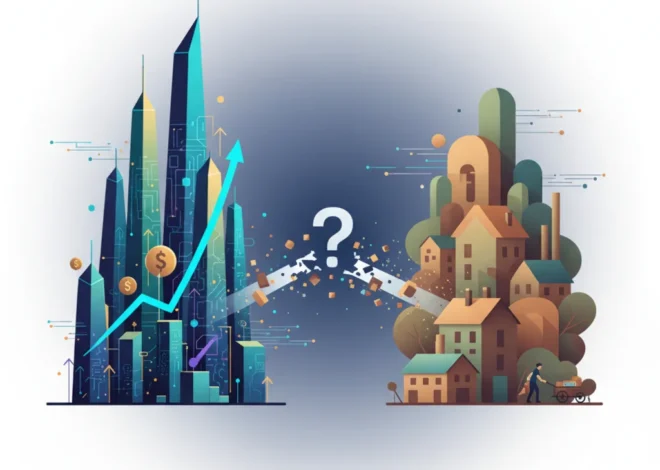
Ultimately, this conversation forces us to ask a bigger question: are we measuring the right things? GDP was designed for a 20th-century industrial economy. It excels at measuring the production of cars and bushels of wheat but struggles to capture the value of a free, open-source software library or the time saved by an AI-powered search engine.
The “hidden productivity” generated by AI is a prime example of this measurement gap. The billions of hours saved globally on personal tasks represent an enormous increase in human welfare, even if no money changes hands. As AI becomes more integrated into our lives, we may need to develop new metrics that account for well-being, time saved, and cognitive freedom.
The AI revolution is happening. It’s not just in the data centers or the research labs; it’s in your kitchen, your home office, and on your smartphone. While the economists wait for the J-curve to kick in, the rest of us are already experiencing the benefits. This quiet, personal revolution is laying the groundwork for the massive economic and societal shifts to come. The productivity boom is not a myth—it’s just been hiding in plain sight.
The Drone Revolution: How AI, Automation, and Code Are Lighting Up Our Skies