A Raid or an Invasion? Polymarket’s $10.5M Controversy and the High-Stakes Future of Fintech
The Multi-Million Dollar Question of a Single Word
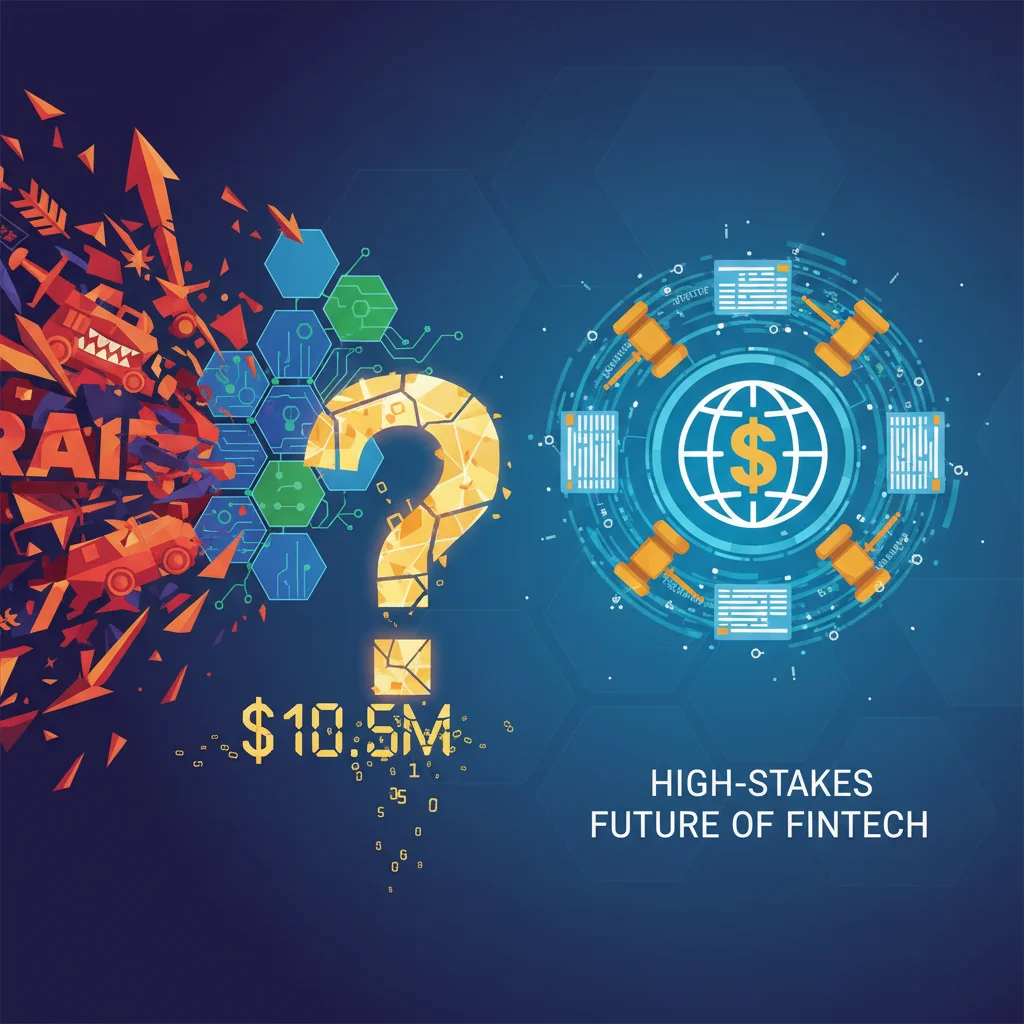
In the world of high-frequency trading and complex financial instruments, disputes are often settled by armies of lawyers poring over dense contracts in mahogany-lined boardrooms. But what happens when the dispute is over a staggering $10.5 million, the contract is a simple question on a blockchain-based platform, and the entire debate hinges on the definition of a single word: “invade”?
This is the scenario currently engulfing Polymarket, a leading decentralized prediction market. The platform is at the center of a firestorm after refusing to pay out on a market asking, “Will the US invade Venezuela by year end?” The controversy erupted after a US military operation in Venezuela occurred, an event many bettors believed satisfied the “Yes” condition. However, Polymarket’s resolution mechanism declared it did not, voiding millions in potential winnings and igniting a fierce debate about the very foundations of decentralized finance (DeFi), the future of investing, and the treacherous intersection of code and human language.
This isn’t just a niche story for crypto enthusiasts. It’s a critical case study for anyone involved in finance, technology, and economics, revealing the profound challenges and immense potential of the burgeoning financial technology (fintech) landscape.
Anatomy of a High-Stakes Geopolitical Wager
Prediction markets like Polymarket represent a fascinating evolution in trading and information aggregation. Instead of trading stocks or commodities, users wager on the outcomes of future events, from election results to economic indicators. The theory is that the “market price” of an outcome reflects the crowd’s collective belief in its probability—a powerful tool for forecasting.
The market in question, created in 2022, tapped into the long-simmering geopolitical tensions between the United States and Venezuela. With a potential payout pool exceeding $10.5 million, it attracted significant attention from traders looking to capitalize on their geopolitical analysis. For months, the market ticked along, with the odds shifting based on news and political rhetoric. Then, in October 2023, the situation escalated.
Reports emerged of a US military raid in Venezuela aimed at extracting a fugitive. For those holding “Yes” shares, this seemed like a clear-cut victory. A sovereign nation’s border was crossed by a foreign military for a state-sanctioned operation. The bet, they argued, was won. But in the world of smart contracts and decentralized systems, reality is rarely that simple.
The Great Crypto Recalibration: Why Wall Street's Arrival Will Define the Market by 2026
The Crux of the Conflict: Vague Words and Decentralized Rulings
The dispute hinges on interpretation. Traders who bet “Yes” pointed to the plain meaning of the event: a military incursion is, for all intents and purposes, a form of invasion. They argued that the spirit of the bet was fulfilled.
However, Polymarket’s resolution process, which is handled by a decentralized oracle network called UMA (Universal Market Access), concluded otherwise. The UMA token holders who vote on such outcomes determined that a targeted special forces “raid” did not meet the commonly understood threshold of a full-scale “invasion,” which typically implies a larger military objective of seizing territory or overthrowing a government. They argued the event was not significant enough to be recorded on the designated resolution source—a Wikipedia page tracking US foreign interventions—which remained unchanged.
This highlights a fundamental weakness in this new form of trading: semantic ambiguity. Unlike a traditional financial contract, which is often dozens of pages long and defines every conceivable term, this entire multi-million dollar market rested on a single, undefined verb. The very efficiency and accessibility that makes blockchain-based markets appealing became their greatest vulnerability.
Comparing Resolution Mechanisms: Old Finance vs. New Fintech
The Polymarket-UMA system is designed to replace the centralized intermediaries of the traditional stock market and banking system. But how does it stack up when disputes arise? The table below offers a comparison between the resolution processes in traditional finance and a decentralized prediction market.
| Feature | Traditional Finance (e.g., Options Contract) | Decentralized Prediction Market (e.g., Polymarket) |
|---|---|---|
| Contract Creation | Standardized contracts drafted by legal experts (e.g., ISDA). Highly detailed and specific. | User-generated markets with simple, often ambiguous, natural language questions. |
| Resolution Body | Centralized exchanges, clearing houses, and ultimately, the court system. | Decentralized oracle network (e.g., UMA) where token holders vote on the outcome. |
| Dispute Mechanism | Formal legal proceedings, arbitration, and mediation based on established contract law. | An escalation process within the oracle’s governance system, with token votes being final. |
| Cost & Speed | Potentially very slow and expensive, involving significant legal fees. | Designed to be fast and low-cost, resolving within hours or days. |
| Transparency | Court proceedings are often public, but the process can be opaque to outsiders. | All bets, votes, and resolutions are recorded publicly and immutably on the blockchain. |
As the table illustrates, the decentralized model prioritizes speed, low cost, and transparency over the legal robustness and established precedent of the traditional financial system. This trade-off is now being stress-tested in the most public way imaginable.
The Swift Effect: How Female Artists Are Composing the Future of the Music Economy
Wider Implications for the Future of Investing and the Economy
This controversy is far more than an internal squabble within the crypto community. It carries significant implications for the broader worlds of finance and technology.
- A Lesson in Due Diligence for Investors: For anyone investing in these new markets, this is a powerful cautionary tale. The primary risk isn’t just being wrong about the future; it’s also the risk of the contract itself being interpreted in a way you didn’t anticipate. Scrutinizing the resolution source and the precise wording of a market is no longer optional—it’s essential.
- A Wake-Up Call for the Fintech Industry: The incident exposes a critical need for better “smart contract” design. The future of this technology may lie in creating markets with clearer, binary, and machine-verifiable outcomes. Relying on subjective human interpretation for resolution reintroduces the very element of centralized trust that blockchain was designed to eliminate. Platforms that solve this user-experience and contract-design problem will gain a significant competitive advantage.
- Credibility on the Line for a New Economic Tool: At their best, prediction markets are powerful tools for aggregating information and forecasting economic and political trends. However, their credibility rests entirely on the perception that they are fair and reliable. High-profile, contentious resolutions like this one risk damaging public trust and hindering the mainstream adoption of what could be a valuable new instrument in the field of economics.
- The Eye of the Regulator: Events like this do not go unnoticed by regulatory bodies. While the DeFi space has largely operated outside the traditional banking and finance regulatory perimeter, this case highlights the potential for significant consumer harm. It provides a textbook example for regulators seeking to understand the risks of this new financial technology and could spur calls for greater oversight and investor protection.
Rial in Ruins: Iran's Economic Crisis Reaches a Boiling Point, What Investors Must Understand
Conclusion: From Ambiguity to Accountability
The Polymarket Venezuela market dispute, regardless of its final outcome, will be remembered as a landmark moment for the decentralized finance industry. It has laid bare the immense challenge of building automated financial systems that can reliably interpret the complex, nuanced, and often subjective nature of real-world events. The battle over $10.5 million is a proxy war for the much larger struggle for the soul of fintech: the tension between radical decentralization and the practical need for clarity, accountability, and trust.
For this innovative sector to mature from a niche interest into a foundational part of our global economy, it must learn from this episode. The path forward requires a move away from ambiguous, user-generated prompts toward more robust, clearly defined, and legally sound market structures. The future of finance is undoubtedly digital and increasingly decentralized, but its success will depend not just on the elegance of its code, but on its ability to earn and maintain the trust of its users. This controversy, painful as it is for those involved, may be the catalyst for building that more trustworthy future.