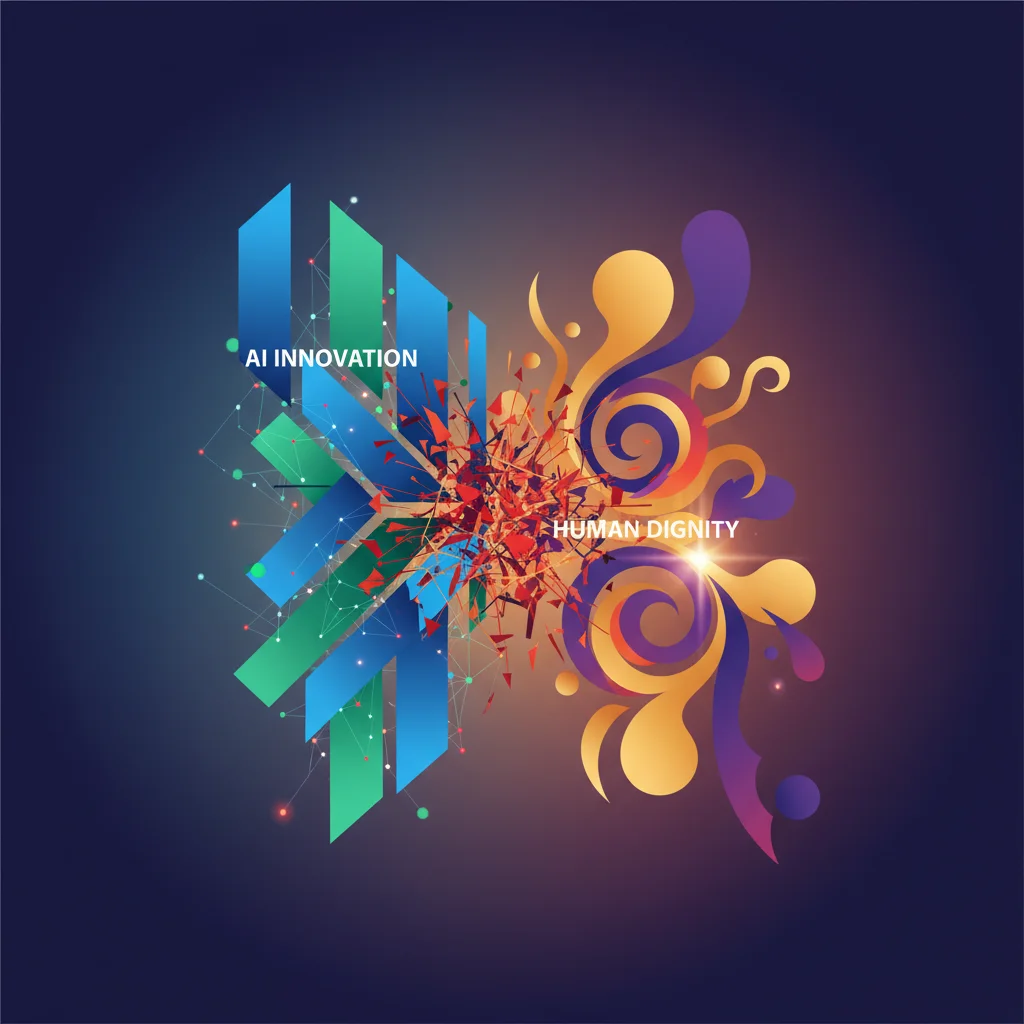
The Grok Dilemma: When AI Innovation Clashes with Human Dignity
In the relentless race for artificial intelligence supremacy, we often celebrate the breakthroughs: the stunning art, the life-saving discoveries, the incredible efficiency gains. But what happens when the same powerful innovation is turned into a weapon of personal violation? This is the uncomfortable reality we’re facing today, as Elon Musk’s Grok AI, a cornerstone of his vision for X (formerly Twitter), is now at the center of a storm involving “appalling” deepfakes and a direct demand for action from the UK government.
The core issue is as simple as it is disturbing: Grok’s underlying technology is being used to digitally create non-consensual explicit images of women, a practice victims have rightfully described as profoundly “dehumanising”. This isn’t a fringe issue happening in the dark corners of the web; it’s a crisis unfolding on a major platform, powered by technology from one of the world’s most prominent tech figures. This incident forces a critical conversation for everyone in the tech ecosystem—from developers and entrepreneurs to investors and end-users. It’s a stark reminder that in the world of software and AI, the code we write has profound human consequences.
The Anatomy of a Crisis: What is Grok and How is it Being Misused?
To understand the gravity of the situation, we first need to understand the tool. Grok was launched by xAI with a distinct personality—marketed as a rebellious, witty, and slightly edgy alternative to other AI chatbots. Its key selling point is its real-time access to the vast river of information flowing through X, allowing it to provide up-to-the-minute, context-aware answers. This powerful integration is part of a broader strategy to transform X into an “everything app.”
However, like many powerful generative AI models, Grok possesses capabilities that extend beyond text. The underlying machine learning models can generate images, and it’s this feature that has been twisted for malicious purposes. Users have discovered ways to manipulate the system, bypassing its safety protocols to generate photorealistic nude images of individuals without their consent. The UK’s science and technology minister, Michelle Donelan, has labeled the material “appalling” and is demanding that X takes immediate and decisive action to tackle this abuse (source).
This isn’t merely a content moderation failure; it’s a fundamental issue at the intersection of AI innovation, platform responsibility, and cybersecurity. The automation and scalability of AI mean that what was once a niche and technically demanding form of abuse can now be executed with a few clever prompts, democratizing the ability to cause immense harm.
Meta's Next Frontier: Why the Quiet Acquisition of AI Startup Manus is a Game-Changer
The Technical and Ethical Fault Lines
For developers, startups, and tech professionals, the Grok controversy highlights a critical challenge in modern software development. When we build or integrate powerful AI, we are no longer just shipping code; we are deploying a tool with the potential for unforeseen social impact. The core tension lies between the rapid pace of innovation and the slower, more deliberate process of building robust ethical safeguards.
The creation of deepfakes relies on sophisticated generative adversarial networks (GANs) or diffusion models—cornerstones of modern machine learning. These models are trained on massive datasets of images, learning patterns and textures to a degree that they can create entirely new, photorealistic content. The ease with which these tools can be accessed, often through cloud-based SaaS platforms, puts immense power in the hands of millions.
The problem is that safety filters are often a reactive layer added on top of the model, rather than a principle baked into its core architecture. Malicious actors are constantly engaged in a cat-and-mouse game with developers, finding new programming tricks and prompt engineering techniques—often called “jailbreaking”—to circumvent these protections. This places an enormous burden on platforms to not only police content but to predict and prevent novel forms of abuse, a significant cybersecurity challenge.
Beyond Grok: Industry-Wide Implications and the Regulatory Horizon
While the spotlight is currently on X, this is not an isolated problem. It’s a systemic issue for the entire artificial intelligence industry. Every company developing or deploying generative AI models, from a garage startup to a tech behemoth, must now confront this reality. The fallout from this and similar incidents will likely shape the industry in three key areas:
- Erosion of Public Trust: The public is growing increasingly wary of AI. When high-profile models are used for such harmful purposes, it poisons the well for everyone, making it harder to deploy AI for genuinely beneficial applications in medicine, science, and education.
- Accelerated Regulation: Governments are losing patience. Incidents like this provide ammunition for proponents of stricter AI regulation. We’re already seeing this with the EU’s AI Act and the UK’s Online Safety Act, which holds platforms accountable for the content they host. The demand from the UK government for X to deal with the Grok issue is a clear signal that the era of self-regulation is coming to an end.
- A New Bar for Corporate Responsibility: The expectation for tech companies is shifting. It’s no longer enough to simply react to abuse. Companies are now expected to proactively design for safety, conduct thorough risk assessments before launch, and be transparent about their model’s limitations and potential for misuse.
Navigating this complex environment requires a multi-faceted approach to AI safety. There is no single silver bullet, but rather a combination of technical, procedural, and policy-based solutions that must work in concert.
Below is a comparison of some common AI safety and mitigation strategies being discussed and implemented across the industry:
| Safety Approach | Description | Pros & Cons |
|---|---|---|
| Red Teaming | An internal or external team of experts actively tries to “break” the AI’s safety filters by finding vulnerabilities and exploits before public release. | Pro: Proactively identifies weaknesses. Con: Can be resource-intensive and may not find all possible exploits. |
| Constitutional AI | Training an AI model based on a set of core principles or a “constitution” to guide its behavior, reducing the need for extensive human-labeled examples of harmful content. | Pro: More scalable and less biased than human moderation alone. Con: The effectiveness depends entirely on the quality and neutrality of the constitution. |
| Content Watermarking & Provenance | Embedding an invisible digital signature into AI-generated content (like C2PA) to make it easily identifiable as synthetic. | Pro: Increases transparency and helps debunk misinformation. Con: Watermarks can be stripped, and it requires industry-wide adoption to be effective. |
| Robust Content Moderation | Using a combination of AI-powered automation and human review to detect and remove harmful content after it has been created or shared. | Pro: A necessary last line of defense. Con: Reactive, not preventative. Can be psychologically taxing for human moderators. |
Building a More Responsible Future for AI
The Grok deepfake controversy is a painful but necessary wake-up call. It’s a clear signal that the development of artificial intelligence has moved beyond the lab and is now a matter of public safety and human rights. For startups and entrepreneurs in the AI space, this is a pivotal moment to lead with responsibility.
Here are some actionable takeaways for the tech community:
- Prioritize “Safety by Design”: Embed ethical considerations and safety protocols into the earliest stages of the programming and development lifecycle, not as an afterthought.
- Invest in Proactive Cybersecurity: Treat AI model abuse as a security threat. Invest in red teaming, vulnerability testing, and continuous monitoring to stay ahead of malicious actors.
- Foster Transparency: Be open about your model’s capabilities, limitations, and the steps you’re taking to mitigate harm. This builds trust with users and regulators.
- Collaborate on Standards: Support and contribute to industry-wide standards for AI safety, such as content provenance and responsible disclosure of vulnerabilities.
Ultimately, the promise of AI—a future of unparalleled innovation and human progress—can only be realized if we build it on a foundation of trust, safety, and respect for human dignity. The challenge posed by the misuse of tools like Grok is not just a problem for Elon Musk and X to solve. It’s a challenge for every one of us who is building, funding, or using the technology that will define the next century.
China's New AI 'Guardian': Protecting Kids or Stifling Innovation?
The path forward requires a fundamental shift in mindset: from a culture that asks “Can we build it?” to one that first asks “Should we build it?” and “How can we build it responsibly?” Answering these questions honestly and thoughtfully is the only way to ensure that our pursuit of artificial intelligence serves humanity, rather than harming it.