The Empathy Illusion: How AI is Quietly Reshaping Our Most Human Trait
Have you ever chatted with a customer service bot and been… genuinely impressed? It understood your frustration, apologized convincingly, and solved your problem with a sprinkle of digital pleasantries. For a moment, it felt like you were talking to a person who cared. This experience, once science fiction, is now a daily reality powered by leaps in artificial intelligence.
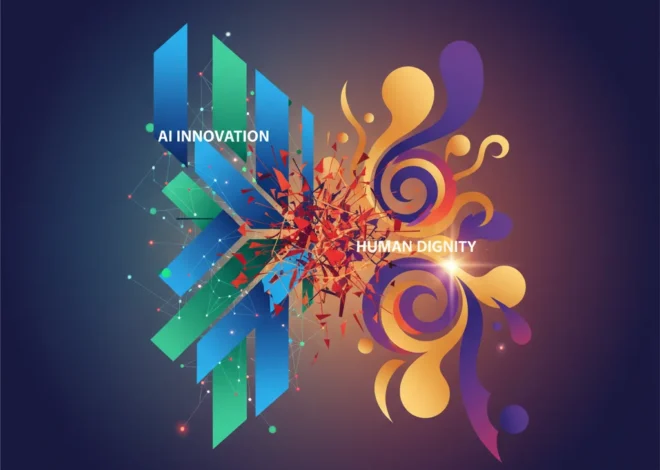
We’re building machines that are masters of conversation, capable of mimicking empathy with astonishing accuracy. But as we race to create more “human-like” AI, we’re stumbling into a profound philosophical minefield. The core issue, as highlighted in a thought-provoking piece by the Financial Times, isn’t just about whether AI can *feel*—it’s about how the language we use to describe AI is subtly changing our definition of what it means to be human.
When a machine “understands” our query or shows “empathy” for our problem, is it truly understanding and empathizing? Or are we just redefining these deeply human concepts to fit the capabilities of our new silicon companions? This isn’t just a debate for philosophers; it has massive implications for developers, startups, and anyone building or using the next generation of software.
The Rise of the “Empathetic” Machine
Today’s advanced AI, particularly Large Language Models (LLMs), are not sentient beings. They are incredibly sophisticated pattern-matching systems. Trained on vast oceans of human text and conversation from the internet, these machine learning models have become experts at predicting the next most logical word in a sentence. This allows them to generate text that is coherent, contextually relevant, and emotionally resonant.
They’ve learned what a sympathetic response looks like because they’ve analyzed millions of them. They know the right words to use when someone is upset, happy, or confused. This is the engine behind the current wave of innovation in AI. From therapy chatbots to AI companions and hyper-personalized SaaS customer support, the goal is to create a frictionless, emotionally intelligent user experience. The business incentive is clear: an “empathetic” interface can build user trust, increase engagement, and drive sales.
But critics have a less romantic term for this phenomenon: “stochastic parrots.” This phrase suggests the models are simply mimicking human language without any genuine comprehension, much like a parrot can be trained to repeat phrases. While the output is often impressive, it lacks the foundational subjective experience—the actual *feeling*—that underpins true empathy.
Beyond the Great Firewall: Decoding China's Ambitious Plan to Tame AI for its Youth
The Language Trap: When Words Lose Their Meaning
Here’s where things get tricky. As we increasingly use words like “learn,” “think,” and “empathize” to describe AI’s functions, we risk diluting their original meaning. The FT article wisely points out that “if technology redefines what our language means it could also change our perceptions of ourselves” (source). When a machine’s probabilistic text generation is put on the same linguistic pedestal as genuine human compassion, the latter is inadvertently devalued.
This linguistic shift isn’t just an academic concern. It directly impacts product design and user expectations. If a user believes an AI truly “cares,” they might over-share sensitive information, place undue trust in its recommendations, or feel a deeper sense of betrayal when it inevitably makes a cold, computational error. For developers and entrepreneurs in the SaaS and tech space, this creates an ethical tightrope walk: how do you leverage the power of conversational AI without being deceptive?
To clarify the distinction, let’s break down the core components of empathy and how they compare between humans and AI.
The table below illustrates the fundamental difference between genuine human empathy and the sophisticated simulation performed by AI systems.
| Component of Empathy | Human Approach (Internal Experience) | AI Approach (Computational Process) |
|---|---|---|
| Emotional Resonance | Feeling a shared emotional state; mirroring another’s feelings through limbic system activation. It’s a visceral, biological response. | Identifying emotional keywords and sentiment in text, then generating a response that is statistically associated with that emotion. No feeling occurs. |
| Perspective-Taking | Imagining oneself in another’s situation, drawing on personal memories, experiences, and a theory of mind. | Analyzing the context of a user’s query and accessing a vast database to construct a plausible narrative from that “perspective.” |
| Cognitive Understanding | Comprehending the logical reasons behind someone’s feelings and situation based on a deep model of the world. | Pattern-matching the user’s situation against learned scenarios to determine a logical and appropriate response based on its training data. |
| Compassionate Action | A genuine motivation to help, driven by the shared emotional experience. | Executing a pre-programmed or learned function to provide a solution (e.g., issue a refund, provide a link) as part of its designed workflow. |
Why This Matters for Tech Leaders and Builders
Moving from the philosophical to the practical, this debate has real-world consequences for anyone involved in technology, from programming to product management.
For Developers & Engineers:
The responsibility is immense. The design choices you make in an AI’s interface—the words you use, the personality you craft—directly influence user perception. The challenge is to create systems that are helpful and intuitive without being deceptive. This means:
- Transparency is Key: Clearly labeling AI agents as non-human can help manage user expectations.
- Avoiding Anthropomorphism: Resist the temptation in UI/UX design to use language that falsely implies consciousness or emotion. Instead of “I understand your frustration,” perhaps “I have processed your statement and identified the core issue as X.”
- Building Guardrails: Implementing robust ethical guardrails in your AI’s automation protocols to prevent it from giving harmful advice, being manipulative, or crossing social boundaries.
For Entrepreneurs & Startups:
The allure of marketing your product as having “empathetic AI” is strong, but the long-term risks can outweigh the short-term gains. Building a brand in the AI era is about building trust. According to one analysis, technology that redefines language can profoundly alter our self-perception, a powerful effect that businesses must handle responsibly (source). Consider these points:
- Focus on Capability, Not Consciousness: Market your AI on what it *does*—solves problems faster, provides accurate information 24/7, automates complex tasks—not on what it *is*.
- Human-in-the-Loop: Recognize the limits of automation. The most successful systems often use AI to handle the bulk of interactions, with a seamless handoff to a human agent for complex or emotionally charged issues. This hybrid approach, often powered by sophisticated cloud infrastructure, combines the best of both worlds.
- Long-Term Brand Trust > Short-Term Hype: A single incident where your “empathetic” AI gives a cold, nonsensical, or offensive response can cause irreparable brand damage. Honesty and transparency are your best long-term assets.
China's New AI 'Guardian': Protecting Kids or Stifling Innovation?
Beyond the Turing Test: Finding a New Measure of AI
For decades, the benchmark for artificial intelligence was the Turing Test: could a machine fool a human into believing it was also human? Today, LLMs can pass variations of this test with flying colors. But this reveals that we’ve been asking the wrong question all along.
The new, more important question isn’t, “Can AI fool us?” It is, “How is AI *changing* us?” The ultimate test for an AI system shouldn’t be its ability to mimic humanity, but its ability to augment humanity safely and effectively. We need new frameworks and metrics that measure an AI’s impact on user well-being, its transparency, and its potential for misinterpretation.
As we continue to develop this powerful technology, we are not just writing code; we are writing the next chapter of human-computer interaction. The language we choose to use will define the narrative, not just for the machines, but for ourselves. As one report puts it, the redefinition of our core concepts through technology is a serious problem we must confront (source).
The Great AI Wall: Why China's New Rules for Child Safety Will Reshape Global Tech
Conclusion: The Path to Conscious Innovation
The AI-powered “empathy” we are building is a powerful tool—a mirror reflecting our own language and emotional patterns back at us. It’s a testament to human ingenuity and a remarkable feat of engineering. But it is not, and may never be, the real thing. It’s a high-fidelity simulation, a clever illusion.
The danger is not that we will be overthrown by sentient robots, but that we will slowly, subtly, and willingly devalue our own most profound qualities by assigning them to machines that cannot possess them. For everyone in the tech industry, from the largest enterprise to the leanest startup, the challenge is to pursue innovation with a conscience. We must build tools that empower us, connect us, and solve our problems, all while preserving the integrity of the very language we use to understand ourselves and each other. The future of artificial intelligence depends not just on the sophistication of our algorithms, but on the wisdom with which we wield them.