Narco-State Economics: Unpacking the Financial Fallout of the Maduro Indictment
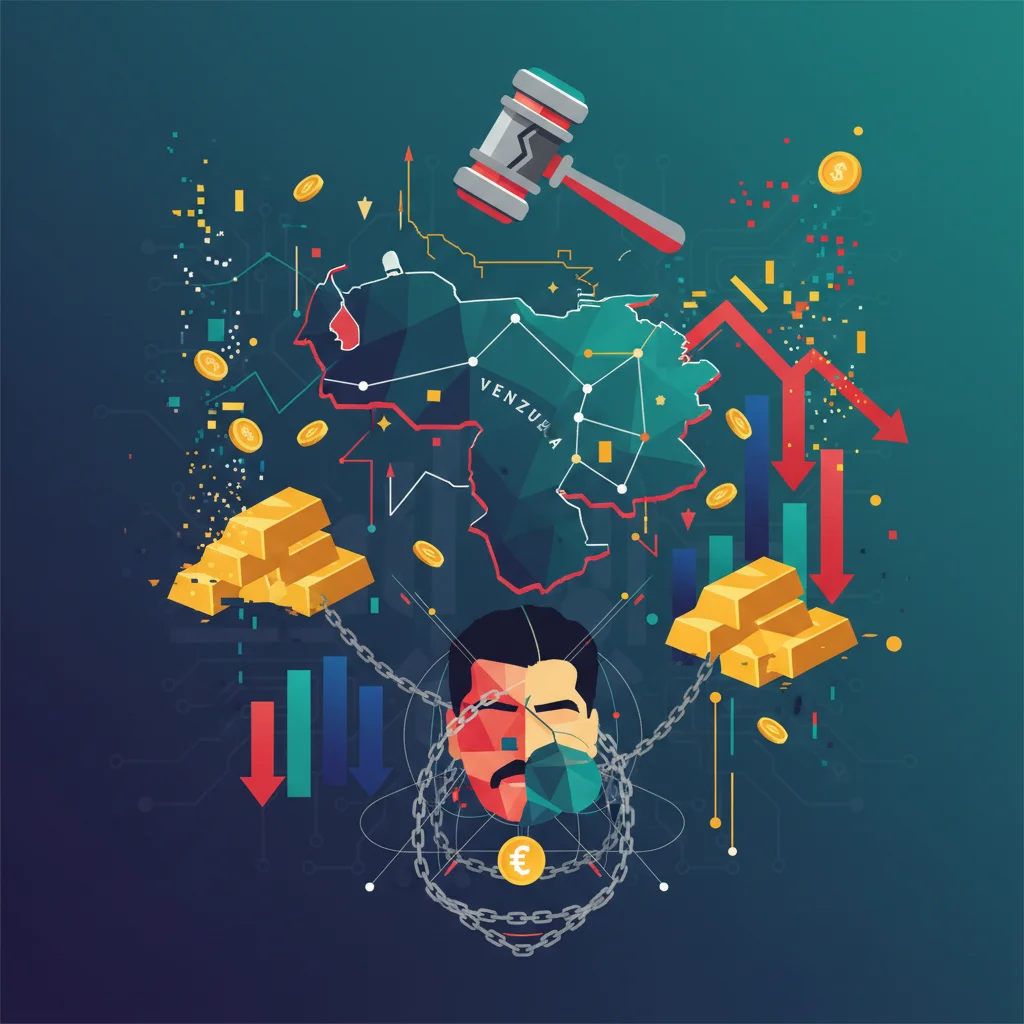
In the world of international finance and investing, risk is a constant variable. We analyze market volatility, economic indicators, and corporate governance. But what happens when the very leadership of a sovereign nation is accused of operating a massive criminal enterprise? The 2020 U.S. Department of Justice indictment against Venezuelan President Nicolás Maduro and his inner circle is more than a geopolitical headline; it’s a stark case study in the ultimate form of sovereign risk—the transformation of a state into a narco-trafficking organization.
The indictment paints a devastating picture, alleging that for over two decades, Maduro and his top officials weaponized state institutions to facilitate the trafficking of cocaine into the United States. This isn’t just about corruption; it’s about the alleged systematic integration of a multi-billion dollar illicit industry into the very fabric of government. For investors, finance professionals, and business leaders, understanding this story is crucial for grasping the profound economic consequences when a nation’s governance collapses and its economy is hijacked by criminal interests.
The Anatomy of the Allegations
The U.S. indictment is a detailed chronicle of a slow-burning conspiracy. It alleges that Maduro’s journey from a trusted lieutenant of Hugo Chávez to the head of a criminal syndicate began long before he assumed the presidency. The prosecution’s narrative, built over years of investigation, suggests a calculated strategy to partner with the Revolutionary Armed Forces of Colombia (FARC), a designated terrorist organization, to flood the U.S. with cocaine.
According to the indictment, the scheme was audacious and deeply embedded within the state apparatus. Key allegations include:
- The Cartel of the Suns: The indictment names Maduro as a leader of the “Cártel de los Soles,” a term referring to high-ranking Venezuelan military officials involved in drug trafficking. The name derives from the sun insignias worn by Venezuelan generals.
- State-Sanctioned Flights: Prosecutors allege that drug-laden planes were allowed to depart from a presidential airplane ramp at Caracas’s main airport, a privilege allegedly granted by Maduro himself when he was foreign minister (source).
- Weapon-for-Cocaine Deals: The Venezuelan state is accused of providing FARC with military-grade weapons, including rocket launchers, in exchange for cocaine and cash payments.
- Palace Meetings: The indictment details meetings at the presidential palace where trafficking routes and logistics were allegedly discussed. This suggests the operation was not a rogue element but a centrally coordinated policy.
The indictment doesn’t just target Maduro; it implicates a significant portion of Venezuela’s leadership. To clarify the key figures and their alleged roles, the following table summarizes the main individuals charged.
| Individual | Position (at time of indictment/alleged crimes) | Alleged Role in the Conspiracy |
|---|---|---|
| Nicolás Maduro | President of Venezuela | Alleged leader of the Cártel de los Soles; negotiating with FARC; coordinating trafficking routes. |
| Diosdado Cabello | President of the National Constituent Assembly | Allegedly managed cartel security, bribery of officials, and weapon provisions. |
| Vladimir Padrino López | Minister of Defence | Accused of controlling drug flight paths from Venezuela to Central America. |
| Maikel Moreno | Chief Justice of the Supreme Court | Allegedly authorized the seizure and sale of assets from traffickers to enrich himself and dismiss charges against cartel members (source). |
| Tareck El Aissami | Minister of Industry and National Production | Accused of facilitating drug shipments and using his position to control air and sea ports. |
This systematic dismantling of state institutions for criminal gain has had a catastrophic effect on Venezuela’s economy, turning a once-prosperous oil nation into a cautionary tale of economic devastation.
The Halving Is No Longer the Main Event: How Institutional ETFs Are Rewriting Bitcoin's Future
From Petro-Economy to Narco-Economy
To understand the current crisis, one must look at the collapse of Venezuela’s traditional economy. For decades, the nation’s fortunes were tied to its vast oil reserves. However, a combination of mismanagement, corruption, a collapse in oil prices, and crippling U.S. sanctions decimated the state-owned oil company, PDVSA. As oil revenues plummeted, the government’s primary source of legitimate income evaporated.
This economic vacuum created a fertile ground for illicit enterprises to become central to state survival. The allegations suggest that narco-trafficking wasn’t just a side business for corrupt officials; it became a parallel economic engine, a source of hard currency essential for the regime’s endurance. This shift has profound implications for the principles of economics and finance. A formal economy based on production, trade, and a functioning banking system was replaced by an informal, criminalized economy based on smuggling, extortion, and money laundering.
The consequences are visible in every aspect of Venezuelan life: hyperinflation that has rendered the currency worthless, a shattered industrial base, and a humanitarian crisis that has forced millions to flee. For the international financial community, it highlights the fact that when a state’s primary economic activity becomes illicit, traditional metrics for assessing risk and opportunity become meaningless.
The Illicit Financial Networks: A Challenge for Global Banking
A multi-billion dollar trafficking operation requires a sophisticated financial pipeline to launder its proceeds. While the indictment focuses on the trafficking itself, the unspoken challenge is how these funds are integrated into the global financial system. This is where the world of international banking and the burgeoning field of financial technology intersect with organized crime.
Laundering money from state-sponsored crime involves complex techniques:
- Trade-Based Money Laundering: Over- or under-invoicing for goods to move value across borders.
- Real Estate Investments: Parking illicit cash in property markets in stable countries.
- Shell Corporations: Using anonymous companies in secrecy jurisdictions to obscure ownership of funds.
- Cryptocurrencies: Leveraging the anonymity of some blockchain transactions to move funds outside the traditional banking system.
The rise of fintech presents both a threat and an opportunity. While criminals can exploit new payment platforms and digital assets, financial technology also offers powerful tools for compliance. AI-powered transaction monitoring and blockchain analytics are becoming essential weapons for banks and regulators trying to identify and freeze illicit funds. The Venezuelan case puts immense pressure on global banking institutions to strengthen their know-your-customer (KYC) and anti-money-laundering (AML) protocols, as dealing with entities linked to the Venezuelan state carries enormous legal and reputational risk.
Plot Twist at the Picture House: Why the Everyman CEO's Exit is a Box Office Event for Investors
Investing in a Pariah State: Risk, Sanctions, and the Future
For the investing community, the message is unequivocal: Venezuela under its current leadership is un-investable. The indictment effectively codifies what was already a reality. U.S. sanctions have largely cut off the Venezuelan government and its state-owned enterprises from the U.S. financial system, making any form of legitimate trading or investment nearly impossible.
The impact extends beyond direct investment. Companies operating in Latin America must conduct extreme due diligence to avoid any association with entities or individuals linked to the Venezuelan regime. The risk of secondary sanctions or becoming entangled in a money-laundering investigation is simply too high. This has a chilling effect on the regional economy, as it complicates supply chains and financial flows.
What is the path forward? A political transition that ousts the indicted leadership is a prerequisite for any economic recovery. Rebuilding Venezuela would be a monumental task, requiring:
- Restoration of the Rule of Law: A complete overhaul of the judiciary and security forces.
- Macroeconomic Stabilization: Tackling hyperinflation and creating a stable currency, a task that would require massive international aid and expertise (source).
- Rebuilding the Oil Industry: Attracting billions in foreign investment to repair and modernize its crumbling infrastructure.
- Debt Restructuring: Negotiating with a host of international creditors to restructure its defaulted sovereign debt.
Only then could Venezuela begin the long journey back to being a viable player in the global economy and a potential destination for investment. Until that day, it remains a stark lesson in how quickly a nation’s wealth can be destroyed when its leaders allegedly trade national interest for criminal profit.
Beyond the Headlines: Why Misleading Crime Data is a Red Flag for Global Investors
Conclusion: A Cautionary Tale for the Global Economy
The U.S. case against Nicolás Maduro and his government is far more than a legal battle. It is an economic post-mortem of a failed state. It demonstrates in terrifying detail how the corrosion of democratic institutions can lead to a complete economic collapse, replacing a formal economy with one driven by criminality. For anyone involved in finance, investing, or international business, the story of Venezuela is a critical lesson in the absolute necessity of good governance, the rule of law, and institutional integrity. It shows that when a government itself becomes the primary source of systemic risk, the entire economic and financial framework of a nation can be brought to its knees, with devastating consequences that ripple across the globe.

Related Posts

Financial Paternalism: Why Old Rules of the Road Won’t Work for the New Generation of Digital Investors

The Butterfly Effect: How New Road Safety Rules Could Reshape Your Investment Portfolio