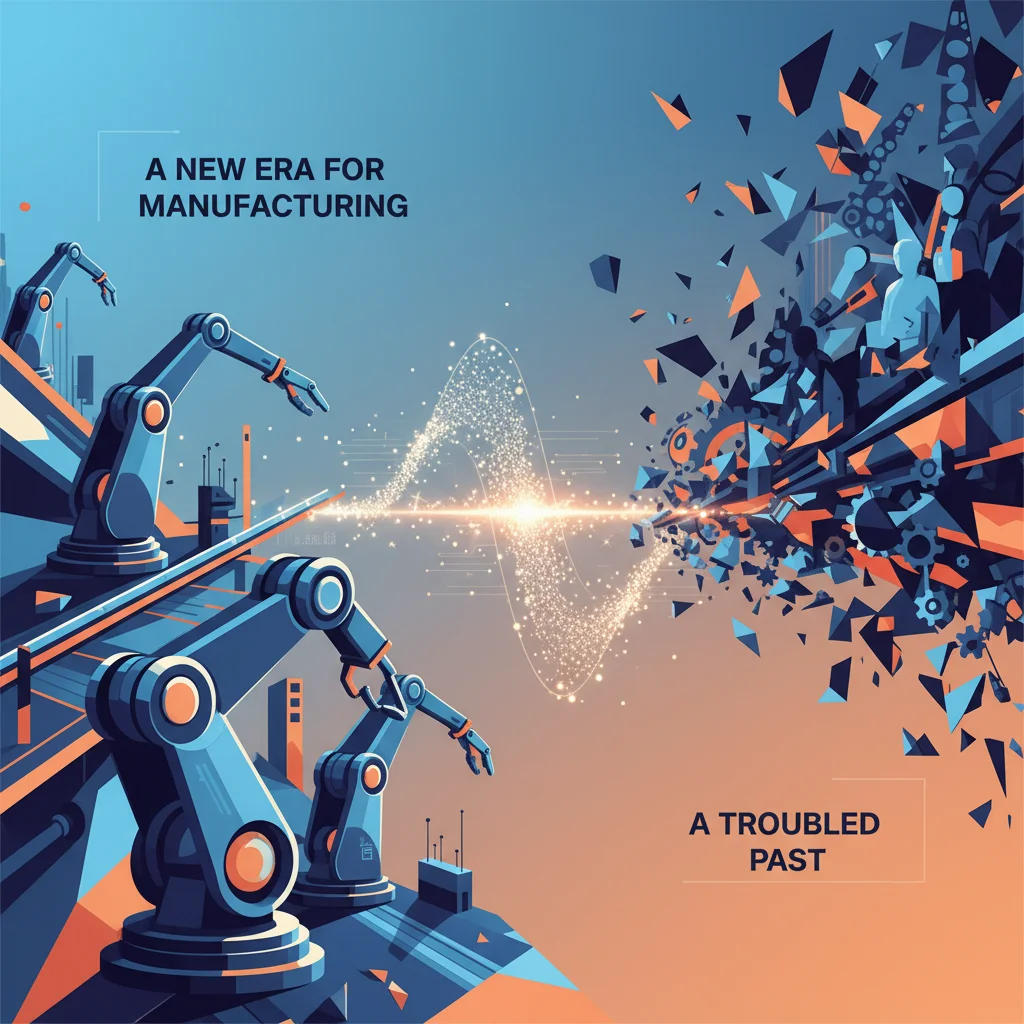
Hyundai’s Robotic Workforce: A New Era for Manufacturing or a Reaction to a Troubled Past?
In the world of manufacturing, the steady hum of machinery is the sound of progress. For decades, robotic arms have been a familiar sight, performing repetitive tasks with precision. But a seismic shift is underway. Hyundai, the South Korean automotive giant, has announced a plan that sounds like it was lifted from the pages of science fiction: the deployment of advanced, human-like robots in its factories. This move, however, is not just a technological leap; it’s a strategic decision layered with complex financial, ethical, and economic implications, particularly given the context of its announcement—targeting a plant linked to a significant labor controversy.
This isn’t merely about swapping out a few machines. It’s about fundamentally rethinking the factory floor, the nature of labor, and the future of global supply chains. For investors, business leaders, and anyone interested in the future of the global economy, Hyundai’s bold step is a critical case study in the convergence of technology, finance, and corporate strategy.
The Dawn of the Humanoid Factory Worker
Hyundai’s vision is powered by its subsidiary, Boston Dynamics—a name synonymous with cutting-edge robotics. The plan involves deploying sophisticated humanoid robots, capable of navigating complex environments, handling a variety of tools, and performing tasks that have, until now, required human dexterity and problem-solving skills. Unlike the stationary robotic arms bolted to the floor, these machines can walk, carry loads, and adapt to changing production needs. This represents a quantum leap in factory automation.
The initial deployment is slated for the same manufacturing ecosystem that faced intense scrutiny following revelations of labor violations at supplier facilities. According to the initial report, this choice of location is no coincidence. It signals a potential strategy to mitigate risks associated with human labor, including shortages, safety concerns, and the severe reputational and financial damage that accompanies ethical lapses. By automating complex roles, Hyundai could be aiming to create a more resilient, predictable, and ethically sound production line—a move that would be viewed favorably on the stock market.
The Billionaire's Gambit: Why India's Most Powerful Men Couldn't Win Over Trump
The Financial Calculus: Investing in an Autonomous Future
The decision to deploy a fleet of humanoid robots is, at its core, a monumental financial one. These machines represent a significant capital expenditure, far exceeding the cost of traditional automation. However, the long-term economic argument is compelling. A detailed analysis reveals a multifaceted investment thesis that extends beyond simple labor cost arbitrage.
To understand the financial implications, let’s compare the operational costs and benefits of a human workforce versus a humanoid robotic workforce over a projected 5-year period. The following table illustrates the key financial metrics a company like Hyundai would consider:
| Metric | Human Worker | Humanoid Robot |
|---|---|---|
| Upfront Cost | Recruitment & Training (~$5,000) | Acquisition Cost (~$150,000 – $250,000) |
| Annual Salary & Benefits | ~$50,000 – $70,000 | N/A |
| Annual Operational Cost | Workspace, Safety Gear, HR | Energy, Maintenance, Software (~$20,000) |
| Operational Hours/Day | 8-10 hours (with breaks) | 22-23 hours (with charging/maintenance) |
| Productivity & Uptime | Variable, subject to fatigue/error | Consistent, 95%+ uptime |
| 5-Year Total Cost of Operation (TCO) | ~$255,000 – $355,000 | ~$250,000 – $350,000 |
As the table shows, while the initial investment in robotics is substantial, the Total Cost of Operation (TCO) can approach parity with human labor over a medium-term horizon. The real financial upside, however, comes from factors not easily captured in a simple cost comparison: near-continuous operation (24/7 production), enhanced precision leading to fewer defects, and the elimination of costs associated with workplace injuries and labor disputes. For investors focused on long-term value, this shift towards a predictable, high-uptime operational model makes Hyundai a more attractive proposition in the competitive automotive trading landscape.
Reshaping Global Economics and Financial Technology
Hyundai’s initiative is a microcosm of a larger trend that could fundamentally reshape global economics. The rise of a viable robotic workforce challenges the decades-old model of offshoring manufacturing to countries with lower labor costs. If a robot in Alabama costs the same to operate as a robot in Vietnam, the incentive to maintain complex, fragile global supply chains diminishes. This could accelerate the trend of reshoring, bringing manufacturing capacity back to domestic markets.
This shift has profound implications for international finance and trade. It could lead to more resilient domestic economies, but also cause significant economic disruption in nations that have built their growth models on manufacturing exports. Central banks and financial institutions will need to model these new economic realities when setting policy and assessing risk.
Moreover, managing a fully autonomous factory requires a new generation of financial technology. Imagine a factory where robots autonomously order new parts from suppliers when inventories run low, and smart contracts on a blockchain ledger instantly process payments upon delivery and quality verification. This level of integration between the physical and digital worlds, powered by secure and transparent fintech solutions, is the endgame of Industry 4.0. The data generated by these robotic operations—every movement, every component handled—becomes a valuable asset. This data can be used for predictive maintenance, efficiency optimization, and even for developing new financial products like parametric insurance that pays out automatically if production efficiency drops below a certain threshold. A 2023 report from PwC highlights that 91% of industrial companies are investing in digital factories, underscoring the massive financial and technological shift occurring across the sector.
India in 2025: A Deep Dive into the Economic Juggernaut's Next Chapter
The New Competitive Battleground: Automation as a Strategic Moat
Hyundai is not alone in this pursuit. The race to develop and deploy humanoid robots is becoming a new front in the corporate cold war. Tesla, with its Optimus robot, has been vocal about its ambition to leverage automation not just in its factories but as a future product line. Amazon has transformed its fulfillment centers with a legion of specialized robots, continuously pushing the boundaries of logistical efficiency. Other startups like Figure AI, backed by major tech players, are also entering the fray. According to the International Federation of Robotics, robot installations in 2022 hit a new record of 553,052 units, a clear indicator of the accelerating trend.
In this context, Hyundai’s acquisition and integration of Boston Dynamics can be seen as a masterstroke of vertical integration. By owning the core technology, Hyundai can develop robotics tailored specifically to its needs, creating a competitive advantage that is difficult for rivals to replicate. This strategic control over a key enabling technology is a powerful signal to the market, suggesting that Hyundai is not just an automaker but a future-focused technology and robotics company. This reframing can have a significant positive impact on its valuation and its appeal to a broader class of technology investors.
Geopolitical Shockwaves: How US-Iran Tensions Could Reroute the Global Economy
Conclusion: A Glimpse into the Future of Industry
Hyundai’s plan to deploy humanoid robots is far more than a technological curiosity. It is a calculated strategic response to a confluence of pressures: labor ethics, supply chain vulnerabilities, and intense market competition. It represents a massive bet on a future where manufacturing is more automated, localized, and data-driven.
For the financial world, this is a pivotal moment. It forces a re-evaluation of how we value industrial companies, the risks we associate with labor and supply chains, and the opportunities presented by a new class of intelligent assets. The success or failure of Hyundai’s robotic workforce will offer crucial lessons for every sector of the economy. While the image of a robot on an assembly line is captivating, the real story lies in the complex web of finance, economics, and strategy that is driving this revolution. The factory of the future is being built today, and its impact on our portfolios and our world will be profound.