Beyond the Balance Sheet: Why a Culture War is the Greatest Unseen Threat to the European Economy
In the world of finance and investing, risk is typically quantified in basis points, volatility indexes, and credit default swaps. We meticulously analyze earnings reports, central bank policies, and macroeconomic data to forecast the trajectory of the stock market. Yet, one of the most significant threats to Europe’s economic stability isn’t found on a Bloomberg terminal; it’s being fought in the realm of ideas, values, and culture.
A recent letter in the Financial Times by André Wilkens, Director of the European Cultural Foundation, sounded a stark alarm. He argues that Europe is facing a “culture war” designed to “undermine its model of co-operation, democracy and freedom” (source). For many in the financial community, this might seem like a “soft” issue, far removed from the hard numbers of economics and trading. This is a dangerous miscalculation. This culture war is a direct assault on the foundational principles that make the European economy a predictable, stable, and attractive environment for long-term investment. It’s a systemic risk hiding in plain sight.
This article will deconstruct this threat, translating the abstract concept of a “culture war” into the concrete language of financial risk, market stability, and investment strategy. We will explore how the erosion of Europe’s unique socio-economic model could trigger significant market shocks and what investors, business leaders, and fintech innovators need to understand to navigate this new, complex battlefield.
Decoding the “European Model”: The Bedrock of Economic Stability
To understand the threat, we must first define what is being attacked. The “European model” is more than just a geographic bloc; it’s a distinct approach to capitalism, often referred to as a “social market economy” or “stakeholder capitalism.” Unlike the U.S. model, which prioritizes shareholder value above all, the European model seeks to balance market efficiency with social cohesion and broad stakeholder interests—including employees, communities, and the environment.
This philosophy manifests in several key economic structures:
- Strong Social Safety Nets: Robust unemployment benefits, public healthcare, and pension systems act as automatic stabilizers, cushioning the economy during downturns and maintaining consumer demand.
- Regulatory Predictability: While often criticized for its bureaucracy, the EU’s comprehensive regulatory framework (from GDPR in tech to MiFID II in finance) creates a stable and predictable environment for businesses, reducing uncertainty for long-term capital allocation.
- Collaborative Governance: Institutions like the European Central Bank (ECB), the Single Market, and various cross-border initiatives are built on a foundation of co-operation and multilateralism. This institutional strength has been crucial in navigating crises, from the 2008 financial meltdown to the recent pandemic.
For investors, this model has traditionally offered a compelling trade-off: perhaps lower top-line growth than in the US, but significantly less volatility, lower social friction, and greater long-term stability. This predictable environment is a cornerstone of the European value proposition in the global economy. The culture war aims to shatter this cornerstone.
The Assault on a Consensus: How a Culture War Manifests as Economic Risk
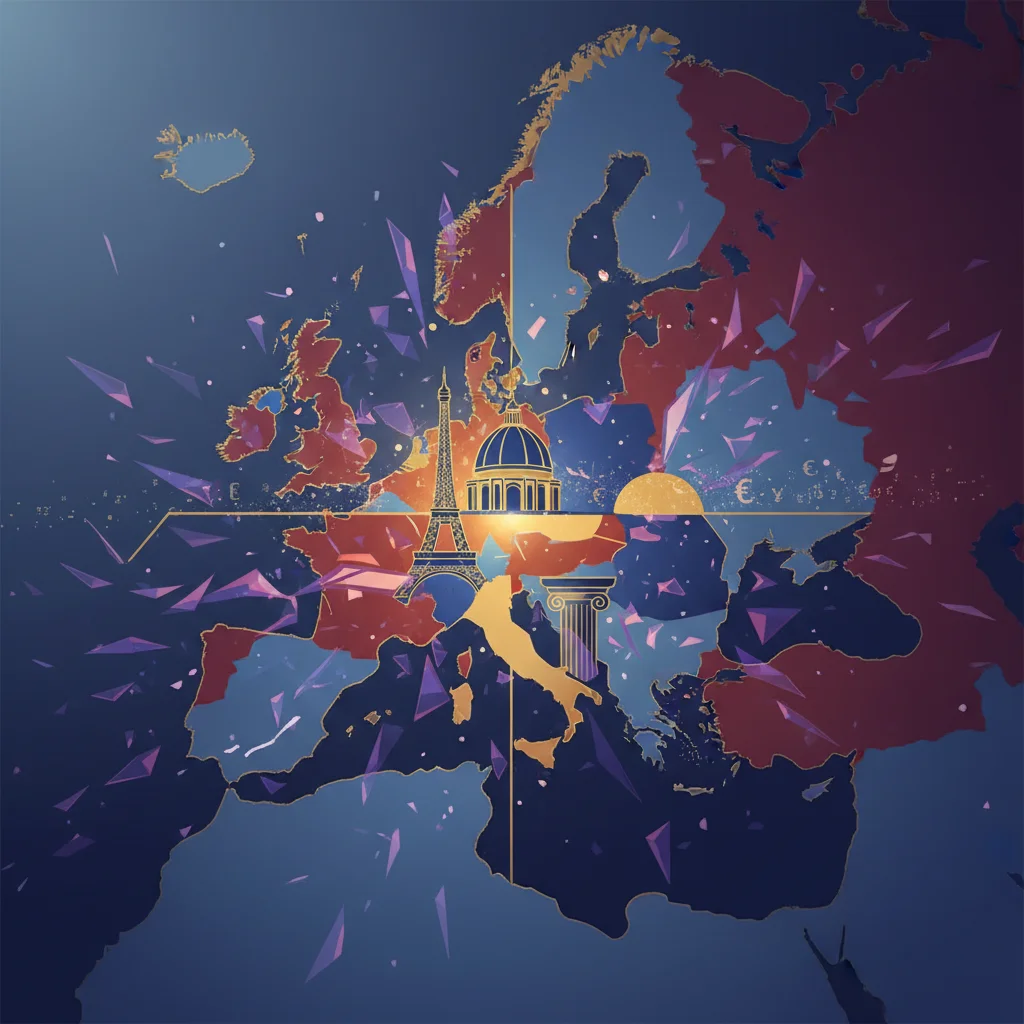
The “culture war” described by Wilkens is a multifaceted campaign to discredit and dismantle the very idea of a collaborative, rules-based Europe. It is fueled by both internal populist movements and external geopolitical actors who see a fragmented, distrustful Europe as advantageous. According to a report by the European External Action Service, disinformation campaigns often target core European values to sow division and erode trust in democratic institutions.
This assault translates into tangible financial and economic risks:
- Political Fragmentation: The rise of nationalist parties threatens the integrity of the Single Market, the bedrock of European commerce. The mere threat of “Frexit” or “Italexit” can send shockwaves through sovereign debt markets, impacting the entire European banking system.
- Regulatory Chaos: If the consensus on a common regulatory approach breaks down, it could lead to a patchwork of national rules. This would be a nightmare for pan-European businesses, especially in the financial technology sector, which relies on scalable, cross-border operations.
- Erosion of Institutional Trust: Coordinated attacks on the credibility of institutions like the ECB or Eurostat undermine their ability to manage the economy effectively. If markets lose faith in the central bank’s independence or the reliability of official data, risk premiums on European assets will soar.
Below is a comparison of the foundational principles and the associated investment implications of the prevailing US and European models, highlighting what is at stake.
| Feature | The American Model (Shareholder Primacy) | The European Model (Stakeholder Capitalism) |
|---|---|---|
| Primary Goal | Maximizing short-term shareholder returns | Balancing long-term growth with social stability |
| Key Strengths | High dynamism, rapid innovation, capital flexibility | High stability, lower inequality, predictable regulation |
| Dominant Risks | High volatility, social inequality, market bubbles | Slower growth, demographic challenges, bureaucratic drag |
| Implications for Investing | Favors high-risk, high-reward growth stocks and active trading | Favors stable, dividend-paying equities, and long-term infrastructure projects |
| Threat from Culture War | Political polarization impacting fiscal policy | Existential threat to the entire cooperative framework and single market |
Culture as Critical Infrastructure for the Economy
André Wilkens correctly states that culture is not “the cherry on the cake” but the “yeast” that makes it rise. In economic terms, culture is the social infrastructure that enables a complex, modern economy to function. A shared cultural understanding of trust, rule of law, and cooperation reduces transaction costs, facilitates cross-border trading, and fosters the long-term thinking necessary for capital-intensive industries.
Investment in culture—in education, public forums, and the arts—is therefore not a subsidy but an investment in the social capital that underpins economic resilience. A society that shares a common space for dialogue is less susceptible to the disinformation that can destabilize markets. In fact, the European creative and cultural industries themselves are a significant economic force, contributing around 4.4% of the EU’s total GDP in terms of total turnover. Protecting this sector is synonymous with protecting a key part of the modern European economy.
Beyond the Headlines: Why Misleading Crime Data is a Red Flag for Global Investors
This perspective reframes the debate around technologies like blockchain. While often viewed through a purely technical or financial lens, blockchain’s core proposition is a system for creating trust in a trustless environment. In a Europe where institutional trust is under attack, decentralized financial technology could become more than a tool for speculation; it could become a vital piece of infrastructure for maintaining transactional integrity if traditional systems falter.
Navigating the New Battlefield: An Investor’s Guide
The weaponization of culture against Europe’s economic model demands a new playbook for investors and business leaders. Simply analyzing balance sheets is no longer sufficient.
For Investors: Political risk analysis must be integrated into core investment theses. This means moving beyond headline risk and understanding the social dynamics within and between EU member states. Asset allocation may need to reflect not just economic fundamentals but the political resilience of the jurisdiction. Monitoring sentiment analysis, media polarization, and election polling is now as crucial as monitoring inflation data.
For Business Leaders: The principles of ESG (Environmental, Social, and Governance) investing take on a new urgency. By actively practicing stakeholder capitalism—investing in employees, strengthening community ties, and ensuring transparent governance—businesses can become a powerful bulwark against the forces of fragmentation. They have a vested interest in defending the stable, predictable model that has allowed them to thrive.
For the Fintech Sector: The challenge is twofold. A fragmenting Europe is a threat to scalability. However, it also presents an opportunity. Innovators who develop technologies that enhance transparency, combat disinformation, or facilitate secure cross-border transactions in a potentially less-cohesive environment will be in high demand. The future of European banking and finance may depend on technological solutions that reinforce the trust that is being eroded politically.
Conclusion: The Intangible Threat with Tangible Consequences
The culture war being waged against the European model is the ultimate black swan event hiding in plain sight. It is a non-financial risk with the potential to trigger a cascade of financial consequences, from sovereign debt crises to a collapse in cross-border investment. It is an attack on the software of the European economy—the shared trust, values, and institutional frameworks that allow the hardware of its markets and industries to function smoothly.
For anyone involved in the European market, from the retail investor to the institutional asset manager, the message is clear: the cultural and political landscape is no longer a backdrop to the market; it is the market. Ignoring this battle is not just a social oversight; it is a critical failure of financial analysis. The future stability and prosperity of the European economy may well depend on who wins this war of ideas.